Lumps and Bumps on the Hand and Wrist PDF
Found a lump on your hand or wrist? The common causes — ganglion cysts, tendon-sheath swellings and other masses — how they are assessed, and when to worry.
What you're feeling
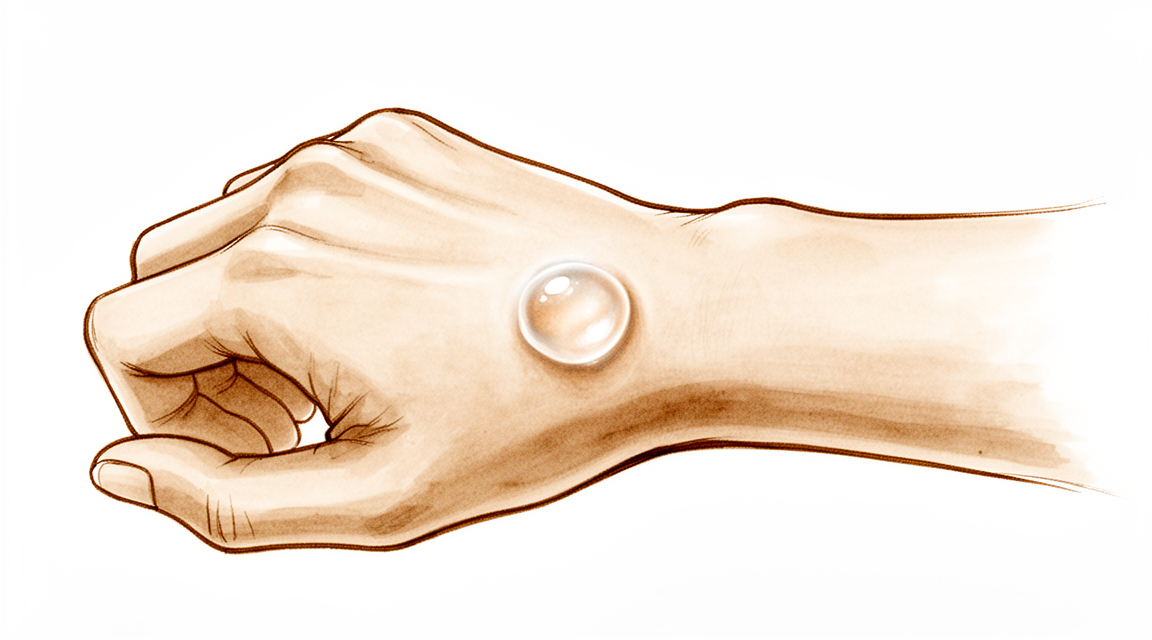
You may notice a soft lump on your hand or wrist. These lumps often appear as cysts filled with fluid. You might feel them most clearly on the back of your wrist or on the palm side. In children under ten years old, these lumps typically show up on the palm side of the wrist. They are often painless at first. However, they can grow larger over time.
The lump may cause discomfort when you move your wrist. You might feel pain when you push against it or bend your wrist back. This pain can make daily tasks difficult. Simple actions like tucking in a shirt or reaching behind your back to fasten a bra may become tricky. If the lump presses on nearby nerves, you might feel tingling or weakness in your fingers. Some people find that symptoms worsen after using their hands for long periods. Others notice more pain when they first wake up in the morning.
In rare cases, a lump can cause more significant issues. For example, a fatty growth inside the wrist can press on the nerve that controls thumb movement. This condition is known as carpal tunnel syndrome. You might experience numbness or a burning sensation in your thumb and fingers. While most lumps are harmless, some are solid fatty tumors. These can occur on the bones of your fingers or the palm side of your wrist.
If you have a lump on your hand, your doctor will examine it closely. They will check its size, shape, and location. This helps them tell the difference between a fluid-filled cyst, a trigger finger, or a thickened area of tissue in the palm. In young children, many of these lumps go away on their own. About 69% to 79% of them disappear within 12 to 18 months without any treatment. For adults, the lump may stay longer. Your doctor will discuss the best way to manage your symptoms based on how much the lump affects your daily life.
What's actually happening
Most lumps and bumps on your hand or wrist are fluid-filled sacs called ganglions. Think of your joint like a hinge. The joint capsule is the tough sleeve that wraps around it, keeping everything in place. Sometimes, the fluid inside this sleeve leaks out through a weak spot in the wall. It forms a small balloon on the surface. This balloon is what you see and feel as a lump.
These cysts are soft tissue tumors. They are not cancer. In children under 10 years old, these lumps often appear on the palm side of the wrist. The good news is that they often go away on their own. If you watch and wait, 69% to 79% of these childhood lumps disappear within 12 to 18 months. You do not always need surgery right away.
Sometimes, the lump is not fluid. It might be a fatty growth called a lipoma. These are benign tumors made of fat tissue. They can grow in unusual places on your fingers or wrist. While rare, they can press on nearby nerves. For example, a fatty lump near the wrist can squeeze the nerve that controls your hand. This squeezing causes pain and numbness, similar to carpal tunnel syndrome.
Other lumps might be related to your tendons. Tendons are the strong cords that move your fingers. A ganglion can form along the tendon sheath, which is the slippery covering around the tendon. This can make it hard for the tendon to slide smoothly. You might feel a clicking or locking sensation, known as trigger finger. Your doctor can tell the difference between a tendon issue and a simple cyst by examining the base of your finger.
In very rare cases, a lump might be a bone tumor. These require careful removal to ensure they do not come back. Most of the time, however, your lump is a harmless ganglion or lipoma. Understanding what it is helps you decide if treatment is necessary. Many lumps cause no pain and need no intervention.
What we can do about it
For many lumps and bumps, you can start with simple self-care. If you have a ganglion cyst on your wrist, your doctor may suggest trying aspiration first. This involves draining the fluid with a needle before considering surgery. Doing this at least once can make the treatment more cost-effective. For children under ten years old, ganglions on the front of the wrist often go away on their own. About 69% to 79% of these cases show spontaneous regression within a span of 12-18 months. You can simply watch and wait in these situations.
If you have a scar from previous surgery, scar massage is a common way to help it heal. However, few therapists have formal training in this skill or regularly measure how well it works. For other types of lumps, such as those on the fingers, a detailed physical exam can help tell the difference between a flexor sheath ganglion, trigger digit, and Dupuytren’s disease. Your doctor will check the knuckle area of the affected finger to make the right diagnosis.
If self-care does not help, your doctor might recommend medical management. When draining a ganglion cyst, adding steroids at the time of aspiration can lead to lower rates of recurrence. Patients who receive this treatment often perceive less chance of the lump coming back. Ultrasound guidance during this procedure does not change the reintervention rate at one year compared to doing it without imaging, but it helps ensure accuracy.
If your symptoms are severe or persist despite these steps, your doctor may refer you for specialist assessment. In some cases, a procedure may be considered. For example, if you have a parosteal lipoma on your finger, marginal excision can result in good outcomes with no recurrence in the short to medium term. For other bone tumors, treatments like curettage or resection are options. Your doctor will choose the approach that minimizes harm while controlling the disease. Keep in mind that higher postoperative pain can be linked to recurrence, especially if you had previous surgery, treat your dominant hand, or have high baseline pain. Your doctor will discuss the best path forward based on your specific situation.
What to expect
Your outlook depends largely on the type of lump and your age. Many lumps on the hand and wrist are benign cysts that may resolve on their own. In children under 10 years old, ganglions often appear on the front of the wrist. These have a high chance of disappearing without treatment. Between 69% and 79% of these show spontaneous regression within 12-18 months. Hand ganglions in children also resolve more often than wrist ganglions.
For adults, the course is less predictable. If you choose not to have surgery, your doctor may first try draining the cyst with a needle. This is called aspiration. Doing at least one aspiration before considering surgery improves the cost-effectiveness of treatment. Some patients receive a steroid injection during this process, which may lower the chance of the lump returning. However, open surgery for dorsal wrist ganglions has high recurrence rates and is often ineffective.
If your lump is a solid tumor, such as a lipoma or giant cell tumor, the outlook varies by location and size. Small lipomas on the finger bones can be removed with marginal excision, which typically leads to good outcomes with no recurrence in the short to medium term. Larger or deeper tumors, like those in the distal radius, may require more extensive surgery. While these procedures can control the disease, they carry risks. For example, after extensive resection and reconstruction, one-third of patients may experience complications within at least 10 years.
Recovery feels different for everyone. You might notice higher pain levels if you had previous surgery on the area, if it is your dominant hand, or if you had high pain levels before treatment. Longer symptom duration and lower belief in the treatment’s success can also be linked to more postoperative pain. Most patients find that managing expectations helps. Your doctor will tailor the plan to minimize discomfort and maximize function, but some lumps may persist or return despite best efforts.
When to see someone
See your GP if you notice a lump that causes persistent pain not improving with rest. Seek a specialist review if you experience weakness, instability, or locking in your hand. Symptoms that interfere with sleep or work also warrant attention. Sudden worsening of any bump should be evaluated promptly. While many lumps are harmless, such as ganglions in children which often resolve within 12-18 months, others may require treatment. Your doctor can distinguish between common issues like trigger digit and rarer conditions through a physical exam. Do not ignore changes in size or sensation. Early assessment helps determine if simple aspiration or further intervention is needed to prevent recurrence or manage pain effectively.