Basal Thumb Arthritis PDF Evidence
Basal thumb arthritis — causes, symptoms, non-surgical options, and when surgery might help.
What you're feeling
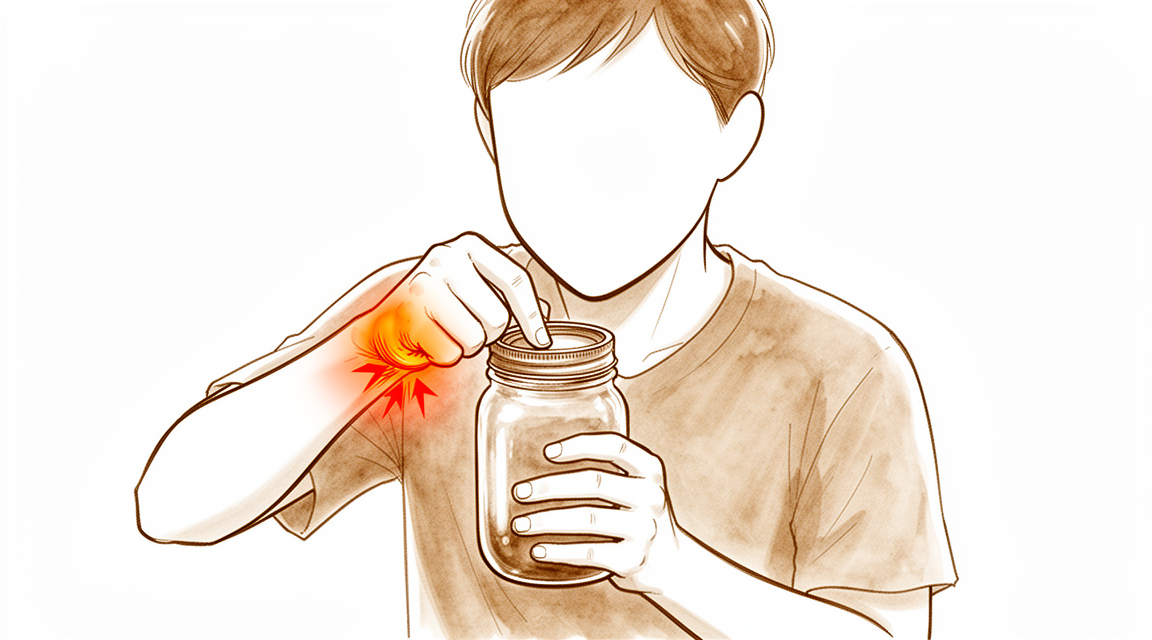
Basal thumb arthritis is a common condition that affects the joint at the base of your thumb. This wear-and-tear arthritis develops as part of normal aging. You may notice that the pain is not just on the surface but feels deep inside the joint. Early in the disease, you might find it harder to grip objects firmly. Simple tasks like turning a key or opening a jar can feel difficult because your grip strength weakens.
The pain often flares up after you have been using your hand for a while. You might feel achy and stiff when you first wake up in the morning. This stiffness usually eases as you move your hand, but it can return if you do repetitive motions. Some people experience pain at night, which can make it hard to fall asleep or stay asleep. Sleeping on the side that hurts can put direct pressure on the inflamed joint, worsening the discomfort.
Daily activities become more challenging as the condition progresses. You may struggle with fine motor skills, such as buttoning a shirt or tucking in a blouse. Reaching behind your back to fasten a bra can be particularly painful. You might also find that holding a phone or a cup of coffee causes sharp pain at the thumb base. This is because these actions require a strong, stable grip that the arthritic joint can no longer provide comfortably.
Chronic pain and inflammation are common features of this condition. You might feel a constant low-grade ache even when you are resting. The joint may feel warm or swollen to the touch. While the pain can be frustrating, it is a clear signal from your body that the joint is under stress. Your surgeon will listen to your history and examine your hand to confirm the diagnosis. Understanding these symptoms helps explain why certain movements hurt and why rest or specific supports might provide relief.
What's actually happening
Basal thumb arthritis is a common, progressive wear-and-tear condition. It affects the joint at the base of your thumb, where it meets your wrist. Over time, the smooth cartilage that cushions the bone ends wears away. This leads to chronic pain and inflammation. You may notice a reduction in your ability to make a firm grip. This happens early in the disease, even before X-rays show significant damage.
The joint relies on precise movement and stability. Ligaments and tendons act like ropes to hold the bones in place. When the joint structure changes, these stabilizers struggle. The bones may shift or migrate upward. This misalignment alters how the joint moves during pinching or grasping. The resulting friction causes further damage to the joint surface. Your surgeon can diagnose this through a simple history and physical exam.
Surgery aims to restore the anatomy and biomechanics of this joint. Procedures like trapeziectomy remove the damaged bone to relieve pain. Other options use tendons or synthetic spacers to stabilize the joint. While these treatments improve function and health, they do not fully replicate the motion of a healthy joint. Some procedures may allow the bone to shift slightly over time, but this often does not affect your daily function. The goal is to reduce pain and restore your ability to use your hand effectively.
What we can do about it
We start with non-operative care, which is effective for early stages of wear-and-tear arthritis in the base of your thumb. Your surgeon may recommend self-management strategies and physiotherapy to help you maintain movement and strength. These conservative measures aim to reduce pain and improve function without surgery. You should give these methods a fair trial before considering more invasive options. For many patients, this approach is sufficient to manage symptoms effectively.
If simple measures do not provide enough relief, your surgeon may discuss medical management. This can include pain medication and anti-inflammatory drugs to help control discomfort. Injections are another option. Cortisone injections can reduce inflammation and pain for a limited time. Hyaluronic acid injections may help lubricate the joint, though effects vary. Platelet-rich plasma (PRP) injections use your own blood components to promote healing, but evidence on their long-term benefit is still developing. Your surgeon will advise on which injection, if any, is suitable for your specific condition and how long the relief might last.
Surgery is reserved for cases where conservative measures have failed to provide adequate relief. The goal of surgery is to remove the source of pain and restore function. One common procedure is trapeziectomy, where the worn bone is removed. This often yields very positive long-term clinical outcomes. Other options include joint replacement or fusion, depending on your individual needs. While most patients experience significant improvement, it is important to know that despite many treatment options, a constant proportion of patients remain unhappy or symptomatic after surgery. Your surgeon will discuss the risks, benefits, and expected recovery time to help you decide if surgery is the right step for you.
What to expect
Basal thumb arthritis is a common condition that typically worsens over time. It is a progressive disease, meaning the wear-and-tear changes in your joint tend to increase rather than settle on their own. You will likely notice that symptoms persist and may gradually become more bothersome as the condition advances.
If you choose to manage this with non-surgical options like hand therapy, your journey to surgery may be longer. However, evidence shows that patients who do not undergo therapy often reach the point of needing surgery sooner. For those in the earlier stages of the disease, less invasive treatments such as joint washing or nerve calming procedures can offer relief. These approaches have a low rate of complications and short recovery times, serving as a gentle alternative to more major surgery.
When surgery is the right path, the long-term outlook is very positive. Most patients achieve excellent results that improve their daily function and reduce pain. Your surgeon will discuss the best technique for you, whether it involves removing the worn bone, using a spacer, or replacing the joint. Regardless of the specific method chosen, you can expect significant improvements in your health and quality of life.
It is important to know that some changes may appear on X-rays over time, such as slight shifting of the joint components. However, these radiographic changes do not necessarily mean your outcome will be poor. Many patients maintain favorable strength and satisfaction for many years. Even if a previous procedure needs revision, there are effective options available that yield high satisfaction rates.
While complications are possible, serious issues are relatively uncommon with modern techniques. Some specific older implants are no longer used due to high complication rates, so your surgeon will select materials with a proven safety record. You should also be aware that factors like smoking or previous hand surgery might influence how the condition progresses, but these do not prevent successful treatment. Overall, with appropriate care, you can expect to regain the use of your thumb and return to your normal activities with reduced pain.
When to see someone
Basal thumb arthritis is a common, progressive condition. You should see your GP if you notice persistent pain that does not improve with rest. Ask for a specialist review if you experience weakness or instability in your thumb. Symptoms such as locking or giving way also warrant a check-up. Seek care if your symptoms interfere with sleep or work. A sudden worsening of pain is another clear sign to act. While wear-and-tear changes are part of aging, functionally limiting pain is less common. Your surgeon can diagnose this through a simple history and examination. Early detection helps manage the disease before it significantly reduces your grip strength.
Evidence & references
title: "Basal Thumb Arthritis" slug: basal-thumb-arthritis region: hand audience: patient mesh_terms: ["Thumb", "Carpometacarpal Joints", "Osteoarthritis", "Trapezium Bone", "Arthritis", "Arthroplasty", "Metacarpophalangeal Joint", "Metacarpal Bones"] article_count: 513 model_used: Qwen3.6-35B-A3B-Q8_0.gguf generated_at: '2026-06-13T09:59:07+00:00' key_articles: - title: "Basal thumb arthritis" ref_num: 1 evidence_tier: paper evidence_level: 4 doi: 10.1136/pgmj.2006.046300 year: 2007 - title: "Trapeziectomy for basal thumb osteoarthritis does not increase the risk of developing wrist osteoarthritis in the long term" ref_num: 2 evidence_tier: paper evidence_level: 3 doi: 10.1186/s13018-021-02856-x year: 2021 - title: "Basal thumb arthritis surgery: complications and its management" ref_num: 3 evidence_tier: paper evidence_level: 5 doi: 10.1177/17531934231197787 year: 2024 - title: "Thumb Basal Joint Arthritis" ref_num: 4 evidence_tier: paper evidence_level: 5 doi: 10.5435/jaaos-d-17-00374 year: 2018 - title: "Minimum 10-year clinical and radiological follow-up of trapeziectomy with interposition or suspensionplasty for basal thumb arthritis" ref_num: 5 evidence_tier: paper evidence_level: 3 doi: 10.1016/j.otsr.2016.08.014 year: 2016 - title: "Basal thumb osteoarthritis surgery improves health state utility irrespective of technique: a study of UK Hand Registry data" ref_num: 6 evidence_tier: paper evidence_level: 3 doi: 10.1177/1753193420909753 year: 2020 - title: "Changes in Local Bone Density in Early Thumb Carpometacarpal Joint Osteoarthritis" ref_num: 7 evidence_tier: paper evidence_level: 2 doi: 10.1016/j.jhsa.2017.09.004 year: 2018 - title: "The use of Swanson silastic interposition arthroplasty in revision thumb-base surgery for failed trapeziectomy; a case series of 10 patients" ref_num: 8 evidence_tier: paper evidence_level: 4 doi: 10.1177/1753193412447496 year: 2012 - title: "Long-Term Results of Suture-Button Suspensionplasty in the Treatment of Thumb Carpometacarpal Arthritis: A Minimum 10-Year Follow-Up" ref_num: 9 evidence_tier: paper evidence_level: 4 doi: 10.1016/j.jhsg.2023.12.002 year: 2024 - title: "Pyrocarbon implants for the basal thumb arthritis" ref_num: 10 evidence_tier: paper evidence_level: 4 doi: 10.1016/j.hansur.2020.08.012 year: 2021 - title: "The use of the Artelon CMC Spacer for osteoarthritis of the basal joint of the thumb" ref_num: 11 evidence_tier: paper evidence_level: 4 doi: 10.1016/j.jht.2013.12.001 year: 2014 - title: "Reduction in Cylindrical Grasp Strength Is Associated With Early Thumb Carpometacarpal Osteoarthritis" ref_num: 12 evidence_tier: paper evidence_level: 3 doi: 10.1007/s11999-016-5151-2 year: 2017 - title: "Arthroscopy of the Trapeziometacarpal and Metacarpophalangeal Joints" ref_num: 13 evidence_tier: paper evidence_level: 5 doi: 10.1016/j.jhsa.2007.02.020 year: 2007 - title: "Simultaneous Dual Prosthetic Replacement of Trapeziometacarpal and Scaphotrapezial-Trapezoid Joints in Pantrapezial Osteoarthritis: Midterm Results of a Combined Implant Strategy" ref_num: 14 evidence_tier: paper evidence_level: 4 doi: 10.1016/j.jhsa.2025.12.013 year: 2026 - title: "Extensor Carpi Radialis Longus Technique for Thumb Arthritis" ref_num: 15 evidence_tier: paper evidence_level: 5 doi: 10.1016/j.jhsa.2007.02.013 year: 2007 - title: "WITHDRAWN: Long-Term Results of Suture-Button Suspensionplasty in the Treatment of Thumb Carpometacarpal Arthritis: A Minimum 10-Year Follow-Up" ref_num: 16 evidence_tier: paper evidence_level: 4 doi: 10.1016/j.jhsg.2025.100855 year: 2025 - title: "Porous Polyurethaneurea (Artelon) Joint Spacer Compared to Trapezium Resection and Ligament Reconstruction" ref_num: 17 evidence_tier: paper evidence_level: 3 doi: 10.1016/j.jhsa.2013.05.013 year: 2013 - title: "The ISIS® prosthesis in 77 cases of trapeziometacarpal arthritis: outcomes and survival at a minimum follow-up of 5 years" ref_num: 18 evidence_tier: paper evidence_level: 4 doi: 10.1177/17531934221123166 year: 2022 - title: "Radiological imaging of the trapeziometacarpal joint: a historical and clinical perspective" ref_num: 19 evidence_tier: paper evidence_level: 5 doi: 10.1177/17531934221137979 year: 2022 - title: "Outcomes of denervation, joint lavage and capsular imbrication for painful thumb carpometacarpal joint osteoarthritis" ref_num: 20 evidence_tier: paper evidence_level: 4 doi: 10.1177/1753193416632149 year: 2016 - title: "Trapeziometacarpal osteoarthritis: do not forget other disorders" ref_num: 21 evidence_tier: paper evidence_level: 3 doi: 10.1177/17531934231220644 year: 2023 - title: "Musculoskeletal ultrasound in symptomatic thumb-base osteoarthritis: clinical, functional, radiological and muscle strength associations" ref_num: 22 evidence_tier: paper evidence_level: 4 doi: 10.1186/s12891-019-2610-4 year: 2019 - title: "Inter- and Intrarater Reliability of Osteoarthritis Classification at the Trapeziometacarpal Joint" ref_num: 25 evidence_tier: paper evidence_level: 3 doi: 10.1016/j.jhsa.2014.09.007 year: 2015 - title: "Epidemiology of Trapeziometacarpal Arthrosis" ref_num: 27 evidence_tier: paper evidence_level: 5 doi: 10.1016/j.jhsa.2015.04.038 year: 2015 - title: "Intra- and Interobserver Reliability of the Eaton Classification for Trapeziometacarpal Arthritis: A Systematic Review" ref_num: 28 evidence_tier: paper evidence_level: 1 doi: 10.1007/s11999-013-3208-z year: 2014 - title: "Thumb Carpometacarpal Arthritis: Prognostic Indicators and Timing of Further Intervention Following Corticosteroid Injection" ref_num: 29 evidence_tier: paper evidence_level: 4 doi: 10.1016/j.jhsa.2020.03.025 year: 2020 - title: "The Effect of Surgical Treatments for Trapeziometacarpal Osteoarthritis on Wrist Biomechanics: A Cadaver Study" ref_num: 30 evidence_tier: paper evidence_level: 5 doi: 10.1016/j.jhsa.2019.10.003 year: 2020 - title: "Impact of Osteoarthritis and Total Joint Arthroplasty on the Kinematics of the Trapeziometacarpal Joint: A Pilot Study" ref_num: 31 evidence_tier: paper evidence_level: 4 doi: 10.1016/j.jhsa.2017.10.011 year: 2018 - title: "Joint Kinematics After Thumb Carpometacarpal Joint Reconstruction: An In Vitro Comparison of Various Constructs" ref_num: 32 evidence_tier: paper evidence_level: 5 doi: 10.1016/j.jhsa.2007.02.009 year: 2007 - title: "Effect of Carpometacarpal Joint Osteoarthritis, Sex, and Handedness on Thumb In Vivo Kinematics" ref_num: 33 evidence_tier: paper evidence_level: 3 doi: 10.1016/j.jhsa.2014.08.012 year: 2014 - title: "Dynamic stabilization of the painful thumb: A historical and evidence-informed synthesis" ref_num: 34 evidence_tier: paper evidence_level: 5 doi: 10.1016/j.jht.2022.06.007 year: 2022 - title: "Thumb carpometacarpal palmar and radial abduction in adults with thumb carpometacarpal joint pain: Inter-rater reliability and precision of the inter-metacarpal distance method" ref_num: 35 evidence_tier: paper evidence_level: 4 doi: 10.1016/j.jht.2021.03.001 year: 2022 - title: "Fractures and dislocation of the base of the thumb metacarpal" ref_num: 36 evidence_tier: paper evidence_level: 4 doi: 10.1177/1753193414554357 year: 2014 - title: "Kinematics of Trapeziometacarpal Joint During First Dorsal Interosseous Maneuver in Osteoarthritic Patients: An Imaging Study Using Real-Time Magnetic Resonance Imaging and Ultrasonography" ref_num: 37 evidence_tier: paper evidence_level: 4 doi: 10.1016/j.jhsa.2024.12.018 year: 2025 - title: "In Vivo 3-Dimensional Kinematics of Thumb Carpometacarpal Joint During Thumb Opposition" ref_num: 38 evidence_tier: paper evidence_level: 5 doi: 10.1016/j.jhsa.2017.07.028 year: 2018 - title: "Influence of Metacarpophalangeal Joint Position on Basal Joint-Loading in the Thumb" ref_num: 39 evidence_tier: paper evidence_level: 5 doi: 10.2106/00004623-200105000-00009 year: 2001 - title: "First Carpometacarpal Joint Motion and Proximal Migration of the First Metacarpal After Tensioning of a Suture Device Suspensionplasty Compared With Trapeziectomy: A Biomechanical Cadaver Study" ref_num: 40 evidence_tier: paper evidence_level: 5 doi: 10.1016/j.jhsa.2022.05.001 year: 2023 - title: "Ligament Reconstruction with or without Tendon Interposition to Treat Primary Thumb Carpometacarpal Osteoarthritis" ref_num: 41 evidence_tier: paper evidence_level: 1 doi: 10.2106/jbjs.d.02630 year: 2005 - title: "Thumb rotation patterns during pinch in patients with trapeziometacarpal osteoarthritis" ref_num: 42 evidence_tier: paper evidence_level: 3 doi: 10.1177/17531934251383073 year: 2025 - title: "Automated analysis of trapeziometacarpal joint kinematics using four-dimensional computed tomography" ref_num: 43 evidence_tier: paper evidence_level: 4 doi: 10.1177/17531934241229948 year: 2024 - title: "Osteoarthritis of the Thumb Carpometacarpal Joint in Women and Occupational Risk Factors: A Case–Control Study" ref_num: 44 evidence_tier: paper evidence_level: 3 doi: 10.1016/j.jhsa.2007.01.014 year: 2007 - title: "Carpometacarpal and metacarpophalangeal joint collapse is associated with increased pain but not functional impairment in persons with thumb carpometacarpal osteoarthritis" ref_num: 45 evidence_tier: paper evidence_level: 3 doi: 10.1016/j.jht.2020.07.003 year: 2021 - title: "In Vivo Kinematics of the Thumb Carpometacarpal Joint During Three Isometric Functional Tasks" ref_num: 46 evidence_tier: paper evidence_level: 4 doi: 10.1007/s11999-013-3063-y year: 2014 - title: "Early Treatment of Degenerative Arthritis of the Thumb Carpometacarpal Joint" ref_num: 48 evidence_tier: paper doi: 10.1016/j.hcl.2008.03.001 year: 2008 - title: "What is the most effective treatment for basal osteoarthritis of the thumb?" ref_num: 51 evidence_tier: paper evidence_level: 2 doi: 10.1302/0301-620x.108b1.bjj-2025-0483.r1 year: 2026 - title: "Trapeziometacarpal arthritis: 70 years after Gervis" ref_num: 52 evidence_tier: paper evidence_level: 5 doi: 10.1177/17531934221122987 year: 2022 - title: "A systematic review and meta-analysis of arthroscopic assisted techniques for thumb carpometacarpal joint osteoarthritis" ref_num: 53 evidence_tier: paper evidence_level: 1 doi: 10.1177/1753193418757122 year: 2018 - title: "Suture Suspension Arthroplasty for Thumb Carpometacarpal Arthritis Reconstruction: 12- to 14-Year Follow-up" ref_num: 54 evidence_tier: paper evidence_level: 4 doi: 10.1177/15589447211003176 year: 2021 - title: "Comparison of Radiographic and Intraoperative Visual Assessment of Scaphotrapezoid Joint Arthritis in Patients With End-Stage Carpometacarpal Arthritis of the Thumb Base" ref_num: 56 evidence_tier: paper evidence_level: 3 doi: 10.1177/1558944718765246 year: 2018 - title: "Trapezium Trabecular Morphology in Carpometacarpal Arthritis" ref_num: 58 evidence_tier: paper evidence_level: 4 doi: 10.1016/j.jhsa.2012.10.038 year: 2013 - title: "In Reply:" ref_num: 62 evidence_tier: paper evidence_level: 5 doi: 10.1016/j.jhsa.2015.04.042 year: 2015 - title: "Diagnostic Value of Clinical Grind Test for Carpometacarpal Osteoarthritis of the Thumb" ref_num: 63 evidence_tier: paper evidence_level: 3 doi: 10.1016/j.jht.2010.02.001 year: 2010 - title: "Degenerative Change at the Pseudarthrosis After Trapeziectomy at 6-year Followup" ref_num: 64 evidence_tier: paper evidence_level: 2 doi: 10.1007/s11999-013-2956-0 year: 2014 - title: "Is Hand Therapy Associated With a Delay in Surgical Treatment in Thumb Carpometacarpal Arthritis?" ref_num: 65 evidence_tier: paper evidence_level: 2 doi: 10.1016/j.jhsa.2023.05.019 year: 2025 synthesis_version: "v2" verifier_status: skipped
Overview
- Basal thumb arthritis is a common condition [1].
- A comprehensive history and clinical examination are sufficient for the diagnosis of basal thumb arthritis [1].
- Osteoarthritis is likely the most common indication for basal joint arthroscopy [13].
- Chronic pain and inflammation are useful indications for metacarpophalangeal arthroscopy [13].
- Basal thumb osteoarthritis surgery improves health state utility irrespective of the surgical technique used [6].
- Trapeziectomy for basal thumb osteoarthritis does not increase the risk of developing wrist osteoarthritis in the long term [2].
- Long-term clinical outcomes of trapeziectomy for basal thumb arthritis are very positive [5].
- Interpositioning as an isolated procedure appears clinically to be the preferred treatment for basal thumb arthritis despite greater radiological degradation compared to suspensionplasty [5].
- Patients who underwent suture-button suspensionplasty (SBS) surgery for thumb CMC osteoarthritis achieve excellent long-term outcomes by maintaining favorable subjective and objective results [9].
- Some radiographic subsidence occurs over time in patients who underwent suture-button suspensionplasty for thumb CMC osteoarthritis [9].
- The use of Swanson silastic interposition arthroplasty in revision thumb-base surgery for failed trapeziectomy yields good medium-term results and high satisfaction rates [8].
- Swanson silastic interposition arthroplasty is advocated as an effective treatment option for revision thumb-base surgery provided other treatable causes of poor outcome are excluded [8].
- Pyrocarbon implants are used for the surgical treatment of basal thumb arthritis [10].
- The Artelon CMC Spacer is no longer used for the management of basal joint arthritis of the thumb due to an unacceptably high complication rate [11].
- Porous Polyurethaneurea (Artelon) Joint Spacer use has been abandoned for the treatment of basilar thumb osteoarthritis [17].
- Denervation, joint lavage, and capsular imbrication could be a good alternative to more invasive surgical options in patients with earlier stages of thumb carpometacarpal joint osteoarthritis [20].
- Denervation, joint lavage, and capsular imbrication offer advantages including a low rate of complications, low invasiveness, and short recovery times [20].
Anatomy & Pathophysiology
- Thumb basal joint arthritis is a progressive disease [4].
- A reduction in cylindrical grasp is associated with early symptomatic and radiographic CMC OA [12].
- Gross grasp is not associated with early thumb CMC OA [12].
- Wrist biomechanics are significantly altered following trapeziectomy [30].
- Ligament reconstruction with tendon interposition (LRTI) most closely resembles intact wrist biomechanics in a cadaveric model [30].
- Total joint arthroplasty restores thumb function but cannot fully replicate the kinematics of the healthy TMC joint [31].
- Kinematic analysis of the thumb CMC joint differentiates surgical treatments used for end-stage OA [32].
- Thumb motion capability is unaffected by sex and handedness [33].
- A rationale for dynamic stabilization of the thumb is based on its unique anatomy [34].
- The inter-metacarpal distance method is the most reliable tool for measuring thumb abduction [35].
- Surgical treatment is usually indicated to restore the anatomy and biomechanics of the trapeziometacarpal joint in fractures and dislocations of the base of the thumb metacarpal, as conservative treatment often yields poor results [36].
- Thumbs in patients with TMC-OA have different kinematics during first dorsal interosseous (FDI) maneuvers compared to healthy thumbs [37].
- An atrophic FDI may not be an efficient dynamic stabilizer [37].
- During thumb oppositional motion, internal rotation of the first metacarpal occurs, with the palmar base rotating primarily with respect to the dorsal base [38].
- The position of the thumb metacarpophalangeal joint exerts a strong influence on contact-pressure patterns in the trapeziometacarpal joint [39].
- Metacarpophalangeal joint flexion shifts the center of pressure in the trapeziometacarpal joint dorsally [39].
- Metacarpophalangeal joint hyperextension produces the most palmar contact pattern in the trapeziometacarpal joint [39].
- Trapeziectomy results in proximal migration of the first metacarpal [40].
- Suture suspensionplasty mitigates proximal migration of the first metacarpal while maintaining normal motion [40].
- Proximal migration of the thumb metacarpal does not appear to influence functional outcome [41].
- Altered thumb rotation patterns during pinch may contribute to joint misalignment and the development of osteoarthritis [42].
- Automated analysis of TMC joint kinematics using four-dimensional computed tomography significantly decreases analysis time [43].
- Ergonomic solutions are necessary to decrease thumb motions or strenuous effort at work, especially for women, to reduce the risk of thumb CMC osteoarthritis [44].
- Carpometacarpal and metacarpophalangeal joint collapse is associated with increased pain but not functional impairment in persons with thumb CMC osteoarthritis [45].
- Directionally coupled motion patterns in the CMC joint are similar in men and women [46].
Classification
- Basal thumb arthritis is a common condition where a comprehensive history and clinical examination are sufficient for diagnosis [1].
- Thumb basal joint arthritis is a progressive disease with substantial new biomechanical and longitudinal clinical studies changing prevailing opinions on serial degenerative changes [4].
- Subjects presenting with early CMC OA had significantly lower bone density as assessed with HU at the thumb CMC joint (trapezium and first metacarpal base) [7].
- The metacarpal surface of the trapezium demonstrates three distinct patterns of wear in arthritic surgical specimens [26].
- Radiological imaging of the trapeziometacarpal joint involves various measurements and classifications used to evaluate the joint [19].
- The radiological classification does not describe all stages of carpometacarpal joint osteoarthritis accurately enough to permit reliable and consistent communication between clinicians [25].
- There is not a reliable system for classification of disease severity in CMC joint disease based on radiographs [28].
- Ulnar instability should be included in the classification of thumb CMCj osteoarthritis stages and considered in treatment options [55].
Clinical Presentation
- Basal thumb arthritis is a common condition [1].
- A comprehensive history and clinical examination are sufficient for the diagnosis of basal thumb arthritis [1].
- Thumb basal joint arthritis is a progressive disease [4].
- Serial degenerative changes in thumb basal joint arthritis are described by new biomechanical and longitudinal clinical studies [4].
- Radiographic development of trapeziometacarpal arthrosis is an expected part of human aging [27].
- Clinically significant, functionally limiting trapeziometacarpal arthrosis is less common than radiographic development [27].
- The development of clinically significant trapeziometacarpal arthrosis may be unrelated to hand use [27].
- Subjects with early thumb carpometacarpal joint osteoarthritis have significantly lower bone density at the trapezium and first metacarpal base as assessed with Hounsfield Units [7].
- A reduction in cylindrical grasp strength is associated with early symptomatic and radiographic thumb carpometacarpal osteoarthritis [12].
- Gross grasp is not associated with early thumb carpometacarpal osteoarthritis [12].
- Cylindrical grasp may be a better tool than gross grasp to detect changes in thumb and hand function during early disease stages [12].
- Power Doppler ultrasound has a significant relationship with pain severity in thumb base osteoarthritis, suggesting it may be useful for understanding pain aetiology [22].
- The high prevalence of other symptomatic hand disorders requires a complete and standardized clinical examination of the hand to consider these disorders during surgical planning [21].
- Osteoarthritis is likely the most common indication for basal joint arthroscopy [13].
- Chronic pain and inflammation are useful indications for metacarpophalangeal arthroscopy [13].
- The metacarpal surface of the trapezium demonstrates three distinct patterns of wear in arthritic surgical specimens [26].
Investigations
- A comprehensive history and clinical examination are sufficient for the diagnosis of basal thumb arthritis [1].
- Radiographic development of trapeziometacarpal arthrosis is an expected part of human aging [27, 62].
- Clinically significant, functionally limiting trapeziometacarpal arthrosis is less common than radiographic changes [27, 62].
- The development of clinically significant trapeziometacarpal arthrosis may be unrelated to hand use [27].
- Subjects with early CMC OA have significantly lower bone density at the thumb CMC joint (trapezium and first metacarpal base) as assessed with Hounsfield Units (HU) [7].
- The volar-ulnar quadrant of the trapezium has significantly greater trabecular bone volume, thickness, and connectivity compared to the dorsal-radial and dorsal-ulnar quadrants [58].
- The greatest compressive loads at the first carpometacarpal joint occur at the volar-ulnar quadrant of the trapezium [58].
- The volar-ulnar quadrant of the trapezium represents a consistently affected region of wear in both normal and arthritic states [58].
- A reduction in cylindrical grasp strength is associated with early symptomatic and radiographic CMC OA [12].
- Gross grasp is not associated with early thumb CMC OA [12].
- Cylindrical grasp may be a better tool than gross grasp to detect changes in thumb and hand function during early disease stages [12].
- Power Doppler ultrasound has a significant relationship with pain severity in thumb base OA, suggesting it may be useful in understanding pain aetiology [22].
- Radiological imaging reviews provide an overview of different radiological views, historical origins, positioning, measurements, and classifications used to evaluate the trapeziometacarpal joint [19].
- Radiographic classification of osteoarthritis at the trapeziometacarpal joint does not describe all stages of CMC joint OA accurately enough to permit reliable and consistent communication between clinicians [25].
- Radiographs assist in the assessment of CMC joint disease, but there is not a reliable system for classification of disease severity [28].
- A negative grind test does not necessarily reflect negative radiographic evidence of thumb CMC osteoarthritis [63].
- Wrist radiographs demonstrate 47% sensitivity and 94% specificity in predicting end-stage ST joint arthritis [56].
- Direct visualization of the ST joint is important after trapeziectomy due to the limitations of wrist radiographs in predicting end-stage ST joint arthritis [56].
Treatment
Non-Operative Management
- Nonoperative modalities are effective for early stages of degenerative arthritis of the thumb carpometacarpal (CMC) joint [48].
- Surgical options for thumb CMC arthritis are reserved for cases refractory to conservative measures [48].
- Denervation, joint lavage, and capsular imbrication are good alternative treatments for earlier stages of thumb CMC joint osteoarthritis, offering a low rate of complications, low invasiveness, and short recovery times [20].
Arthroscopic Techniques
- Osteoarthritis is likely the most common indication for basal joint arthroscopy [13].
- Chronic pain and inflammation are useful indications for metacarpophalangeal arthroscopy [13].
- The use of arthroscopic-assisted techniques for thumb CMC osteoarthritis is still limited but may be a reasonable option for patients who do not respond to non-operative treatment [53].
Trapeziectomy and Interposition/Suspensionplasty
- Trapeziectomy with interposition or suspensionplasty yields very positive long-term clinical outcomes [5].
- Interpositioning as an isolated procedure appears to be the preferred treatment clinically, despite greater radiological degradation compared to suspensionplasty [5].
- Suture-button suspensionplasty (SBS) achieves excellent long-term outcomes by maintaining favorable subjective and objective results, despite some radiographic subsidence over time [9].
- Suture-button suspensionplasty (SBS) achieves excellent long-term outcomes by maintaining favorable subjective and objective results, despite some radiographic subsidence over time [16].
- The multiplicity of treatment modalities for carpometacarpal joint arthritis suggests that underlying trapezium excision is probably the prime factor in patients' clinical improvement [15].
- Thumb index metacarpal stabilization needs to be based on each individual clinical scenario [15].
- Trapeziectomy for basal thumb osteoarthritis does not increase the risk of developing wrist osteoarthritis in the long term [2].
Joint Replacement and Implants
- Health state utility gains occur after basal thumb osteoarthritis surgery regardless of the surgical techniques used [6].
- The ISISVR prosthesis is a reliable implant for treating disabling thumb basal joint arthritis, with a low complication rate and long-lasting clinical and functional improvements [18].
- Pyrocarbon implants are used for the surgical treatment of basal thumb arthritis [10].
- The Artelon CMC Spacer is no longer used for the management of basal joint arthritis of the thumb due to an unacceptably high complication rate [11].
- The use of Porous Polyurethaneurea (Artelon) Joint Spacer has been abandoned for the treatment of basilar thumb osteoarthritis due to findings indicating poor outcomes or high complications [17].
Revision Surgery
- Swanson silastic interposition arthroplasty is an effective treatment option for revision thumb-base surgery for failed trapeziectomy, showing good medium-term results and high satisfaction rates, provided other treatable causes of poor outcome are excluded [8].
Complications and Outcomes
- Common complications after surgery for basal thumb arthritis include those associated with resection arthroplasty, joint replacement, and joint fusion, with specific management strategies available for different types of complications [3].
- Despite 70 years of research and numerous treatment options, the best management for trapeziometacarpal arthritis remains debated, with a constant proportion of patients remaining unhappy or symptomatic post-surgery [52].
Ongoing Research
- The SCOOTT trial is a multicentre, three-arm randomized controlled trial designed to determine the clinical and cost-effectiveness of treating basal osteoarthritis of the thumb with or without surgery, and to compare trapeziectomy versus thumb CMC joint arthrodesis (CMCJA) [51].
Complications
- Basal thumb arthritis surgery complications are reviewed for resection arthroplasty, joint replacement, and joint fusion, including management strategies [3].
- Trapeziectomy for basal thumb osteoarthritis does not increase the risk of developing wrist osteoarthritis in the long term [2].
- Long-term clinical outcomes of trapeziectomy are very positive, with interpositioning appearing clinically preferred despite greater radiological degradation compared to suspensionplasty [5].
- Health state utility gains after basal thumb osteoarthritis surgery occur irrespective of the surgical technique used [6].
- Revision thumb-base surgery using Swanson silastic interposition arthroplasty yields good medium-term results and high satisfaction rates, provided other treatable causes of poor outcome are excluded [8].
- The Artelon CMC Spacer is no longer used for the management of basal joint arthritis of the thumb due to an unacceptably high complication rate [11].
- Simultaneous dual prosthetic replacement of the trapeziometacarpal and scaphotrapezial-trapezoid joints in pantrapezial osteoarthritis achieves a low complication rate [14].
- Suture-button suspensionplasty (SBS) for thumb CMC osteoarthritis maintains favorable subjective and objective results despite some radiographic subsidence over time [9, 16].
- The ISISVR prosthesis is a reliable implant for treating disabling thumb basal joint arthritis, with a low complication rate and long-lasting clinical and functional improvements [18].
Recovery
- Basal thumb arthritis is a common condition where a comprehensive history and clinical examination are sufficient for diagnosis [1].
- Thumb basal joint arthritis is a progressive disease with substantial new biomechanical and longitudinal clinical studies changing prevailing opinions on serial degenerative changes [4].
- Subjects presenting with early CMC OA had significantly lower bone density as assessed with HU at the thumb CMC joint (trapezium and first metacarpal base) [7].
- Increased degenerate-like changes were observed after simple excision of the trapezium at 6-year followup but these did not influence the clinical outcome [64].
- Trapeziectomy for basal thumb osteoarthritis does not increase the risk of developing wrist osteoarthritis in the long term [2].
- Long-term clinical outcomes of trapeziectomy for basal thumb arthritis are very positive, with interpositioning as an isolated procedure appearing, clinically, to be the preferred treatment despite greater radiological degradation when compared to suspensionplasty [5].
- The use of Swanson silastic interposition arthroplasty in revision thumb-base surgery for failed trapeziectomy yields good medium-term results and high satisfaction rates, advocating the technique as an effective treatment option for revision thumb-base surgery provided other treatable causes of poor outcome are excluded [8].
- Patients who underwent SBS surgery for thumb CMC osteoarthritis achieve excellent long-term outcomes by maintaining favorable subjective and objective results, despite some radiographic subsidence over time [9].
- The SSA technique for thumb CMC arthritis reconstruction yields good to excellent long-term clinical outcomes at 12- to 14-year follow-up [54].
- Simultaneous dual prosthetic replacement of trapeziometacarpal and scaphotrapezial-trapezoid joints in pantrapezial osteoarthritis achieves favorable functional outcomes and a low complication rate, making it a potentially superior alternative for patients with high functional demands or those requiring durable long-term results [14].
- The ISISVR prosthesis is a reliable implant for treating disabling thumb basal joint arthritis, with a low complication rate and long-lasting clinical and functional improvements at a minimum follow-up of 5 years [18].
- Outcomes of denervation, joint lavage and capsular imbrication for painful thumb carpometacarpal joint osteoarthritis indicate that this treatment approach could be a good alternative to more invasive surgical options in patients with earlier stages of thumb carpometacarpal joint osteoarthritis, with advantages including a low rate of complications, low invasiveness, and short recovery times [20].
- Basal thumb osteoarthritis surgery improves health state utility irrespective of technique [6].
- Advanced radiographic arthritis, current smoking status, and a history of ipsilateral hand surgery were patient-specific factors that predicted progression to surgery following injection [29].
- Patients treated with hand therapy had significantly longer times to surgery, and the 2-year surgery rates were significantly higher in those who did not undergo therapy treatment [65].
Key Evidence
- [L4] Basal thumb arthritis is a common condition where a comprehensive history and clinical examination are sufficient for diagnosis. (10.1136/pgmj.2006.046300)
- [L3] Removal of the trapezium as treatment for basal thumb osteoarthritis does not increase the risk of developing wrist osteoarthritis in the long term. (10.1186/s13018-021-02856-x)
- [L5] The article reviews the most common complications after surgery for basal thumb arthritis, emphasizing resection arthroplasty, joint replacement, and joint fusion, and highlights possible management strategies for the different types of complications. (10.1177/17531934231197787)
- [L5] Thumb basal joint arthritis is a progressive disease with substantial new biomechanical and longitudinal clinical studies changing prevailing opinions on serial degenerative changes. (10.5435/jaaos-d-17-00374)
- [L3] Long-term clinical outcomes of trapeziectomy for basal thumb arthritis are very positive, with interpositioning as an isolated procedure appearing, clinically, to be the preferred treatment despite greater radiological degradation when compared to suspensionplasty. (10.1016/j.otsr.2016.08.014)
- [L3] This study demonstrates health state utility gains after basal thumb osteoarthritis surgery regardless of surgical techniques used. (10.1177/1753193420909753)
- [L2] Subjects presenting with early CMC OA had significantly lower bone density as assessed with HU at the thumb CMC joint (trapezium and first metacarpal base). (10.1016/j.jhsa.2017.09.004)
- [L4] The study found good medium-term results and high satisfaction rates, advocating the technique as an effective treatment option for revision thumb-base surgery provided other treatable causes of poor outcome are excluded. (10.1177/1753193412447496)
- [L4] Patients who underwent SBS surgery for thumb CMC osteoarthritis achieve excellent long-term outcomes by maintaining favorable subjective and objective results, despite some radiographic subsidence over time. (10.1016/j.jhsg.2023.12.002)
- [L4] This paper focuses on the surgical techniques and outcomes of pyrocarbon implants for the treatment of basal thumb arthritis. (10.1016/j.hansur.2020.08.012)
- [L4] Due to an unacceptably high complication rate, we no longer use the Artelon CMC Spacer for the management of basal joint arthritis of the thumb. (10.1016/j.jht.2013.12.001)
- [L3] A reduction in cylindrical grasp is associated with early symptomatic and radiographic CMC OA, whereas gross grasp is not associated with early thumb CMC OA, suggesting that cylindrical grasp may be a better tool to detect changes in thumb and hand function seen during early disease stages. (10.1007/s11999-016-5151-2)
- [L5] Osteoarthritis will likely remain the most common indication for basal joint arthroscopy while chronic pain and inflammation are useful indications for metacarpophalangeal arthroscopy. (10.1016/j.jhsa.2007.02.020)
- [L4] By preserving carpal stability and thumb function, this approach achieves favorable functional outcomes and a low complication rate, making it a potentially superior alternative for patients with high functional demands or those requiring durable long-term results. (10.1016/j.jhsa.2025.12.013)
- [L5] The multiplicity of treatment modalities for carpometacarpal joint arthritis shows that the underlying trapezium excision is probably the prime factor in patients' clinical improvement, and thumb index metacarpal stabilization needs to be based on each individual clinical scenario. (10.1016/j.jhsa.2007.02.013)
- [L4] Our findings demonstrate that patients who underwent SBS surgery for thumb CMC osteoarthritis achieve excellent long-term outcomes by maintaining favorable subjective and objective results, despite some radiographic subsidence over time. (10.1016/j.jhsg.2025.100855)
- [L3] Due to these findings, we have abandoned its use for treatment of basilar thumb osteoarthritis. (10.1016/j.jhsa.2013.05.013)
- [L4] The ISISVR prosthesis is a reliable implant for treating disabling thumb basal joint arthritis, with a low complication rate and long-lasting clinical and functional improvements. (10.1177/17531934221123166)
- [L5] This review provides an overview of different radiological views described for the thumb, emphasizing their historical origin and positioning, and describes various measurements and classifications used to evaluate the trapeziometacarpal joint. (10.1177/17531934221137979)
- [L4] The findings indicate that the presented treatment approach could be a good alternative to more invasive surgical options in patients with earlier stages of thumb carpometacarpal joint osteoarthritis, with advantages including a low rate of complications, low invasiveness, and short recovery times. (10.1177/1753193416632149)
- [L3] The high prevalence of other symptomatic disorders of the hand requires a complete and standardized clinical examination of the hand, as they must be considered during surgical planning. (10.1177/17531934231220644)
- [L4] The significant relationship of power Doppler with pain severity in thumb base OA suggests this might be a useful tool in understanding pain aetiology. (10.1186/s12891-019-2610-4)
- [L3] The radiological classification does not describe all stages of carpometacarpal joint osteoarthritis accurately enough to permit reliable and consistent communication between clinicians. (10.1016/j.jhsa.2014.09.007)
- [L5] Radiographic development of trapeziometacarpal arthrosis is an expected part of human aging, although clinically significant, functionally limiting trapeziometacarpal arthrosis is less common, and its development may be unrelated to hand use. (10.1016/j.jhsa.2015.04.038)
- [L1] Review of the literature demonstrates that radiographs assist in the assessment of CMC joint disease, but there is not a reliable system for classification of disease severity. (10.1007/s11999-013-3208-z)
- [L4] Advanced radiographic arthritis, current smoking status, and a history of ipsilateral hand surgery were patient-specific factors that predicted progression to surgery following injection. (10.1016/j.jhsa.2020.03.025)
- [L5] Wrist biomechanics were significantly altered following trapeziectomy, and of the reconstructions tested, LRTI most closely resembled the intact biomechanics in this cadaveric model. (10.1016/j.jhsa.2019.10.003)
- [L4] We also showed that, whereas total joint arthroplasty is able to restore thumb function, it cannot fully replicate the kinematics of the healthy TMC joint. (10.1016/j.jhsa.2017.10.011)
- [L5] Kinematic analysis of the thumb CMC joint is effective in differentiating surgical treatments used for end-stage OA. (10.1016/j.jhsa.2007.02.009)
- [L3] Thumb motion capability was unaffected by sex and handedness. (10.1016/j.jhsa.2014.08.012)
- [L5] A rationale for a dynamic stabilization approach is presented based on the unique anatomy of the thumb. (10.1016/j.jht.2022.06.007)
- [L4] Currently, it is the most reliable tool for measuring thumb abduction. (10.1016/j.jht.2021.03.001)
- [L4] Surgical treatment is usually indicated to restore the anatomy and biomechanics of the trapeziometacarpal joint, as conservative treatment often yields poor results. (10.1177/1753193414554357)
- [L4] Thumbs in patients with TMC-OA and healthy thumbs have different kinematics during FDI maneuvers, and an atrophic FDI may not be an efficient dynamic stabilizer. (10.1016/j.jhsa.2024.12.018)
- [L5] During thumb oppositional motion, internal rotation of the first metacarpal occurred, with the palmar base rotating primarily with respect to the dorsal base. (10.1016/j.jhsa.2017.07.028)
- [L5] The position of the thumb metacarpophalangeal joint exerts a strong influence on contact-pressure patterns in the trapeziometacarpal joint, with flexion shifting the center of pressure dorsally and hyperextension producing the most palmar contact pattern. (10.2106/00004623-200105000-00009)
- [L5] This biomechanical cadaver study supports the hypothesis that trapeziectomy results in proximal migration of the first metacarpal, which is mitigated by suture suspensionplasty while maintaining normal motion. (10.1016/j.jhsa.2022.05.001)
- [L1] Furthermore, proximal migration of the thumb metacarpal does not appear to influence the functional outcome. (10.2106/jbjs.d.02630)
- [L3] Altered thumb rotation patterns during pinch may contribute to joint misalignment and the development of osteoarthritis. (10.1177/17531934251383073)
- [L4] The automated approach significantly decreased the time needed to analyse each case and makes this model applicable for further research on TMC kinematics. (10.1177/17531934241229948)
- [L3] Ergonomic solutions are necessary to decrease thumb motions or strenuous effort encountered at work, especially for women. (10.1016/j.jhsa.2007.01.014)
- [L3] Future studies should determine the relationship between thumb hypermobility and joint collapse and how to manage these conditions effectively. (10.1016/j.jht.2020.07.003)
- [L4] Directionally coupled motion patterns in the CMC joint are similar in men and women. (10.1007/s11999-013-3063-y)
- [Paper] Degenerative arthritis of the thumb CMC joint is a common treatable condition where nonoperative modalities are effective for early stages, while surgical options are reserved for cases refractory to conservative measures. (10.1016/j.hcl.2008.03.001)
- [L2] The SCOOTT trial is a multicentre, three-arm randomized controlled trial designed to determine the clinical and cost-effectiveness of treating basal osteoarthritis of the thumb with or without surgery, and to compare trapeziectomy versus thumb CMCJA. (10.1302/0301-620x.108b1.bjj-2025-0483.r1)
- [L5] The author notes that despite 70 years of research and numerous treatment options, the best management for trapeziometacarpal arthritis remains debated, with a constant proportion of patients remaining unhappy or symptomatic post-surgery. (10.1177/17531934221122987)
- [L1] The use of arthroscopic-assisted techniques for thumb CMC OA is still limited; however, it may be a reasonable option for patients with thumb CMC OA who do not respond to non-operative treatment. (10.1177/1753193418757122)
- [L4] The SSA technique for thumb CMC arthritis reconstruction yields good to excellent long-term clinical outcomes. (10.1177/15589447211003176)
- [L3] Wrist radiographs demonstrate a 47% sensitivity and 94% specificity in predicting end-stage ST joint arthritis, emphasizing the importance of directly visualizing the ST joint after trapeziectomy. (10.1177/1558944718765246)
- [L4] The significantly greater trabecular bone volume, thickness, and connectivity in the volar-ulnar quadrant compared with the dorsal-radial and dorsal-ulnar quadrants provides evidence that the greatest compressive loads at the first carpometacarpal joint occur at the volar-ulnar quadrant of the trapezium, representing a consistently affected region of wear in both normal and arthritic states. (10.1016/j.jhsa.2012.10.038)
- [L5] Radiographic development of trapeziometacarpal arthrosis is an expected part of human aging, although clinically significant, functionally limiting trapeziometacarpal arthrosis is less common. (10.1016/j.jhsa.2015.04.042)
- [L3] However, a negative grind test does not necessarily reflect negative radiographic evidence of thumb CMC osteoarthritis. (10.1016/j.jht.2010.02.001)
- [L2] Increased degenerate-like changes were observed after simple excision of the trapezium but these did not influence the clinical outcome. (10.1007/s11999-013-2956-0)
- [L2] Patients treated with hand therapy had significantly longer times to surgery, and the 2-year surgery rates were significantly higher in those who did not undergo therapy treatment. (10.1016/j.jhsa.2023.05.019)
References
[1] Basal thumb arthritis. Postgraduate Medical Journal. 2007. DOI: 10.1136/pgmj.2006.046300 [2] Trapeziectomy for basal thumb osteoarthritis does not increase the risk of developing wrist osteoarthritis in the long term. Journal of Orthopaedic Surgery and Research. 2021. DOI: 10.1186/s13018-021-02856-x [3] Basal thumb arthritis surgery: complications and its management. Journal of Hand Surgery (European Volume). 2024. DOI: 10.1177/17531934231197787 [4] Thumb Basal Joint Arthritis. Journal of the American Academy of Orthopaedic Surgeons. 2018. DOI: 10.5435/jaaos-d-17-00374 [5] Minimum 10-year clinical and radiological follow-up of trapeziectomy with interposition or suspensionplasty for basal thumb arthritis. Orthopaedics & Traumatology: Surgery & Research. 2016. DOI: 10.1016/j.otsr.2016.08.014 [6] Basal thumb osteoarthritis surgery improves health state utility irrespective of technique: a study of UK Hand Registry data. Journal of Hand Surgery (European Volume). 2020. DOI: 10.1177/1753193420909753 [7] Changes in Local Bone Density in Early Thumb Carpometacarpal Joint Osteoarthritis. The Journal of Hand Surgery. 2018. DOI: 10.1016/j.jhsa.2017.09.004 [8] The use of Swanson silastic interposition arthroplasty in revision thumb-base surgery for failed trapeziectomy; a case series of 10 patients. Journal of Hand Surgery (European Volume). 2012. DOI: 10.1177/1753193412447496 [9] Long-Term Results of Suture-Button Suspensionplasty in the Treatment of Thumb Carpometacarpal Arthritis: A Minimum 10-Year Follow-Up. Journal of Hand Surgery Global Online. 2024. DOI: 10.1016/j.jhsg.2023.12.002 [10] Pyrocarbon implants for the basal thumb arthritis. Hand Surgery and Rehabilitation. 2021. DOI: 10.1016/j.hansur.2020.08.012 [11] The use of the Artelon CMC Spacer for osteoarthritis of the basal joint of the thumb. Journal of Hand Therapy. 2014. DOI: 10.1016/j.jht.2013.12.001 [12] Reduction in Cylindrical Grasp Strength Is Associated With Early Thumb Carpometacarpal Osteoarthritis. Clinical Orthopaedics & Related Research. 2017. DOI: 10.1007/s11999-016-5151-2 [13] Arthroscopy of the Trapeziometacarpal and Metacarpophalangeal Joints. The Journal of Hand Surgery. 2007. DOI: 10.1016/j.jhsa.2007.02.020 [14] Simultaneous Dual Prosthetic Replacement of Trapeziometacarpal and Scaphotrapezial-Trapezoid Joints in Pantrapezial Osteoarthritis: Midterm Results of a Combined Implant Strategy. The Journal of Hand Surgery. 2026. DOI: 10.1016/j.jhsa.2025.12.013 [15] Extensor Carpi Radialis Longus Technique for Thumb Arthritis. The Journal of Hand Surgery. 2007. DOI: 10.1016/j.jhsa.2007.02.013 [16] WITHDRAWN: Long-Term Results of Suture-Button Suspensionplasty in the Treatment of Thumb Carpometacarpal Arthritis: A Minimum 10-Year Follow-Up. Journal of Hand Surgery Global Online. 2025. DOI: 10.1016/j.jhsg.2025.100855 [17] Porous Polyurethaneurea (Artelon) Joint Spacer Compared to Trapezium Resection and Ligament Reconstruction. The Journal of Hand Surgery. 2013. DOI: 10.1016/j.jhsa.2013.05.013 [18] The ISIS® prosthesis in 77 cases of trapeziometacarpal arthritis: outcomes and survival at a minimum follow-up of 5 years. Journal of Hand Surgery (European Volume). 2022. DOI: 10.1177/17531934221123166 [19] Radiological imaging of the trapeziometacarpal joint: a historical and clinical perspective. Journal of Hand Surgery (European Volume). 2022. DOI: 10.1177/17531934221137979 [20] Outcomes of denervation, joint lavage and capsular imbrication for painful thumb carpometacarpal joint osteoarthritis. Journal of Hand Surgery (European Volume). 2016. DOI: 10.1177/1753193416632149 [21] Trapeziometacarpal osteoarthritis: do not forget other disorders. Journal of Hand Surgery (European Volume). 2023. DOI: 10.1177/17531934231220644 [22] Musculoskeletal ultrasound in symptomatic thumb-base osteoarthritis: clinical, functional, radiological and muscle strength associations. BMC Musculoskeletal Disorders. 2019. DOI: 10.1186/s12891-019-2610-4 [25] Inter- and Intrarater Reliability of Osteoarthritis Classification at the Trapeziometacarpal Joint. The Journal of Hand Surgery. 2015. DOI: 10.1016/j.jhsa.2014.09.007 [26] 10.1055-s-0033-1350088. n.d.. [27] Epidemiology of Trapeziometacarpal Arthrosis. The Journal of Hand Surgery. 2015. DOI: 10.1016/j.jhsa.2015.04.038 [28] Intra- and Interobserver Reliability of the Eaton Classification for Trapeziometacarpal Arthritis: A Systematic Review. Clinical Orthopaedics & Related Research. 2014. DOI: 10.1007/s11999-013-3208-z [29] Thumb Carpometacarpal Arthritis: Prognostic Indicators and Timing of Further Intervention Following Corticosteroid Injection. The Journal of Hand Surgery. 2020. DOI: 10.1016/j.jhsa.2020.03.025 [30] The Effect of Surgical Treatments for Trapeziometacarpal Osteoarthritis on Wrist Biomechanics: A Cadaver Study. The Journal of Hand Surgery. 2020. DOI: 10.1016/j.jhsa.2019.10.003 [31] Impact of Osteoarthritis and Total Joint Arthroplasty on the Kinematics of the Trapeziometacarpal Joint: A Pilot Study. The Journal of Hand Surgery. 2018. DOI: 10.1016/j.jhsa.2017.10.011 [32] Joint Kinematics After Thumb Carpometacarpal Joint Reconstruction: An In Vitro Comparison of Various Constructs. The Journal of Hand Surgery. 2007. DOI: 10.1016/j.jhsa.2007.02.009 [33] Effect of Carpometacarpal Joint Osteoarthritis, Sex, and Handedness on Thumb In Vivo Kinematics. The Journal of Hand Surgery. 2014. DOI: 10.1016/j.jhsa.2014.08.012 [34] Dynamic stabilization of the painful thumb: A historical and evidence-informed synthesis. Journal of Hand Therapy. 2022. DOI: 10.1016/j.jht.2022.06.007 [35] Thumb carpometacarpal palmar and radial abduction in adults with thumb carpometacarpal joint pain: Inter-rater reliability and precision of the inter-metacarpal distance method. Journal of Hand Therapy. 2022. DOI: 10.1016/j.jht.2021.03.001 [36] Fractures and dislocation of the base of the thumb metacarpal. Journal of Hand Surgery (European Volume). 2014. DOI: 10.1177/1753193414554357 [37] Kinematics of Trapeziometacarpal Joint During First Dorsal Interosseous Maneuver in Osteoarthritic Patients: An Imaging Study Using Real-Time Magnetic Resonance Imaging and Ultrasonography. The Journal of Hand Surgery. 2025. DOI: 10.1016/j.jhsa.2024.12.018 [38] In Vivo 3-Dimensional Kinematics of Thumb Carpometacarpal Joint During Thumb Opposition. The Journal of Hand Surgery. 2018. DOI: 10.1016/j.jhsa.2017.07.028 [39] Influence of Metacarpophalangeal Joint Position on Basal Joint-Loading in the Thumb. The Journal of Bone and Joint Surgery-American Volume. 2001. DOI: 10.2106/00004623-200105000-00009 [40] First Carpometacarpal Joint Motion and Proximal Migration of the First Metacarpal After Tensioning of a Suture Device Suspensionplasty Compared With Trapeziectomy: A Biomechanical Cadaver Study. The Journal of Hand Surgery. 2023. DOI: 10.1016/j.jhsa.2022.05.001 [41] Ligament Reconstruction with or without Tendon Interposition to Treat Primary Thumb Carpometacarpal Osteoarthritis. Journal of Bone and Joint Surgery. 2005. DOI: 10.2106/jbjs.d.02630 [42] Thumb rotation patterns during pinch in patients with trapeziometacarpal osteoarthritis. Journal of Hand Surgery (European Volume). 2025. DOI: 10.1177/17531934251383073 [43] Automated analysis of trapeziometacarpal joint kinematics using four-dimensional computed tomography. Journal of Hand Surgery (European Volume). 2024. DOI: 10.1177/17531934241229948 [44] Osteoarthritis of the Thumb Carpometacarpal Joint in Women and Occupational Risk Factors: A Case–Control Study. The Journal of Hand Surgery. 2007. DOI: 10.1016/j.jhsa.2007.01.014 [45] Carpometacarpal and metacarpophalangeal joint collapse is associated with increased pain but not functional impairment in persons with thumb carpometacarpal osteoarthritis. Journal of Hand Therapy. 2021. DOI: 10.1016/j.jht.2020.07.003 [46] In Vivo Kinematics of the Thumb Carpometacarpal Joint During Three Isometric Functional Tasks. Clinical Orthopaedics & Related Research. 2014. DOI: 10.1007/s11999-013-3063-y [48] Early Treatment of Degenerative Arthritis of the Thumb Carpometacarpal Joint. Hand Clinics. 2008. DOI: 10.1016/j.hcl.2008.03.001 [51] What is the most effective treatment for basal osteoarthritis of the thumb?. The Bone & Joint Journal. 2026. DOI: 10.1302/0301-620x.108b1.bjj-2025-0483.r1 [52] Trapeziometacarpal arthritis: 70 years after Gervis. Journal of Hand Surgery (European Volume). 2022. DOI: 10.1177/17531934221122987 [53] A systematic review and meta-analysis of arthroscopic assisted techniques for thumb carpometacarpal joint osteoarthritis. Journal of Hand Surgery (European Volume). 2018. DOI: 10.1177/1753193418757122 [54] Suture Suspension Arthroplasty for Thumb Carpometacarpal Arthritis Reconstruction: 12- to 14-Year Follow-up. HAND. 2021. DOI: 10.1177/15589447211003176 [55] 10.1055-s-0039-1697650. n.d.. [56] Comparison of Radiographic and Intraoperative Visual Assessment of Scaphotrapezoid Joint Arthritis in Patients With End-Stage Carpometacarpal Arthritis of the Thumb Base. HAND. 2018. DOI: 10.1177/1558944718765246 [58] Trapezium Trabecular Morphology in Carpometacarpal Arthritis. The Journal of Hand Surgery. 2013. DOI: 10.1016/j.jhsa.2012.10.038 [62] In Reply:. The Journal of Hand Surgery. 2015. DOI: 10.1016/j.jhsa.2015.04.042 [63] Diagnostic Value of Clinical Grind Test for Carpometacarpal Osteoarthritis of the Thumb. Journal of Hand Therapy. 2010. DOI: 10.1016/j.jht.2010.02.001 [64] Degenerative Change at the Pseudarthrosis After Trapeziectomy at 6-year Followup. Clinical Orthopaedics & Related Research. 2014. DOI: 10.1007/s11999-013-2956-0 [65] Is Hand Therapy Associated With a Delay in Surgical Treatment in Thumb Carpometacarpal Arthritis?. The Journal of Hand Surgery. 2025. DOI: 10.1016/j.jhsa.2023.05.019