Compression Neuropathies PDF Evidence
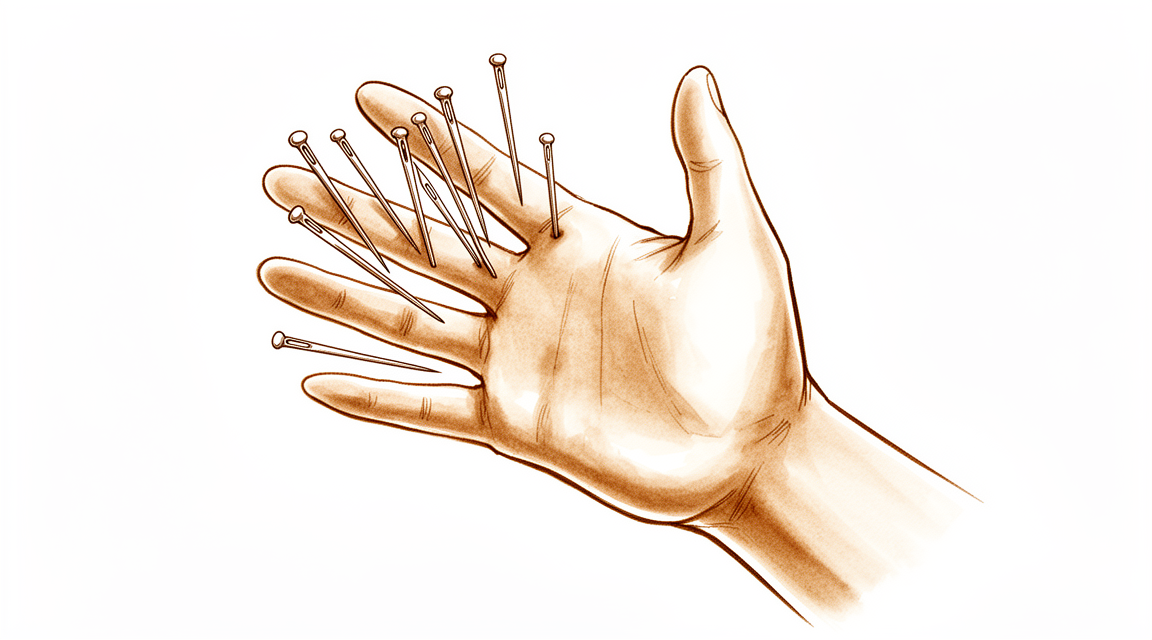
Hand numbness, tingling, or weakness – understanding carpal tunnel, cubital tunnel, and other compression neuropathies.
What you're feeling
You may notice pain, tingling, or numbness in your hand or arm. These symptoms often follow a "double-crush" pattern, meaning a problem in one nerve can make another nerve more sensitive to compression. For example, issues with the ulnar nerve (the nerve on the pinky side of your arm) can increase your risk of developing carpal tunnel syndrome (compression of the median nerve in the wrist). You might feel symptoms in multiple areas because systemic factors, like overall health or inflammation, contribute to how these nerves react.
The location of your discomfort depends on which nerve is pinched. If the ulnar nerve is compressed in the elbow or wrist, you might feel pain or weakness in your ring and little fingers. In the wrist, this is called ulnar tunnel syndrome. Cysts, known as ganglia, are the most common cause of this specific compression. If the median nerve is affected in the wrist, you may experience classic carpal tunnel symptoms. Rarely, conditions like pseudogout (crystal buildup in joints) or tumors can cause sudden, acute nerve compression.
Your symptoms often worsen with activity. Intracarpal tunnel pressures rise significantly when you actively use your hand, which can aggravate carpal tunnel syndrome. You might find that reaching behind your back to fasten a bra, tucking in a shirt, or lifting objects becomes difficult. Nighttime flares are common, as sleeping on your side can increase pressure on the nerves. Because proximal compression sites are often overlooked, you might feel pain in the forearm or hand even if the pinch is higher up in the arm. Your surgeon will evaluate these patterns to determine if the issue is mechanical, systemic, or a combination of both.
What's actually happening
Your nerves are like electrical cables that send signals from your brain to your hands and fingers. When these nerves get squeezed or compressed, the signals get blocked or distorted. This is what causes the pain, tingling, or weakness you feel. In your upper arm and hand, this squeezing often happens because of a "double-crush" mechanism. This means a nerve might be irritated in one spot, making it more sensitive to pressure in another spot nearby.
Several things can cause this squeezing. Sometimes, it is just the way you use your hands. For example, the pressure inside the carpal tunnel in your wrist goes up significantly when you actively use your hand. This increased pressure can pinch the median nerve. Other times, a physical blockage is to blame. A small fatty lump, called a perineural lipoma, can grow around the ulnar nerve in your elbow. Or, if you have had a broken wrist bone before, sharp bone fragments or even surgical hardware can press directly on the nerve.
Your body’s overall health also plays a big role. Systemic factors, like diabetes or inflammation, can make your nerves more vulnerable to compression. Interestingly, problems with one nerve can lead to issues with another. For instance, if your ulnar nerve is already irritated, you might be more likely to develop carpal tunnel syndrome later. This is because the way your hand moves and controls itself can change when one nerve is not working right.
Sometimes, the problem starts with how your muscles control your hand. After a wrist injury, you might lose some sensorimotor control, which changes how pressure is distributed across your nerves. In rare cases, conditions like tuberous sclerosis can cause tumors that press on nerves, even in children. Your surgeon looks at all these pieces—your anatomy, your history, and your symptoms—to understand exactly where and why the compression is happening. This helps in choosing the right treatment to relieve the pressure and restore normal function.
What we can do about it
Conservative treatment benefits the majority of patients with cubital tunnel syndrome who present with mild or moderate symptoms. Your surgeon will likely start here. This approach focuses on reducing pressure on the nerve. You may be advised to adjust your daily habits. For example, avoiding prolonged bending of the elbow can help. Physiotherapy aims to keep the joint mobile and strengthen surrounding muscles. This support helps protect the nerve from further irritation. Give this non-surgical plan enough time to work. Most people see improvement without needing an operation.
If simple measures are not enough, your surgeon may discuss medical management. This often includes pain medication or anti-inflammatories to calm the swelling. In some cases, injections are used to deliver medicine directly to the area. Cortisone injections reduce inflammation and pain. Hyaluronic acid injections can lubricate the joint space. Platelet-rich plasma (PRP) injections use your own blood components to promote healing. These treatments target the source of the irritation. The effect of these injections varies. Some provide relief for weeks, while others may last for months. Your surgeon will help you decide if this step is right for you based on your specific symptoms.
Surgery is considered when conservative care has reached its limit. This is typically when pain persists or nerve function worsens despite other treatments. The surgical option involves decompression. This means your surgeon releases the tight structures pressing on the nerve. This creates more space for the nerve to heal. In some cases, such as when a tumor is present, debulking the mass along with the decompression provides relief. Minimally invasive techniques may be used to make smaller incisions. These approaches aim to minimize blood loss and recovery time. Your surgeon will explain the specific procedure if it becomes necessary. The goal is to stop the compression and restore normal nerve function.
What to expect
Your outlook depends largely on how quickly the nerve pressure is relieved. When diagnosed early and treated carefully, most patients experience good functional recovery. You can expect your symptoms to settle as the nerve heals. For many, this means a return to normal hand and arm function. However, if symptoms have been present for a long time, complete recovery may not happen. Nerve signals take time to restore, and prolonged compression can cause lasting changes.
Treatment decisions vary based on the specific nerve involved. For common issues like carpal tunnel syndrome, surgery often provides lasting relief. This benefit holds true even if you have diabetes. Your long-term improvement will likely be similar to that of patients without diabetes. In more complex cases, such as severe ulnar nerve entrapment at the elbow, minimally invasive techniques are safe and effective. These approaches aim to free the nerve with minimal disruption to surrounding tissue. You may notice sustained improvements in both strength and sensation over time.
It is important to understand that management is not always straightforward. Complications can occur, including injury to nearby structures, treatment failure, or the development of chronic pain syndromes. These risks are minimized when your surgeon has a deep understanding of your unique anatomy. In some cases, the initial treatment may not fully resolve the issue. Recurrent or persistent compression can be challenging to manage. If symptoms return, your surgeon may discuss additional options, such as using a collagen wrap to protect the nerve or transferring another nerve to restore function.
If left untreated, compression neuropathies often persist or worsen. The pressure on the nerve does not typically resolve on its own. In some instances, one compressed nerve can make you more susceptible to compression in another area. For example, ulnar nerve issues can sometimes precede median nerve problems. Therefore, timely evaluation is key. While most publications on rare upper extremity conditions are based on smaller studies, the general principle remains: early and accurate decompression offers the best chance for a full return to your daily activities.
When to see someone
See your GP if you have persistent pain that does not improve with rest. Ask for a specialist review if you notice weakness or instability in your hand. Seek care if your symptoms interfere with sleep or work. Sudden worsening of symptoms also requires attention. Compression neuropathies can involve a double-crush mechanism, where one nerve issue increases susceptibility to another. Systemic factors may also contribute to these conditions. For example, ulnar nerve problems can precede median nerve compression. Be aware that concurrent issues in the wrist and forearm are often overlooked. Early evaluation helps prevent complications like pathologic pain syndromes or treatment failure. Your surgeon relies on understanding normal anatomy to manage these complex cases safely.
Evidence & references
title: "Compression Neuropathies" slug: compression-neuropathies region: hand audience: patient mesh_terms: ["Hand Strength", "Carpal Tunnel Syndrome", "Decompression, Surgical", "Peripheral Nervous System Diseases", "Nerve Compression Syndromes", "Ulnar Nerve", "Cubital Tunnel Syndrome", "Electromyography"] article_count: 89 model_used: Qwen3.6-35B-A3B-Q8_0.gguf generated_at: '2026-06-13T10:03:55+00:00' key_articles: - title: "Complications of Compressive Neuropathy" ref_num: 2 evidence_tier: paper evidence_level: 5 doi: 10.1016/j.hcl.2015.01.012 year: 2015 - title: "Future Considerations in the Diagnosis and Treatment of Compressive Neuropathies of the Upper Extremity" ref_num: 3 evidence_tier: paper evidence_level: 5 doi: 10.1016/j.jhsg.2022.10.009 year: 2023 - title: "Uncommon Upper Extremity Compression Neuropathies" ref_num: 4 evidence_tier: paper evidence_level: 4 doi: 10.1016/j.hcl.2013.04.014 year: 2013 - title: "Collagenoma in a Child With Tuberous Sclerosis Complex Causing Carpal Tunnel Syndrome and Thumb Overgrowth: Case Report" ref_num: 5 evidence_tier: case_report evidence_level: 4 doi: 10.1016/j.jhsa.2013.07.004 year: 2013 - title: "Severe ulnar nerve entrapment at the elbow: functional outcome after minimally invasive in situ decompression" ref_num: 6 evidence_tier: paper evidence_level: 3 doi: 10.1177/1753193411416426 year: 2012 - title: "Pseudogout: A Rare Cause of Acute Carpal Tunnel Syndrome and Acute Guyon Canal Syndrome" ref_num: 7 evidence_tier: paper evidence_level: 4 doi: 10.1016/j.jhsg.2022.07.010 year: 2022 - title: "Incidence of Carpal Tunnel Syndrome After the Diagnosis of Ulnar Neuropathy" ref_num: 8 evidence_tier: paper evidence_level: 2 doi: 10.1016/j.jhsg.2026.100970 year: 2026 - title: "Revision Decompression and Collagen Nerve Wrap for Recurrent and Persistent Compression Neuropathies of the Upper Extremity" ref_num: 9 evidence_tier: paper evidence_level: 4 doi: 10.1097/sap.0b013e3182956475 year: 2014 - title: "Sonographic Follow-Up of Patients With Carpal Tunnel Syndrome Undergoing Surgical or Nonsurgical Treatment: Prospective Cohort Study" ref_num: 10 evidence_tier: paper evidence_level: 3 doi: 10.1016/j.jhsa.2010.06.010 year: 2010 - title: "Concurrent carpal tunnel syndrome and pronator syndrome: A retrospective study of 21 cases" ref_num: 11 evidence_tier: paper evidence_level: 4 doi: 10.1016/j.otsr.2016.10.009 year: 2017 - title: "Ulnar Tunnel Syndrome" ref_num: 12 evidence_tier: paper evidence_level: 5 doi: 10.1016/j.hcl.2007.06.006 year: 2007 - title: "Multifocal Neuropathy: Expanding the Scope of Double Crush Syndrome" ref_num: 13 evidence_tier: paper evidence_level: 5 doi: 10.1016/j.jhsa.2016.09.009 year: 2016 - title: "Anterior interosseous nerve transfer combined with cubital and ulnar tunnel release for severe ulnar nerve compression" ref_num: 14 evidence_tier: paper evidence_level: 4 doi: 10.1177/17531934251381023 year: 2025 - title: "Minimally Invasive Endoscopic Decompression for Anterior Interosseous Nerve Syndrome: Technical Notes" ref_num: 15 evidence_tier: paper evidence_level: 4 doi: 10.1016/j.jhsa.2013.07.026 year: 2013 - title: "Unusual Compression Neuropathies of the Forearm, Part I: Radial Nerve" ref_num: 16 evidence_tier: paper evidence_level: 5 doi: 10.1016/j.jhsa.2009.10.016 year: 2009 - title: "Endoscopic Detection of Compressing Fascial Bands around the Ulnar Nerve within the FCU" ref_num: 17 evidence_tier: paper evidence_level: 4 doi: 10.1007/s11552-011-9377-x year: 2011 - title: "A rare case of a punched nerve syndrome of the deep motor branch of the ulnar nerve" ref_num: 18 evidence_tier: paper evidence_level: 4 doi: 10.1007/s00402-015-2216-8 year: 2015 - title: "Sonographic Follow-Up of Patients With Cubital Tunnel Syndrome Undergoing in Situ Open Neurolysis or Endoscopic Release: The SPECTRE Study" ref_num: 19 evidence_tier: paper evidence_level: 3 doi: 10.1177/1558944719857816 year: 2019 - title: "Ulnar Nerve Compression in the Cubital Tunnel by an Epineural Ganglion: A Case Report" ref_num: 20 evidence_tier: case_report evidence_level: 4 doi: 10.1007/s11552-006-9013-3 year: 2007 - title: "Dynamics of Intracarpal Tunnel Pressure in Patients With Carpal Tunnel Syndrome" ref_num: 21 evidence_tier: paper evidence_level: 4 doi: 10.1016/j.jhsa.2009.09.019 year: 2010 - title: "Conservative Treatment of the Cubital Tunnel Syndrome" ref_num: 22 evidence_tier: paper evidence_level: 2 doi: 10.1177/1753193408098480 year: 2009 - title: "The Efficacy of In-Situ Cubital Tunnel Release in Management of Elbow Ulnar Compression Neuropathy in McGowen Grade 3" ref_num: 23 evidence_tier: paper evidence_level: 4 doi: 10.1016/j.jhsa.2015.06.068 year: 2015 - title: "Carpal Tunnel Release in Patients With Diabetes: A 5-Year Follow-Up With Matched Controls" ref_num: 24 evidence_tier: paper evidence_level: 2 doi: 10.1016/j.jhsa.2014.01.012 year: 2014 - title: "Perineural Lipoma of the Ulnar Nerve Within the Cubital Tunnel: A Brief Review of the Literature" ref_num: 25 evidence_tier: paper evidence_level: 4 doi: 10.1016/j.jhsg.2025.100889 year: 2026 - title: "Rehabilitation strategies for wrist sensorimotor control impairment: From theory to practice" ref_num: 27 evidence_tier: paper evidence_level: 5 doi: 10.1016/j.jht.2015.12.003 year: 2016 - title: "Nerve Injuries Following Elbow Arthroscopy" ref_num: 29 evidence_tier: paper evidence_level: 4 doi: 10.1016/j.jhsa.2013.08.025 year: 2013 - title: "Re: Bourke G, Wade R, van Alfen N. Updates in diagnostic tools for diagnosing nerve injuries and compressions. J Hand Surg Eur. 2024, 49: 668–80" ref_num: 33 evidence_tier: paper evidence_level: 5 doi: 10.1177/17531934241288802 year: 2024 - title: "Carpal Tunnel Syndrome After Distal Radius Fracture" ref_num: 34 evidence_tier: paper doi: 10.1016/j.ocl.2012.07.021 year: 2012 - title: "Focal Hand Dystonia in a Patient with Ulnar Nerve Neuropathy at the Elbow" ref_num: 41 evidence_tier: paper evidence_level: 4 doi: 10.1007/s11552-010-9280-x year: 2010 synthesis_version: "v2" verifier_status: skipped
Overview
- Compression neuropathies of the upper extremity involve pathophysiology, clinical evaluation, and management considerations including the double-crush mechanism and systemic factors [1].
- Validated patient-reported outcome measures are useful in the evaluation and management of upper extremity compression neuropathies [1].
- Complications of compressive neuropathy management include iatrogenic injury, treatment failure, and pathologic pain syndromes [2].
- Prevention of complications in compressive neuropathy management relies on a solid understanding of normal anatomy and anatomic variations [2].
- Diagnosis and treatment of compressive neuropathies are evolving with technology, specifically shifting towards preoperative imaging with ultrasound and MRN [3].
- Management of failed decompressions for compressive neuropathies remains challenging [3].
- Most publications on uncommon upper extremity compression syndromes (radial, ulnar, and median nerves) are small retrospective series or case reports [4].
- Treatment decisions for uncommon upper extremity compression syndromes are not typically based on high levels of evidence [4].
- Debulking of a tumor along with median nerve decompression relieved neurological symptoms in a child with tuberous sclerosis complex causing carpal tunnel syndrome [5].
- Minimally invasive in situ decompression is technically simple, safe, and provides good results for severe ulnar nerve entrapment at the elbow [6].
- Ulnar nerve pathology may precede and increase susceptibility to median nerve compression, as indicated by the incidence of carpal tunnel syndrome after ulnar neuropathy diagnosis [8].
- Use of a collagen matrix wrap in recurrent compression neuropathies of the upper extremity has shown good success [9].
- Surgical decompression for carpal tunnel syndrome is associated with a greater decrease in median nerve cross-sectional area than nonsurgical treatment [10].
- Anterior interosseous nerve transfer combined with cubital and ulnar tunnel release results in sustained clinical and electrophysiological improvements in severe chronic ulnar nerve compression [14].
- Anterior interosseous nerve transfer combined with cubital and ulnar tunnel release is encouraged as a standard treatment for severe chronic ulnar nerve compression [14].
- Endoscopic decompression for anterior interosseous nerve syndrome can achieve the same proximal and distal extents of the nerve as open techniques [15].
- Endoscopic decompression for anterior interosseous nerve syndrome uses an incision nearly one fourth the size of open techniques, minimizing morbidity, blood loss, and recovery time [15].
- Extensive decompression of the ulnar nerve beyond the cubital tunnel is not routinely needed, supported by satisfactory outcomes with endoscopic detection of compressing fascial bands within the FCU [17].
Anatomy & Pathophysiology
- Compression neuropathies of the upper extremity involve a double-crush mechanism [1].
- Systemic factors play a role in the pathophysiology of compression neuropathies of the upper extremity [1].
- Intracarpal tunnel pressures during active hand use are substantially greater than previously reported in patients with carpal tunnel syndrome [21].
- Perineural lipoma of the ulnar nerve can occur within the cubital tunnel [25].
- Sensorimotor control impairment can occur after wrist trauma [27].
- Distal radius fracture management requires evaluation of all potential causes for early carpal tunnel syndrome findings, including prominent volar cortical fragments causing direct pressure or prominently placed hardware [34].
- Ulnar nerve entrapment neuropathy at the elbow is associated with non-task-specific focal hand dystonia [41].
Classification
- Compression neuropathies of the upper extremity involve a double-crush mechanism [1].
- Systemic factors contribute to the pathophysiology of compression neuropathies of the upper extremity [1].
- Compressive neuropathy management complications include iatrogenic injury, treatment failure, and pathologic pain syndromes [2].
- Prevention of compressive neuropathy complications relies on understanding normal anatomy and anatomic variations [2].
- Diagnosis and treatment of compressive neuropathies are shifting towards preoperative imaging with ultrasound and MRN [3].
- Management of failed decompressions for compressive neuropathies remains challenging [3].
- Most publications on uncommon upper extremity compression syndromes (radial, ulnar, median nerves) are small retrospective series or case reports [4].
- Treatment decisions for uncommon upper extremity compression syndromes are not typically based on high levels of evidence [4].
- Debulking of a tumor along with median nerve decompression relieved neurological symptoms in a child with tuberous sclerosis complex causing carpal tunnel syndrome and thumb overgrowth [5].
- Minimally invasive in situ decompression is technically simple, safe, and provides good results for severe ulnar nerve entrapment at the elbow [6].
- Pseudogout is a rare cause of acute carpal tunnel syndrome and acute Guyon canal syndrome [7].
- Ulnar nerve pathology may precede and increase susceptibility to median nerve compression [8].
- Surgical decompression for carpal tunnel syndrome is associated with a greater decrease in median nerve cross-sectional area than nonsurgical treatment [10].
- Concurrent carpal tunnel syndrome and pronator syndrome are rarely considered, and proximal compression sites are easily overlooked [11].
- Ganglia are the most common cause of ulnar tunnel syndrome [12].
- Symptoms of ulnar tunnel syndrome vary based on the anatomic location of the compression within Guyon's canal [12].
- The term double crush syndrome is proposed to be expanded to multifocal neuropathy to describe the complex interplay of mechanical, systemic, pharmacological, and environmental factors contributing to nerve dysfunction [13].
- Unusual compression neuropathies of the forearm include posterior interosseous nerve syndrome, radial tunnel syndrome, and superficial radial nerve compression (Wartenberg's syndrome) [16].
- In-situ release is an alternative for managing McGowen grade 3 ulnar nerve compression neuropathy at the elbow, with a similar success rate to submuscular and intramuscular transpositions but a lower complication rate [23].
Clinical Presentation
- Compression neuropathies of the upper extremity involve a double-crush mechanism [1].
- Systemic factors contribute to the pathophysiology of compression neuropathies of the upper extremity [1].
- Ulnar nerve pathology may precede and increase susceptibility to median nerve compression [8].
- Concurrent carpal tunnel syndrome and pronator syndrome are rarely considered, and proximal compression sites are easily overlooked [11].
- Intracarpal tunnel pressures during active hand use in patients with carpal tunnel syndrome are substantially greater than previously reported [21].
- Ganglia are the most common cause of ulnar tunnel syndrome [12].
- Symptoms of ulnar tunnel syndrome vary based on the anatomic location of the compression within Guyon's canal [12].
- Pseudogout is a rare cause of acute neuropathic compression of the hand, including acute carpal tunnel syndrome and acute Guyon canal syndrome [7].
- Collagenoma in a child with tuberous sclerosis complex can cause carpal tunnel syndrome and thumb overgrowth [5].
- Uncommon compression syndromes of the radial, ulnar, and median nerves exist, with most publications being small retrospective series or case reports [4].
- Unusual compression neuropathies of the forearm include posterior interosseous nerve syndrome, radial tunnel syndrome, and superficial radial nerve compression (Wartenberg's syndrome) [16].
- A punched nerve syndrome of the deep motor branch of the ulnar nerve is a rare presentation [18].
- Multifocal neuropathy describes the complex interplay of mechanical, systemic, pharmacological, and environmental factors contributing to nerve dysfunction [13].
Investigations
- Diagnosis and treatment of compressive neuropathies are shifting towards preoperative imaging with ultrasound and MRN [3].
- Most publications on uncommon upper extremity compression syndromes are small retrospective series or case reports, and treatment decisions are not typically based on high levels of evidence [4].
- Debulking of a tumor along with median nerve decompression relieved neurological symptoms in a child with tuberous sclerosis complex causing carpal tunnel syndrome [5].
- Pseudogout is a rare cause of acute neuropathic compression of the hand, including acute carpal tunnel syndrome and acute Guyon canal syndrome [7].
- Ulnar nerve pathology may precede and increase susceptibility to median nerve compression [8].
- Concurrent carpal tunnel syndrome and pronator syndrome are rarely considered, and proximal compression sites are easily overlooked [11].
- Ganglia are the most common cause of ulnar tunnel syndrome, and symptoms vary based on the anatomic location of the compression within Guyon's canal [12].
- Endoscopic decompression for anterior interosseous nerve syndrome can be achieved over the same proximal and distal extents of the nerve as open techniques but with an incision nearly one fourth the size, minimizing morbidity, blood loss, and recovery time [15].
- Unusual compression neuropathies of the forearm specifically include posterior interosseous nerve syndrome, radial tunnel syndrome, and superficial radial nerve compression (Wartenberg's syndrome) [16].
- High-resolution ultrasound (HRUS) is a viable method to demonstrate a punched nerve syndrome of the deep motor branch of the ulnar nerve [18].
- Ultrasound measurements have limited value in predicting clinical results of patients treated for entrapment neuropathy of the ulnar nerve [19].
- After surgery for perineural lipoma of the ulnar nerve within the cubital tunnel, shooting pain resolved, sensation normalized in digits four and five, and hand strength gradually improved [25].
- The diagnostic accuracy of nerve conduction studies for ulnar neuropathy at the elbow may be lower than 80%–90% and depends on the severity of the neuropathy [33].
- Short segment testing is suggested to improve the diagnostic accuracy of nerve conduction studies for ulnar neuropathy at the elbow [33].
Treatment
- Conservative treatment benefits the majority of patients with cubital tunnel syndrome who present with mild or moderate symptoms [22].
- Surgical decompression is associated with a greater decrease in median nerve cross-sectional area compared to nonsurgical treatment [10].
- Debulking of a tumor along with median nerve decompression provides relief of neurological symptoms in cases such as collagenoma causing carpal tunnel syndrome [5].
- Minimally invasive in situ decompression is technically simple, safe, and yields good results for severe ulnar nerve entrapment at the elbow [6].
- In-situ release is an alternative for managing McGowen grade 3 ulnar nerve compression neuropathy at the elbow, offering a similar success rate to submuscular and intramuscular transpositions with a lower complication rate [23].
- Anterior interosseous nerve transfer combined with cubital and ulnar tunnel release results in sustained clinical and electrophysiological improvements in patients with severe chronic ulnar nerve compression [14].
- Minimally invasive endoscopic decompression for anterior interosseous nerve syndrome achieves the same proximal and distal extents of the nerve as open techniques but with an incision nearly one-fourth the size, minimizing morbidity, blood loss, and recovery time [15].
- Extensive decompression of the ulnar nerve beyond the cubital tunnel is not routinely needed, as satisfactory outcomes are supported by endoscopic detection of compressing fascial bands within the flexor carpi ulnaris [17].
- A novel technique using a collagen matrix wrap in recurrent compression neuropathies has shown good success [9].
- Pseudogout should be considered a rare cause of acute neuropathic compression of the hand, including acute carpal tunnel syndrome and acute Guyon canal syndrome [7].
- Complications of compressive neuropathy management include iatrogenic injury, treatment failure, and pathologic pain syndromes, with prevention relying on a solid understanding of normal anatomy and anatomic variations [2].
- The management of failed decompressions remains challenging as diagnosis and treatment evolve with technology, shifting towards preoperative imaging with ultrasound and MRN [3].
Complications
- Complications of compressive neuropathy management include iatrogenic injury [2].
- Complications of compressive neuropathy management include treatment failure [2].
- Complications of compressive neuropathy management include pathologic pain syndromes [2].
- Prevention of complications relies on a solid understanding of normal anatomy and anatomic variations [2].
- Management of failed decompressions remains challenging [3].
- Nerve injuries following elbow arthroscopy are likely under-reported in the literature [29].
- The number of severe nerve injuries following elbow arthroscopy may be much higher than previously thought [29].
Recovery
- Minimally invasive in situ decompression for severe ulnar nerve entrapment at the elbow is technically simple, safe, and provides good functional outcomes [6].
- Endoscopic decompression of the anterior interosseous nerve achieves the same proximal and distal extents as open techniques but with an incision nearly one-fourth the size, minimizing morbidity, blood loss, and recovery time [15].
- Extensive decompression of the ulnar nerve beyond the cubital tunnel is not routinely needed, as satisfactory outcomes are supported by endoscopic detection of compressing fascial bands within the flexor carpi ulnaris [17].
- Revision decompression combined with a collagen nerve wrap demonstrates good success in managing recurrent and persistent compression neuropathies of the upper extremity [9].
- Anterior interosseous nerve transfer combined with cubital and ulnar tunnel release results in sustained clinical and electrophysiological improvements in patients with severe chronic ulnar nerve compression [14].
- Early diagnosis and careful excision of epineural ganglia causing ulnar nerve compression in the cubital tunnel are associated with satisfactory outcomes, although complete electrophysiological recovery may not occur if symptoms have been present for a prolonged period [20].
- Debulking of a tumor along with median nerve decompression provides relief of neurological symptoms in cases such as collagenoma-induced carpal tunnel syndrome [5].
- Long-term improvement following carpal tunnel release in patients with diabetes is maintained to the same extent as in patients without diabetes [24].
- Treatment decisions for uncommon upper extremity compression syndromes are not typically based on high levels of evidence, as most publications are small retrospective series or case reports [4].
- Management of failed decompressions remains challenging despite evolving diagnostic and treatment technologies such as preoperative ultrasound and MRN [3].
Key Evidence
- [L5] Complications of compressive neuropathy management include iatrogenic injury, treatment failure, and pathologic pain syndromes, with prevention relying on a solid understanding of normal anatomy and anatomic variations. (10.1016/j.hcl.2015.01.012)
- [L5] The diagnosis and treatment of compressive neuropathies continue to evolve with technology, shifting towards preoperative imaging with ultrasound and MRN, while the management of failed decompressions remains challenging. (10.1016/j.jhsg.2022.10.009)
- [L4] This article reviews uncommon compression syndromes of the radial, ulnar, and median nerves, noting that most publications are small retrospective series or case reports and treatment decisions are not typically based on high levels of evidence. (10.1016/j.hcl.2013.04.014)
- [Case_report] Debulking of the tumor along with median nerve decompression was performed with relief of neurological symptoms. (10.1016/j.jhsa.2013.07.004)
- [L3] Minimally invasive in situ decompression is technically simple, safe and gives good results in patients with severe nerve compression. (10.1177/1753193411416426)
- [L4] Pseudogout should be considered a rare cause of acute neuropathic compression of the hand. (10.1016/j.jhsg.2022.07.010)
- [L2] This supports the hypothesis that ulnar nerve pathology may precede and increase susceptibility to median nerve compression. (10.1016/j.jhsg.2026.100970)
- [L4] The authors report on the novel technique of using a collagen matrix wrap in recurrent compression neuropathies with good success. (10.1097/sap.0b013e3182956475)
- [L3] Surgical decompression was associated with a greater decrease in median nerve cross-sectional area than nonsurgical treatment. (10.1016/j.jhsa.2010.06.010)
- [L4] Concurrent carpal tunnel syndrome and pronator syndrome are rarely considered and proximal compression sites are easily overlooked. (10.1016/j.otsr.2016.10.009)
- [L5] The article provides a comprehensive review of the anatomy, pathophysiology, and causes of ulnar tunnel syndrome, noting that ganglia are the most common cause and that symptoms vary based on the anatomic location of the compression within Guyon's canal. (10.1016/j.hcl.2007.06.006)
- [L5] The authors propose expanding the term from double crush syndrome to multifocal neuropathy to better describe the complex interplay of mechanical, systemic, pharmacological, and environmental factors contributing to nerve dysfunction. (10.1016/j.jhsa.2016.09.009)
- [L4] Anterior interosseous nerve transfer, along with cubital and ulnar tunnel release, results in sustained clinical and electrophysiological improvements in patients with severe chronic ulnar nerve compression, which encourages its adoption as a standard treatment for severe chronic ulnar nerve compression. (10.1177/17531934251381023)
- [L4] Endoscopic decompression can be achieved over the same proximal and distal extents of the nerve as open techniques but with an incision nearly one fourth the size, minimizing morbidity, blood loss, and recovery time. (10.1016/j.jhsa.2013.07.026)
- [L5] This article is a review examining unusual compression neuropathies of the forearm, specifically focusing on the radial nerve, including posterior interosseous nerve syndrome, radial tunnel syndrome, and superficial radial nerve compression (Wartenberg's syndrome). (10.1016/j.jhsa.2009.10.016)
- [L4] The satisfactory outcomes support the perception that extensive decompression of the ulnar nerve beyond the cubital tunnel is not routinely needed. (10.1007/s11552-011-9377-x)
- [L4] HRUS is a viable method to demonstrate a punched nerve syndrome. (10.1007/s00402-015-2216-8)
- [L3] Ultrasound (US) measurements seem to have a limited value in clinical results of patients treated for entrapment neuropathy of the ulnar nerve. (10.1177/1558944719857816)
- [Case_report] Early diagnosis and careful excision of epineural ganglia are associated with satisfactory outcomes, although complete electrophysiological recovery may not occur if symptoms have been present for a prolonged period. (10.1007/s11552-006-9013-3)
- [L4] In patients with carpal tunnel syndrome, intracarpal tunnel pressures during active hand use are substantially greater than previously reported. (10.1016/j.jhsa.2009.09.019)
- [L2] The majority of patients suffering from cubital tunnel syndrome with mild or moderate symptoms benefit from conservative treatment. (10.1177/1753193408098480)
- [L4] Thus, in-situ release could be an alternative in management of patients with McGowen grade 3 ulnar nerve compression neuropathy at the elbow with a similar success rate as the submuscular and intramuscular transpositions with a lower complication rate. (10.1016/j.jhsa.2015.06.068)
- [L2] Long-term improvement in patients with diabetes remained after carpal tunnel release to the same extent as for patients without diabetes. (10.1016/j.jhsa.2014.01.012)
- [L4] After surgery, shooting pain resolved, sensation normalized in digits four and five, and hand strength gradually improved. (10.1016/j.jhsg.2025.100889)
- [L5] This clinical review discusses the organization, neuroanatomy, assessment, clinical relevance, and rehabilitation of sensorimotor control impairment after wrist trauma, proposing promising rehabilitation strategies that require more rigorous evaluation in clinical trials. (10.1016/j.jht.2015.12.003)
- [L4] Nerve injuries are likely under-reported in the literature, and this study indicates that the number of severe nerve injuries may be much higher than previously thought. (10.1016/j.jhsa.2013.08.025)
- [L5] The diagnostic accuracy of nerve conduction studies for ulnar neuropathy at the elbow may be lower than 80%–90% and depends on the severity of the neuropathy; short segment testing is suggested to improve accuracy. (10.1177/17531934241288802)
- [Paper] If early carpal tunnel syndrome findings are noted during distal radius fracture management, all potential causes should be evaluated, including prominent volar cortical fragments causing direct prominently placed hardware. (10.1016/j.ocl.2012.07.021)
- [L4] This case establishes a clear-cut relationship between ulnar nerve entrapment neuropathy at the elbow and non-task-specific focal hand dystonia, demonstrated by the dramatic recovery of clinical and electrophysiological parameters after surgical decompression. (10.1007/s11552-010-9280-x)
References
[1] Compression Neuropathies of the Upper Extremity. 2021. [2] Complications of Compressive Neuropathy. Hand Clinics. 2015. DOI: 10.1016/j.hcl.2015.01.012 [3] Future Considerations in the Diagnosis and Treatment of Compressive Neuropathies of the Upper Extremity. Journal of Hand Surgery Global Online. 2023. DOI: 10.1016/j.jhsg.2022.10.009 [4] Uncommon Upper Extremity Compression Neuropathies. Hand Clinics. 2013. DOI: 10.1016/j.hcl.2013.04.014 [5] Collagenoma in a Child With Tuberous Sclerosis Complex Causing Carpal Tunnel Syndrome and Thumb Overgrowth: Case Report. The Journal of Hand Surgery. 2013. DOI: 10.1016/j.jhsa.2013.07.004 [6] Severe ulnar nerve entrapment at the elbow: functional outcome after minimally invasive in situ decompression. Journal of Hand Surgery (European Volume). 2012. DOI: 10.1177/1753193411416426 [7] Pseudogout: A Rare Cause of Acute Carpal Tunnel Syndrome and Acute Guyon Canal Syndrome. Journal of Hand Surgery Global Online. 2022. DOI: 10.1016/j.jhsg.2022.07.010 [8] Incidence of Carpal Tunnel Syndrome After the Diagnosis of Ulnar Neuropathy. Journal of Hand Surgery Global Online. 2026. DOI: 10.1016/j.jhsg.2026.100970 [9] Revision Decompression and Collagen Nerve Wrap for Recurrent and Persistent Compression Neuropathies of the Upper Extremity. Annals of Plastic Surgery. 2014. DOI: 10.1097/sap.0b013e3182956475 [10] Sonographic Follow-Up of Patients With Carpal Tunnel Syndrome Undergoing Surgical or Nonsurgical Treatment: Prospective Cohort Study. The Journal of Hand Surgery. 2010. DOI: 10.1016/j.jhsa.2010.06.010 [11] Concurrent carpal tunnel syndrome and pronator syndrome: A retrospective study of 21 cases. Orthopaedics & Traumatology: Surgery & Research. 2017. DOI: 10.1016/j.otsr.2016.10.009 [12] Ulnar Tunnel Syndrome. Hand Clinics. 2007. DOI: 10.1016/j.hcl.2007.06.006 [13] Multifocal Neuropathy: Expanding the Scope of Double Crush Syndrome. The Journal of Hand Surgery. 2016. DOI: 10.1016/j.jhsa.2016.09.009 [14] Anterior interosseous nerve transfer combined with cubital and ulnar tunnel release for severe ulnar nerve compression. Journal of Hand Surgery (European Volume). 2025. DOI: 10.1177/17531934251381023 [15] Minimally Invasive Endoscopic Decompression for Anterior Interosseous Nerve Syndrome: Technical Notes. The Journal of Hand Surgery. 2013. DOI: 10.1016/j.jhsa.2013.07.026 [16] Unusual Compression Neuropathies of the Forearm, Part I: Radial Nerve. The Journal of Hand Surgery. 2009. DOI: 10.1016/j.jhsa.2009.10.016 [17] Endoscopic Detection of Compressing Fascial Bands around the Ulnar Nerve within the FCU. HAND. 2011. DOI: 10.1007/s11552-011-9377-x [18] A rare case of a punched nerve syndrome of the deep motor branch of the ulnar nerve. Archives of Orthopaedic and Trauma Surgery. 2015. DOI: 10.1007/s00402-015-2216-8 [19] Sonographic Follow-Up of Patients With Cubital Tunnel Syndrome Undergoing in Situ Open Neurolysis or Endoscopic Release: The SPECTRE Study. HAND. 2019. DOI: 10.1177/1558944719857816 [20] Ulnar Nerve Compression in the Cubital Tunnel by an Epineural Ganglion: A Case Report. HAND. 2007. DOI: 10.1007/s11552-006-9013-3 [21] Dynamics of Intracarpal Tunnel Pressure in Patients With Carpal Tunnel Syndrome. The Journal of Hand Surgery. 2010. DOI: 10.1016/j.jhsa.2009.09.019 [22] Conservative Treatment of the Cubital Tunnel Syndrome. Journal of Hand Surgery (European Volume). 2009. DOI: 10.1177/1753193408098480 [23] The Efficacy of In-Situ Cubital Tunnel Release in Management of Elbow Ulnar Compression Neuropathy in McGowen Grade 3. The Journal of Hand Surgery. 2015. DOI: 10.1016/j.jhsa.2015.06.068 [24] Carpal Tunnel Release in Patients With Diabetes: A 5-Year Follow-Up With Matched Controls. The Journal of Hand Surgery. 2014. DOI: 10.1016/j.jhsa.2014.01.012 [25] Perineural Lipoma of the Ulnar Nerve Within the Cubital Tunnel: A Brief Review of the Literature. Journal of Hand Surgery Global Online. 2026. DOI: 10.1016/j.jhsg.2025.100889 [27] Rehabilitation strategies for wrist sensorimotor control impairment: From theory to practice. Journal of Hand Therapy. 2016. DOI: 10.1016/j.jht.2015.12.003 [29] Nerve Injuries Following Elbow Arthroscopy. The Journal of Hand Surgery. 2013. DOI: 10.1016/j.jhsa.2013.08.025 [33] Re: Bourke G, Wade R, van Alfen N. Updates in diagnostic tools for diagnosing nerve injuries and compressions. J Hand Surg Eur. 2024, 49: 668–80. Journal of Hand Surgery (European Volume). 2024. DOI: 10.1177/17531934241288802 [34] Carpal Tunnel Syndrome After Distal Radius Fracture. Orthopedic Clinics of North America. 2012. DOI: 10.1016/j.ocl.2012.07.021 [41] Focal Hand Dystonia in a Patient with Ulnar Nerve Neuropathy at the Elbow. HAND. 2010. DOI: 10.1007/s11552-010-9280-x