Giant Cell Tumour of Tendon Sheath PDF Evidence
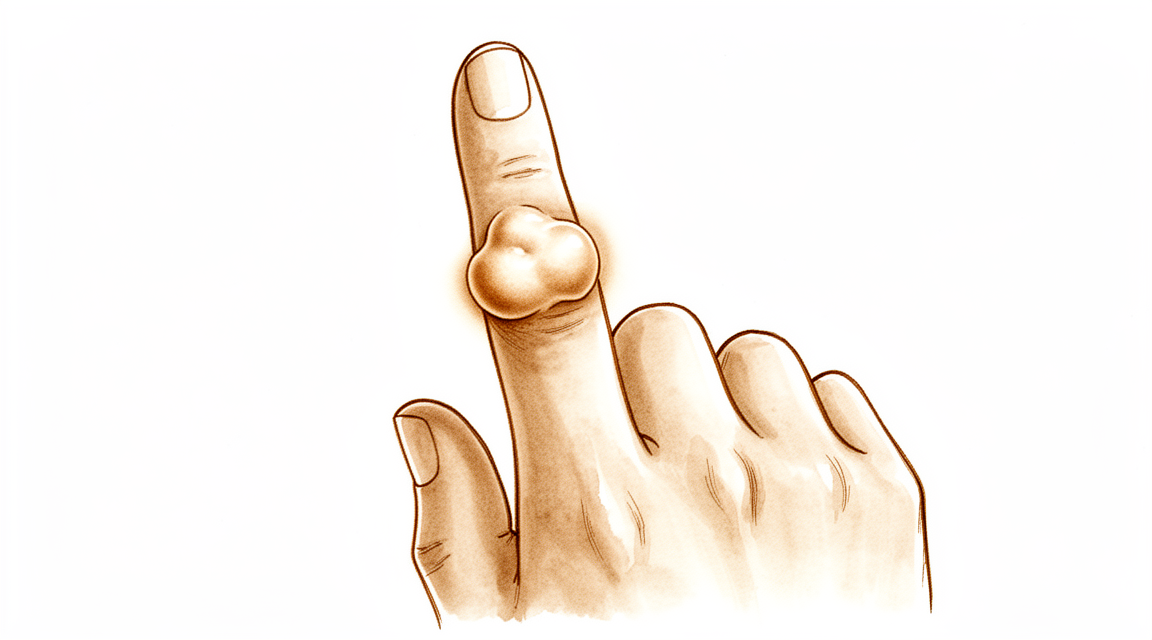
Giant cell tumour of tendon sheath — a benign, slow-growing lump on fingers/thumb, often treated with excision.
What you're feeling
You may notice a small lump on your hand. This is a common benign growth near the tendons. It is not cancer. You might feel a dull ache or tenderness where the lump sits. The pain often worsens when you use your hand. Simple tasks like lifting a coffee cup or typing can become uncomfortable.
The lump may make it hard to bend your fingers fully. You might feel a catching sensation when you move your hand. This can interfere with daily activities. Reaching behind your back to fasten a bra may feel stiff. Tucking in your shirt might be difficult if the lump is on the side of your hand. Some people report pain that wakes them up at night. Others feel soreness first thing in the morning.
It is important to know that this condition can come back after surgery. Local recurrence happens in some cases. Your surgeon will watch for signs of return carefully. Most recurrences appear within the first two years after your procedure. However, some patients remain at risk for a much longer time. Recurrences have been reported nineteen to thirty years after initial treatment.
Because this is a benign tumor, the goal is complete removal to prevent it from growing back. Your surgeon will discuss the best way to remove it. They will explain how to care for your hand after the operation. Following their advice helps reduce the chance of the lump returning. If you notice new swelling or pain, tell your surgeon right away. Early attention can prevent more complex treatment later.
What's actually happening
Giant cell tumour of tendon sheath is a common benign growth in your hand. "Benign" means it is not cancer and will not spread to other parts of your body. It forms in the soft tissue surrounding your tendons. Tendons are the strong rope-like fibers that connect your muscles to your bones, allowing you to move your fingers.
This growth develops slowly within the lining of the tendon sheath. The sheath is the protective sleeve that keeps your tendons lubricated and sliding smoothly. As the tumor expands, it pushes against nearby structures. This pressure can cause a visible lump under the skin. It may also limit your range of motion or cause mild discomfort as you use your hand.
While most cases stay local, this tumor can behave aggressively in some instances. "Aggressive" means it has a higher chance of coming back after surgery. If the growth invades nearby bone or tissue deeply, simple removal might not be enough. In rare, severe cases, preventing recurrence may require wider removal of tissue or, very rarely, amputation. This is why your surgeon looks closely at imaging to understand the full extent of the growth.
It is also important to distinguish this tumor from other hand lumps. For example, glomus tumors can look similar on scans. Imaging studies sometimes have little utility in telling these apart. This is why a precise diagnosis is critical before any treatment begins.
Although rare, these tumors can occur in children. They can also appear in specific bones of the hand, such as the proximal phalanx (the first bone segment of your finger) or the metacarpals (the long bones in your palm). In very unusual cases, similar tumors have been reported in other areas like the spine. However, for the vast majority of patients, this is a localized issue in the hand.
Your surgeon needs to be familiar with the full spectrum of hand tumors. This ensures they choose the right work-up and treatment. The goal is to remove the growth completely while preserving your hand function. Understanding what is happening helps you prepare for the next steps in your care.
What we can do about it
Giant cell tumour of tendon sheath is a common benign growth in the hand. While it is not cancer, it can return after removal. Your surgeon will likely recommend conservative care first. This approach focuses on monitoring the lump and keeping your hand moving. You may be advised to rest the area during flare-ups to reduce swelling. Gentle exercises can help maintain your range of motion and prevent stiffness.
Physiotherapy plays a key role in this phase. A therapist will guide you through specific movements to protect the joint while you heal. The goal is to preserve function without irritating the tumour. You should give this non-surgical approach a fair trial. Most patients see stability or slow growth with careful management. If the lump causes pain or limits your daily tasks, your surgeon will reassess the plan.
Medical management focuses on comfort rather than cure. There are no proven medications, such as anti-inflammatories or injections, that shrink this specific type of tumour. Your surgeon may suggest pain relief to help you manage discomfort during activities. These treatments do not stop the tumour from growing or returning. They simply help you feel better while you monitor the condition.
Surgery is considered when conservative care no longer meets your needs. This might happen if the lump grows, becomes painful, or restricts your hand movement. The operation aims to remove the tumour completely to prevent it from coming back. Because these tumours can recur, your surgeon will take care to remove all affected tissue. In some cases, where the tumour has spread into surrounding soft tissue, a wider removal may be necessary. This ensures the best chance for long-term control.
Your surgeon will tailor the treatment to your specific situation. They will consider the size and location of the tumour, as well as your overall health. Early treatment often leads to better outcomes and fewer complications. If surgery is recommended, it is typically performed to preserve your hand’s function. The procedure is designed to remove the growth while protecting your tendons and joints.
Follow-up visits are important to check for any signs of recurrence. Most returns happen within the first two years after treatment. However, some patients remain at risk for a much longer period. Recurrences have been reported up to thirty years after initial treatment. Regular check-ups allow your surgeon to catch any changes early. This vigilance helps ensure durable, joint-preserving function for years to come.
What to expect
Giant cell tumour of tendon sheath is a common, non-cancerous growth in the hand. It does not spread to other parts of the body. However, it can grow back after you have it removed. This is called local recurrence. Most people will have a good outcome with treatment. Your surgeon will aim to remove the entire tumour to lower this risk.
You should expect to be monitored closely after your procedure. Most recurrences happen within the first two years. This is why your surgeon will want to see you regularly during this time. You may feel some swelling or discomfort as you heal. This is normal. The goal is to keep your joint working well and prevent the tumour from coming back.
It is important to know that the risk does not disappear after two years. Some patients remain at risk for a much longer period. Recurrences have been reported nineteen to thirty years after initial treatment. This means you need to stay vigilant even many years later. If you notice any new lumps, swelling, or changes in your hand, tell your surgeon right away.
If this condition is left untreated, it may persist or grow. While it is benign, it can cause pain or limit your hand movement over time. Early treatment usually leads to better function and less damage to surrounding tissues. In rare cases where the tumour returns, further surgery may be needed. Even after previous surgery, repeat procedures can still be effective.
In very rare cases, this tumour is found in children. Most reports involve adults. If you are a parent of a child with a hand lump, know that this is uncommon but possible. Your surgeon will take extra care to plan treatment that supports your child’s growing bones and hands.
Overall, the outlook is positive for most patients. You can expect to return to your normal activities as you heal. Stay in touch with your care team. Regular check-ups are the best way to ensure long-term success and keep your hand healthy for years to come.
When to see someone
See your GP if you notice a lump on your hand that does not go away. Giant cell tumour of tendon sheath is a common benign growth. Ask for a specialist review if the swelling lasts a long time, even if you had an injury before. This could signal something more serious. Watch for pain that keeps you awake or stops you from working. Your surgeon may check for weakness or instability. If you have had surgery, be aware that the tumour can come back in the scar. Most recurrences happen within the first two years. However, some patients remain at risk for nineteen to thirty years after treatment. Do not ignore new or worsening symptoms.
Evidence & references
title: "Giant Cell Tumour of Tendon Sheath" slug: giant-cell-tumour-of-tendon-sheath region: hand audience: patient mesh_terms: ["Soft Tissue Neoplasms", "Neoplasm Recurrence, Local", "Giant Cell Tumor of Bone", "Giant Cell Tumor of Tendon Sheath", "Bone Neoplasms", "Diagnosis, Differential", "Immunohistochemistry", "Fingers"] article_count: 108 model_used: Qwen3.6-35B-A3B-Q8_0.gguf generated_at: '2026-06-13T10:22:53+00:00' key_articles: - title: "Benign Bony and Soft Tissue Tumors of the Hand" ref_num: 1 evidence_tier: paper evidence_level: 5 doi: 10.1016/j.jhsa.2010.08.015 year: 2010 - title: "Giant cell tumour of tendon sheath in a 4-year-old boy" ref_num: 2 evidence_tier: paper evidence_level: 4 doi: 10.1177/1753193412455792 year: 2012 - title: "Soft-Tissue Recurrence of Giant-Cell Tumor of Bone after Irridiation and Excision" ref_num: 3 evidence_tier: paper evidence_level: 4 doi: 10.2106/00004623-196749020-00016 year: 1967 - title: "Impact Severity of Local Recurrence in Giant Cell Tumor of Bone" ref_num: 4 evidence_tier: paper evidence_level: 3 doi: 10.1097/01.blo.0000180055.76969.08 year: 2005 - title: "Glomus Tumor of Digital Nerve: Case Report" ref_num: 5 evidence_tier: case_report evidence_level: 4 doi: 10.1016/j.jhsa.2012.02.035 year: 2012 - title: "Malignant Tumors of the Hand and Wrist" ref_num: 6 evidence_tier: paper evidence_level: 5 doi: 10.5435/00124635-200611000-00013 year: 2006 - title: "Giant Cell Tumor of Bone: Are We Stratifying Results Appropriately?" ref_num: 7 evidence_tier: paper evidence_level: 4 doi: 10.1007/s11999-011-2172-8 year: 2012 - title: "Giant cell tumour of hand bones: outcomes of treatment" ref_num: 8 evidence_tier: paper evidence_level: 4 doi: 10.1177/17531934211007820 year: 2021 - title: "Malignant and Metastatic Tumors of the Hand" ref_num: 9 evidence_tier: paper evidence_level: 5 doi: 10.1016/j.jhsa.2010.08.014 year: 2010 - title: "Phalangeal transfer for recurrent giant-cell tumor of the phalanx of a finger in a nine-year-old child. A case report with forty-one-year follow-up." ref_num: 10 evidence_tier: case_report evidence_level: 5 doi: 10.2106/00004623-199412000-00015 year: 1994 - title: "Is Intralesional Treatment of Giant Cell Tumor of the Distal Radius Comparable to Resection With Respect to Local Control and Functional Outcome?" ref_num: 11 evidence_tier: paper evidence_level: 3 doi: 10.1007/s11999-014-4054-3 year: 2015 - title: "Late recurrence of giant-cell tumor of bone. A report of four cases." ref_num: 12 evidence_tier: paper evidence_level: 4 doi: 10.2106/00004623-199408000-00013 year: 1994 - title: "Dilemmas in Distinguishing Between Tumor and the Posttraumatic Lesion with Surgical or Pathologic Correlation" ref_num: 13 evidence_tier: paper evidence_level: 5 doi: 10.1016/j.csm.2013.03.008 year: 2013 - title: "Superficial Angiomyxoma of the Thumb Mimicking a Malignant Bone Tumor: Case Report" ref_num: 14 evidence_tier: case_report evidence_level: 4 doi: 10.1016/j.jhsa.2014.01.004 year: 2014 - title: "Spread of Squamous Cell Carcinoma From the Thumb to the Small Finger via the Flexor Tendon Sheaths" ref_num: 15 evidence_tier: paper evidence_level: 5 doi: 10.1016/j.jhsa.2009.06.012 year: 2009 - title: "A High-grade Sarcoma Arising in a Patient With Recurrent Benign Giant Cell Tumor of the Proximal Tibia While Receiving Treatment With Denosumab" ref_num: 16 evidence_tier: paper evidence_level: 4 doi: 10.1007/s11999-015-4249-2 year: 2015 - title: "CORR Insights®: Is Treatment with Denosumab Associated with Local Recurrence in Patients with Giant Cell Tumor of Bone Treated with Curettage? A Systematic Review" ref_num: 17 evidence_tier: paper evidence_level: 5 doi: 10.1097/corr.0000000000001217 year: 2020 - title: "Recurrence of giant-cell tumors of the long bones after curettage and packing with cement." ref_num: 18 evidence_tier: paper evidence_level: 3 doi: 10.2106/00004623-199412000-00009 year: 1994 - title: "Aneurysmal bone cyst and giant cell tumor of bone of the hand and distal radius" ref_num: 19 evidence_tier: paper evidence_level: 4 doi: 10.1016/j.hcl.2004.03.016 year: 2004 - title: "Oncologic Conditions That Simulate Common Sports Injuries" ref_num: 20 evidence_tier: paper evidence_level: 5 doi: 10.5435/jaaos-22-04-223 year: 2014 - title: "Megavoltage Radiation Therapy for Axial and Inoperable Giant-Cell Tumor of Bone*" ref_num: 21 evidence_tier: paper evidence_level: 4 doi: 10.2106/00004623-199911000-00008 year: 1999 - title: "Giant cells tumor recurrence at the third lumbar vertebra" ref_num: 22 evidence_tier: paper evidence_level: 5 doi: 10.1016/j.otsr.2010.05.009 year: 2010 - title: "Resection of a giant cell tumour of the proximal phalanx and reconstruction by iliac crest graft" ref_num: 23 evidence_tier: paper evidence_level: 4 doi: 10.1177/1753193408097859 year: 2009 - title: "Radiation Therapy for Giant Cell Tumors of Bone" ref_num: 27 evidence_tier: paper evidence_level: 4 doi: 10.1097/01.blo.0000069890.31220.b4 year: 2003 - title: "Giant Cell Tumor of Bone" ref_num: 29 evidence_tier: paper evidence_level: 5 doi: 10.5435/jaaos-21-02-118 year: 2013 - title: "Autogenous non-vascularized fibula for treatment of giant cell tumor of distal end radius" ref_num: 31 evidence_tier: paper evidence_level: 4 doi: 10.1007/s00402-010-1059-6 year: 2010 - title: "Skeletal Metastasis in Tricholemmal Carcinoma" ref_num: 32 evidence_tier: paper evidence_level: 4 doi: 10.1097/01.blo.0000129555.37075.74 year: 2004 - title: "Giant Cell Tumor of Bone: Risk Factors for Recurrence" ref_num: 33 evidence_tier: paper evidence_level: 3 doi: 10.1007/s11999-010-1501-7 year: 2011 - title: "Parosteal Osteosarcoma of the Proximal Phalanx of a Finger" ref_num: 36 evidence_tier: paper evidence_level: 4 doi: 10.1016/j.jhsa.2019.08.006 year: 2020 - title: "Multicentric Giant Cell Tumor of Bone: A Case Report and Review of the Literature" ref_num: 38 evidence_tier: paper evidence_level: 4 doi: 10.1097/01.blo.0000063784.32430.b0 year: 2003 - title: "Fibroma of tendon sheath of the hand in a 3-year-old boy: a case report" ref_num: 39 evidence_tier: case_report evidence_level: 4 doi: 10.1186/s12891-020-03728-x year: 2020 - title: "Vascularised Joint Transfer in the Management of Recurrent Giant Cell Tumour of the Second Metacarpal" ref_num: 42 evidence_tier: paper evidence_level: 4 doi: 10.1177/1753193408089048 year: 2008 - title: "Florid Reactive Periostitis of the Metacarpal and Phalanx: 2 Case Reports" ref_num: 45 evidence_tier: paper evidence_level: 4 doi: 10.1016/j.jhsa.2013.08.115 year: 2013 synthesis_version: "v2" verifier_status: skipped
Overview
- Giant cell tumour of tendon sheath is a common benign tumour of the hand [2].
- Reports of giant cell tumour of tendon sheath in the paediatric population are rare [2].
- Giant cell tumour of tendon sheath can be locally recurrent after excision [2].
- Imaging studies can be of little utility in distinguishing glomus tumors from other lesions like giant cell tumor of the tendon sheath [5].
- Vigilance for malignancy is encouraged for lesions such as giant cell tumors, as aggressive treatment such as wide excision or amputation may be necessary to prevent recurrence [1].
- Orthopaedic surgeons should be familiar with the spectrum of hand and wrist tumors, the work-up necessary to arrive at a precise diagnosis, and the treatment that will achieve the most favorable outcome [6].
Anatomy & Pathophysiology
- Giant cell tumors are classified as benign bony and soft tissue tumors of the hand [1].
- Giant cell tumors can exhibit aggressive behavior requiring wide excision or amputation to prevent recurrence [1].
- Giant cell tumors can recur at the third lumbar vertebra [22].
- If the vertebral body and posterior arch are affected in giant cell tumors, curettage is insufficient to prevent recurrence [22].
- Giant cell tumors can occur in the proximal phalanx [23].
- Giant cell tumors can recur in the second metacarpal [42].
- Primary parosteal osteosarcoma of the finger is a rare tumor with characteristic radiographic and microscopic appearance [36].
- Fibroma of tendon sheath (FTS) is an extremely rare condition in the hand of a 3-year-old child [39].
- Florid reactive periostitis presents as soft tissue swelling adjacent to hand bones with pseudomalignant or pseudoinflammatory features [45].
Classification
- Giant cell tumour of tendon sheath is a common benign tumour of the hand [2].
- Giant cell tumour of tendon sheath can be locally recurrent after excision [2].
- Reports of giant cell tumour of tendon sheath in the paediatric population are rare [2].
- Imaging studies can be of little utility in distinguishing glomus tumors from other lesions like giant cell tumor of the tendon sheath [5].
Clinical Presentation
- Giant cell tumour of tendon sheath is a common benign tumour of the hand [2].
- Reports of giant cell tumour of tendon sheath in the paediatric population are rare [2].
- Giant cell tumour of tendon sheath can be locally recurrent after excision [2].
- Imaging studies can be of little utility in distinguishing glomus tumors from other lesions like giant cell tumor of the tendon sheath [5].
- Prolonged and atypical swelling of soft tissue, even with a previous traumatic lesion, may indicate underlying malignancy, necessitating proper imaging before surgery [13].
- Primary bone and soft-tissue tumors that mimic common sports injuries are relatively rare but can be easily missed, leading to limb- and life-threatening consequences [20].
- Vigilance for malignancy is encouraged for lesions like giant cell tumors to prevent recurrence [1].
- Orthopaedic surgeons should be familiar with the spectrum of hand and wrist tumors, the work-up necessary to arrive at a precise diagnosis, and the treatment that will achieve the most favorable outcome [6].
- Soft tissue sarcomas of the hand may have better survival than those at other sites, but prognosis must be interpreted with caution due to the rarity of the condition [9].
- An unusual pathway for spread of squamous cell carcinoma from the thumb to the small finger is via the flexor tendon sheaths, which should be considered in the evaluation of patients with hand tumors [15].
- Local recurrence is seen in ≤20% of cases of giant cell tumor of bone [29].
- A second local intralesional procedure is typically sufficient in cases of giant cell tumor of bone detected early [29].
- Most recurrences of giant-cell tumor of bone can be expected within the first two years [12].
- Some patients with giant-cell tumor of bone remain at risk for recurrence for a much longer period, with recurrences occurring nineteen to thirty years after initial treatment [12].
- Two cases of soft-tissue recurrence of giant-cell tumor within a surgical scar indicate that tumor cells may be implanted in a surgical wound [3].
- There are subsets of patients with giant cell tumor of bone who are at higher risk of recurrence and should be clinically followed more closely [7].
- Malignant transformation of a giant cell tumor of bone while receiving denosumab treatment is a rare but important possibility [16].
Investigations
- Imaging studies have limited utility in distinguishing glomus tumors from other lesions such as giant cell tumor of the tendon sheath [5].
- Prolonged and atypical soft tissue swelling, even in the presence of a previous traumatic lesion, may indicate underlying malignancy and necessitates proper imaging before surgery [13].
- The use of CT and whole body bone scans may be beneficial when indicated, particularly after the occurrence of a second tumor focus [38].
Treatment
- Vigilance for malignancy is encouraged, and aggressive treatment such as wide excision or amputation may be necessary for certain lesions like giant cell tumors to prevent recurrence [1].
- Giant cell tumour of tendon sheath is a common benign tumour of the hand that can be locally recurrent after excision [2].
- Two cases of soft-tissue recurrence of giant-cell tumor within a surgical scar are reported, indicating that tumor cells may be implanted in a surgical wound [3].
- Despite its benign histology, giant cell tumor of bone is an aggressive tumor that demands meticulous attention to surgical detail and close postoperative surveillance for successful local tumor control and durable, joint-preserving function [4].
- Both curettage and resection/amputation are acceptable treatment options for the rare condition of giant cell tumour of bone in the hand, with a need to individualize treatment decisions based on the site and extent of disease to minimize treatment morbidity while maximizing disease control [8].
- The transplantation of a toe phalanx for a recurrent giant-cell tumor in a skeletally immature patient resulted in a satisfactory outcome with full hand function and no tumor recurrence forty-one years later [10].
- Intralesional excision remains a viable, and likely the standard, mode of treatment for most giant cell tumors of the distal radius unless there is extensive bone loss [11].
- Although most recurrences of giant-cell tumor of bone can be expected within the first two years, some patients remain at risk for a much longer period, with recurrences occurring nineteen to thirty years after initial treatment [12].
- Wide excision should be considered in the presence of extensive soft tissue involvement, and early treatment yields good results [14].
- The available studies suffer from selection bias and are inadequate to answer questions regarding the appropriate use, duration, and efficacy of denosumab in giant cell tumors of bone definitively [17].
- The effectiveness of treatment of a recurrence with either an intralesional or a wide excisional procedure does not appear to be diminished by initial curettage and cementing [18].
- Treatment is directed at controlling the lesion locally, with curettage and adjuvant therapy being the primary goal for most lesions to preserve the articular surface [19].
- Giant-cell tumor of bone was effectively treated with megavoltage radiation in patients in whom operative resection would have been difficult or was not feasible, with a ten-year lack of progression rate of 85 percent [21].
- Radiation therapy is a safe and effective treatment option for benign giant cell tumors of bone [27].
- Reconstruction after wide excision by nonvascularized fibular graft is a viable alternative for giant cell tumors of the lower end of radius though it is a challenging procedure and may be accompanied by major complications [31].
- This tumor should be treated with conservative but thorough excision [32].
- The authors recommend intralesional surgery with polymethylmethacrylate for the majority of primary GCTs [33].
Complications
- Giant cell tumour of tendon sheath is a common benign tumour of the hand that can be locally recurrent after excision [2].
- Reports of giant cell tumour of tendon sheath in the paediatric population are rare [2].
- Soft-tissue recurrence of giant-cell tumor within a surgical scar indicates that tumor cells may be implanted in a surgical wound [3].
- Giant cell tumor of bone is an aggressive tumor that demands meticulous attention to surgical detail and close postoperative surveillance for successful local tumor control and durable, joint-preserving function [4].
- There are subsets of patients with giant cell tumor of bone who are at higher risk of recurrence and should be clinically followed more closely [7].
- Both curettage and resection/amputation are acceptable treatment options for giant cell tumour of bone in the hand, with treatment decisions needing to be individualized based on the site and extent of disease to minimize treatment morbidity while maximizing disease control [8].
- The transplantation of a toe phalanx for a recurrent giant-cell tumor in a skeletally immature patient resulted in a satisfactory outcome with full hand function and no tumor recurrence forty-one years later [10].
- Although most recurrences of giant-cell tumor of bone can be expected within the first two years, some patients remain at risk for a much longer period, with recurrences occurring nineteen to thirty years after initial treatment [12].
- Prolonged and atypical swelling of soft tissue, even with a previous traumatic lesion, may indicate underlying malignancy, necessitating proper imaging before surgery [13].
- The available studies regarding treatment with denosumab suffer from selection bias and are inadequate to answer questions regarding the appropriate use, duration, and efficacy of denosumab in giant cell tumors of bone definitively [17].
Recovery
- Giant cell tumour of tendon sheath is a common benign tumour of the hand that can be locally recurrent after excision [2].
- Reports of giant cell tumour of tendon sheath in the paediatric population are rare [2].
- Two cases of soft-tissue recurrence of giant-cell tumor within a surgical scar indicate that tumor cells may be implanted in a surgical wound [3].
- Despite its benign histology, giant cell tumor of bone is an aggressive tumor that demands meticulous attention to surgical detail and close postoperative surveillance for successful local tumor control and durable, joint-preserving function [4].
- There are subsets of patients with giant cell tumor of bone who are at higher risk of recurrence and should be clinically followed more closely [7].
- Although most recurrences of giant-cell tumor of bone can be expected within the first two years, some patients remain at risk for a much longer period, with recurrences occurring nineteen to thirty years after initial treatment [12].
- The transplantation of a toe phalanx for a recurrent giant-cell tumor in a skeletally immature patient resulted in a satisfactory outcome with full hand function and no tumor recurrence forty-one years later [10].
- The effectiveness of treatment of a recurrence with either an intralesional or a wide excisional procedure does not appear to be diminished by initial curettage and cementing [18].
Key Evidence
- [L5] Vigilance for malignancy is encouraged, and aggressive treatment such as wide excision or amputation may be necessary for certain lesions like giant cell tumors to prevent recurrence. (10.1016/j.jhsa.2010.08.015)
- [L4] Giant cell tumour of tendon sheath is a common benign tumour of the hand that can be locally recurrent after excision, and reports in the paediatric population are rare, with this case believed to be the youngest reported. (10.1177/1753193412455792)
- [L4] Two cases of soft-tissue recurrence of giant-cell tumor within a surgical scar are reported, indicating that tumor cells may be implanted in a surgical wound. (10.2106/00004623-196749020-00016)
- [L3] Despite its benign histology, giant cell tumor of bone is an aggressive tumor that demands meticulous attention to surgical detail and close postoperative surveillance for successful local tumor control and durable, joint-preserving function. (10.1097/01.blo.0000180055.76969.08)
- [Case_report] Imaging studies can be of little utility in distinguishing glomus tumors from other lesions like giant cell tumor of the tendon sheath. (10.1016/j.jhsa.2012.02.035)
- [L5] Orthopaedic surgeons should be familiar with the spectrum of these tumors, the work-up necessary to arrive at a precise diagnosis, and the treatment that will achieve the most favorable outcome. (10.5435/00124635-200611000-00013)
- [L4] Our observations suggest there are subsets of patients with giant cell tumor of bone who are at higher risk of recurrence and should be clinically followed more closely. (10.1007/s11999-011-2172-8)
- [L4] Both curettage and resection/amputation are acceptable treatment options for the rare condition of giant cell tumour of bone in the hand, with a need to individualize treatment decisions based on the site and extent of disease to minimize treatment morbidity while maximizing disease control. (10.1177/17531934211007820)
- [L5] It notes that while soft tissue sarcomas of the hand may have better survival than those at other sites, prognosis must be interpreted with caution due to the rarity of the condition. (10.1016/j.jhsa.2010.08.014)
- [Case_report] The transplantation of a toe phalanx for a recurrent giant-cell tumor in a skeletally immature patient resulted in a satisfactory outcome with full hand function and no tumor recurrence forty-one years later. (10.2106/00004623-199412000-00015)
- [L3] Intralesional excision remains a viable, and likely the standard, mode of treatment for most giant cell tumors of the distal radius unless there is extensive bone loss. (10.1007/s11999-014-4054-3)
- [L4] Although most recurrences of giant-cell tumor of bone can be expected within the first two years, some patients remain at risk for a much longer period, with recurrences occurring nineteen to thirty years after initial treatment. (10.2106/00004623-199408000-00013)
- [L5] Prolonged and atypical swelling of soft tissue, even with a previous traumatic lesion, may indicate underlying malignancy, necessitating proper imaging before surgery. (10.1016/j.csm.2013.03.008)
- [Case_report] Wide excision should be considered in the presence of extensive soft tissue involvement, and early treatment yields good results. (10.1016/j.jhsa.2014.01.004)
- [L5] This unusual pathway should be considered in the evaluation of patients with hand tumors. (10.1016/j.jhsa.2009.06.012)
- [L4] Malignant transformation of a giant cell tumor of bone while receiving denosumab treatment is a rare but important possibility that physicians should be aware of, as denosumab is increasingly used for this condition. (10.1007/s11999-015-4249-2)
- [L5] The available studies suffer from selection bias and are inadequate to answer questions regarding the appropriate use, duration, and efficacy of denosumab in giant cell tumors of bone definitively. (10.1097/corr.0000000000001217)
- [L3] Furthermore, the effectiveness of treatment of a recurrence with either an intralesional or a wide excisional procedure does not appear to be diminished by initial curettage and cementing. (10.2106/00004623-199412000-00009)
- [L4] Treatment is directed at controlling the lesion locally, with curettage and adjuvant therapy being the primary goal for most lesions to preserve the articular surface. (10.1016/j.hcl.2004.03.016)
- [L5] Primary bone and soft-tissue tumors that mimic common sports injuries are relatively rare but can be easily missed, leading to limb- and life-threatening consequences. (10.5435/jaaos-22-04-223)
- [L4] Giant-cell tumor of bone was effectively treated with megavoltage radiation in patients in whom operative resection would have been difficult or was not feasible, with a ten-year lack of progression rate of 85 percent. (10.2106/00004623-199911000-00008)
- [L5] If the vertebral body and the posterior arch are affected, curettage of the lesion is insufficient to prevent tumor recurrence. (10.1016/j.otsr.2010.05.009)
- [L4] The application of a temporary dorsal plaster backslab to unstable distal radius fractures causes insignificant further displacement. (10.1177/1753193408097859)
- [L4] The authors conclude that radiation therapy is a safe and effective treatment option for benign giant cell tumors of bone. (10.1097/01.blo.0000069890.31220.b4)
- [L5] Local recurrence is seen in ≤20% of cases, and a second local intralesional procedure is typically sufficient in cases that are detected early. (10.5435/jaaos-21-02-118)
- [L4] Reconstruction after wide excision by nonvascularized fibular graft is a viable alternative for giant cell tumors of the lower end of radius though it is a challenging procedure and may be accompanied by major complications. (10.1007/s00402-010-1059-6)
- [L4] This tumor should be treated with conservative but thorough excision. (10.1097/01.blo.0000129555.37075.74)
- [L3] The authors recommend intralesional surgery with polymethylmethacrylate for the majority of primary GCTs. (10.1007/s11999-010-1501-7)
- [L4] Primary parosteal osteosarcoma of the finger is a rare tumor with characteristic radiographic and microscopic appearance. (10.1016/j.jhsa.2019.08.006)
- [L4] The use of CT and whole body bone scans may prove beneficial when indicated, particularly after the occurrence of a second tumor focus. (10.1097/01.blo.0000063784.32430.b0)
- [Case_report] We experienced an extremely rare case of FTS in the hand of a 3-year-old child. (10.1186/s12891-020-03728-x)
- [L4] Reversed vascularised toe joint transfer should be considered as an option for reconstruction of joint defects in a single finger, especially in a young active patient, and has shown good short- to medium-term results. (10.1177/1753193408089048)
- [L4] Florid reactive periostitis should be considered in cases of soft tissue swelling adjacent to hand bones showing pseudomalignant or pseudoinflammatory features. (10.1016/j.jhsa.2013.08.115)
References
[1] Benign Bony and Soft Tissue Tumors of the Hand. The Journal of Hand Surgery. 2010. DOI: 10.1016/j.jhsa.2010.08.015 [2] Giant cell tumour of tendon sheath in a 4-year-old boy. Journal of Hand Surgery (European Volume). 2012. DOI: 10.1177/1753193412455792 [3] Soft-Tissue Recurrence of Giant-Cell Tumor of Bone after Irridiation and Excision. The Journal of Bone & Joint Surgery. 1967. DOI: 10.2106/00004623-196749020-00016 [4] Impact Severity of Local Recurrence in Giant Cell Tumor of Bone. Clinical Orthopaedics and Related Research. 2005. DOI: 10.1097/01.blo.0000180055.76969.08 [5] Glomus Tumor of Digital Nerve: Case Report. The Journal of Hand Surgery. 2012. DOI: 10.1016/j.jhsa.2012.02.035 [6] Malignant Tumors of the Hand and Wrist. Journal of the American Academy of Orthopaedic Surgeons. 2006. DOI: 10.5435/00124635-200611000-00013 [7] Giant Cell Tumor of Bone: Are We Stratifying Results Appropriately?. Clinical Orthopaedics & Related Research. 2012. DOI: 10.1007/s11999-011-2172-8 [8] Giant cell tumour of hand bones: outcomes of treatment. Journal of Hand Surgery (European Volume). 2021. DOI: 10.1177/17531934211007820 [9] Malignant and Metastatic Tumors of the Hand. The Journal of Hand Surgery. 2010. DOI: 10.1016/j.jhsa.2010.08.014 [10] Phalangeal transfer for recurrent giant-cell tumor of the phalanx of a finger in a nine-year-old child. A case report with forty-one-year follow-up.. The Journal of Bone & Joint Surgery. 1994. DOI: 10.2106/00004623-199412000-00015 [11] Is Intralesional Treatment of Giant Cell Tumor of the Distal Radius Comparable to Resection With Respect to Local Control and Functional Outcome?. Clinical Orthopaedics & Related Research. 2015. DOI: 10.1007/s11999-014-4054-3 [12] Late recurrence of giant-cell tumor of bone. A report of four cases.. The Journal of Bone & Joint Surgery. 1994. DOI: 10.2106/00004623-199408000-00013 [13] Dilemmas in Distinguishing Between Tumor and the Posttraumatic Lesion with Surgical or Pathologic Correlation. Clinics in Sports Medicine. 2013. DOI: 10.1016/j.csm.2013.03.008 [14] Superficial Angiomyxoma of the Thumb Mimicking a Malignant Bone Tumor: Case Report. The Journal of Hand Surgery. 2014. DOI: 10.1016/j.jhsa.2014.01.004 [15] Spread of Squamous Cell Carcinoma From the Thumb to the Small Finger via the Flexor Tendon Sheaths. The Journal of Hand Surgery. 2009. DOI: 10.1016/j.jhsa.2009.06.012 [16] A High-grade Sarcoma Arising in a Patient With Recurrent Benign Giant Cell Tumor of the Proximal Tibia While Receiving Treatment With Denosumab. Clinical Orthopaedics & Related Research. 2015. DOI: 10.1007/s11999-015-4249-2 [17] CORR Insights®: Is Treatment with Denosumab Associated with Local Recurrence in Patients with Giant Cell Tumor of Bone Treated with Curettage? A Systematic Review. Clinical Orthopaedics & Related Research. 2020. DOI: 10.1097/corr.0000000000001217 [18] Recurrence of giant-cell tumors of the long bones after curettage and packing with cement.. The Journal of Bone & Joint Surgery. 1994. DOI: 10.2106/00004623-199412000-00009 [19] Aneurysmal bone cyst and giant cell tumor of bone of the hand and distal radius. Hand Clinics. 2004. DOI: 10.1016/j.hcl.2004.03.016 [20] Oncologic Conditions That Simulate Common Sports Injuries. Journal of the American Academy of Orthopaedic Surgeons. 2014. DOI: 10.5435/jaaos-22-04-223 [21] Megavoltage Radiation Therapy for Axial and Inoperable Giant-Cell Tumor of Bone. The Journal of Bone & Joint Surgery. 1999. DOI: 10.2106/00004623-199911000-00008 [22] Giant cells tumor recurrence at the third lumbar vertebra. Orthopaedics & Traumatology: Surgery & Research. 2010. DOI: 10.1016/j.otsr.2010.05.009 [23] Resection of a giant cell tumour of the proximal phalanx and reconstruction by iliac crest graft. Journal of Hand Surgery (European Volume). 2009. DOI: 10.1177/1753193408097859 [27] Radiation Therapy for Giant Cell Tumors of Bone. Clinical Orthopaedics & Related Research. 2003. DOI: 10.1097/01.blo.0000069890.31220.b4 [29] Giant Cell Tumor of Bone. Journal of the American Academy of Orthopaedic Surgeons. 2013. DOI: 10.5435/jaaos-21-02-118 [31] Autogenous non-vascularized fibula for treatment of giant cell tumor of distal end radius. Archives of Orthopaedic and Trauma Surgery. 2010. DOI: 10.1007/s00402-010-1059-6 [32] Skeletal Metastasis in Tricholemmal Carcinoma. Clinical Orthopaedics & Related Research. 2004. DOI: 10.1097/01.blo.0000129555.37075.74 [33] Giant Cell Tumor of Bone: Risk Factors for Recurrence. Clinical Orthopaedics & Related Research. 2011. DOI: 10.1007/s11999-010-1501-7 [36] Parosteal Osteosarcoma of the Proximal Phalanx of a Finger. The Journal of Hand Surgery. 2020. DOI: 10.1016/j.jhsa.2019.08.006 [38] Multicentric Giant Cell Tumor of Bone: A Case Report and Review of the Literature. Clinical Orthopaedics & Related Research. 2003. DOI: 10.1097/01.blo.0000063784.32430.b0 [39] Fibroma of tendon sheath of the hand in a 3-year-old boy: a case report. BMC Musculoskeletal Disorders. 2020. DOI: 10.1186/s12891-020-03728-x [42] Vascularised Joint Transfer in the Management of Recurrent Giant Cell Tumour of the Second Metacarpal. Journal of Hand Surgery (European Volume). 2008. DOI: 10.1177/1753193408089048 [45] Florid Reactive Periostitis of the Metacarpal and Phalanx: 2 Case Reports. The Journal of Hand Surgery*. 2013. DOI: 10.1016/j.jhsa.2013.08.115