Finger Fractures PDF Evidence
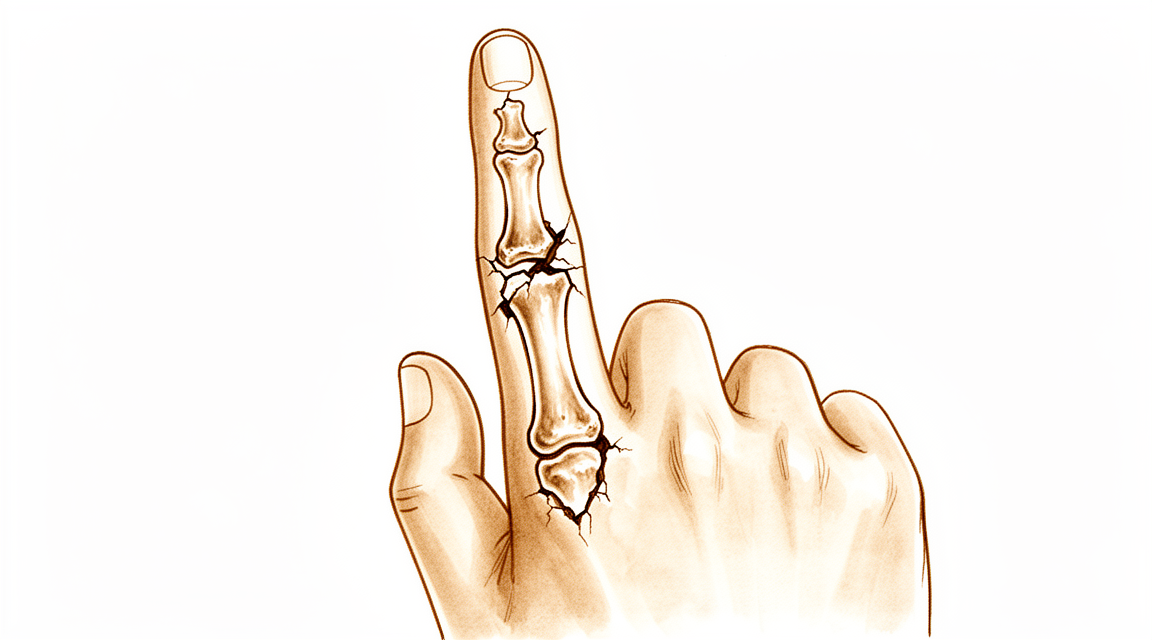
Phalangeal and metacarpal fractures of the hand — non-operative care and indications for fixation.
What you're feeling
You are likely experiencing sharp pain and swelling in your finger or hand. The pain often worsens when you move the injured digit or put weight on your hand. You may notice bruising or visible deformity if the bone is displaced. Simple, closed fractures are common and usually stable, meaning the bone pieces stay in place. However, if the injury involves an open wound or severe crush damage, the pain can be more intense and complex.
Daily tasks become difficult because your hand is not functioning normally. You might struggle with simple actions like reaching behind your back to fasten a bra or tucking in a shirt. Gripping objects feels weak and painful. If the fracture is in the thumb or index finger, these challenges are often more pronounced. These specific fingers are critical for pinch and grip, so injuries here can significantly impact your ability to perform routine activities.
Your hand may feel stiff, especially in the morning or after periods of rest. This stiffness can make it hard to fully straighten or bend the finger. In some cases, particularly with phalangeal fractures, the range of motion may decrease over time if not managed properly. You might find it difficult to sleep on your side due to the pressure on the injured hand.
If your fracture is open, there is a higher risk of complications. About one-quarter of open finger fractures require more than one surgical procedure. This need for additional surgery is especially common if the injury is severe, involves a crush mechanism, or affects blood flow to the finger. For most other metacarpal fractures, the effect on your overall well-being is minimal, and many heal well without surgery. However, individual treatment plans depend on the specific pattern of your fracture and the condition of your soft tissues.
What's actually happening
When you break a finger bone, the hard outer shell is cracked. This can happen to the long bones in your palm (metacarpals) or the smaller bones in your fingers (phalanges). Most of these breaks are simple, closed, and stable. This means the skin is intact and the pieces have not shifted far. In these cases, your hand usually heals well without surgery.
However, some fractures are more complex. If the break goes into the joint surface or the bone ends are displaced, the pieces may not line up correctly. Your surgeon must look at the specific pattern of the break, how much the bone has moved, and the condition of your skin and soft tissues. This helps decide if you need an operation to hold the bones in place while they heal.
If surgery is needed, the goal is to restore the bone to its normal shape. This allows you to move your hand early. Early movement prevents stiffness and helps you get your hand function back. For example, some minimally invasive techniques can treat certain thumb fractures with full movement within 3 weeks. Other methods use plates and screws to hold the bone steady. This rigid support lets you start using your hand sooner, which improves satisfaction and looks.
Be aware that some injuries carry higher risks. Breaks in the thumb or index finger are more likely to need unplanned reoperation. This is especially true if blood vessels were damaged. Also, about a quarter of open finger fractures (where the skin is broken) will likely need more than one surgical procedure. These are often more severe injuries involving crushing or poor blood flow.
Even with successful repair, stiffness can occur. In cases of unstable proximal phalangeal fractures treated with titanium plates, postoperative finger stiffness occurred in 43% of patients. This happens because the joint capsule and tendons can tighten up when the hand is not moved enough during healing. Your surgeon will balance the need for stable fixation with the need for early motion to minimize this risk.
What we can do about it
Most finger fractures heal well without surgery. For children, non-surgical treatment is the standard approach and leads to good results. You can often manage this at home. Your surgeon may recommend buddy taping, which means taping the injured finger to the healthy one next to it. This acts like a natural splint. You can use this method regardless of how much the bone is displaced or if it needed realignment. For metacarpal fractures, which are breaks in the palm bones, most are simple and stable. They usually heal excellently without surgery and have minimal impact on your daily life.
If you have a proximal phalangeal fracture (a break in the first finger bone), your surgeon will check for rotation or angulation. If the bone is not rotated and the angle is within safe limits, a conservative protocol is effective. You might use a thermoplastic traction platform, a non-invasive device that helps hold the bone in place. Hand therapy is a key part of your recovery. Your therapist will guide you based on the fracture location and stability. The goal is to restore motion and strength. For most patients, this pathway leads to full function within 10 weeks without complications.
Surgery is considered when conservative care is not enough or when the injury is severe. You may need an operation if you have an open fracture, where the skin is broken. About a quarter of these cases require more than one surgical procedure, especially if the finger was crushed or has blood flow issues. Surgery is also used for unstable fractures that cannot be held in place with taping or splints. Your surgeon may use plates, screws, or small pins to hold the bone fragments together. This helps ensure the bone heals in the correct position. In some cases, a non-surgical approach is preferred even if surgery is an option, particularly for closed spiral metacarpal fractures, where surgery offers little benefit. Your surgeon will discuss the best path for your specific injury to minimize stiffness and restore normal hand function.
What to expect
Most finger fractures, especially in children, heal well without surgery. Your surgeon will likely use a splint or tape the injured finger to the healthy one next to it. This simple support helps the bone knit back together. You can expect good results with this non-surgical approach. Even if the bone was slightly out of place, buddy taping often works well for children.
For adults, many metacarpal fractures (bones in the palm) are simple and stable. These also often heal perfectly without an operation. You might feel some swelling and stiffness as you recover. Most people return to full function within ten weeks. Your hand should feel normal again, with little impact on your daily life or well-being.
If your fracture is unstable or involves the thumb or index finger, your surgeon may recommend surgery. This ensures the bones stay in the right position. Most patients regain excellent motion and grip strength after these procedures. You should expect to feel your hand becoming stronger over the next few months. Follow-up visits are important to check your progress.
Be aware that some complications can happen. About one in four open fractures (where the skin is broken) may need more than one surgery. This is more likely if the injury was severe, crushed, or affected blood flow. Unplanned reoperations happen in about 8% of metacarpal surgeries. These are often needed to remove hardware that causes discomfort, typically around two months after the first operation.
Stiffness is another common issue. It affects 43% of unstable proximal phalanx fractures treated with plates and screws. You may need extra time to regain full movement. Injuries to the thumb and index finger are more likely to need a second surgery than other fingers.
If you miss your one-month follow-up, your surgeon may not be able to track your healing properly. This group of patients often has different social circumstances than those who attend. Please keep your appointments so your surgeon can ensure you are on the right path. With proper care, most people recover fully and return to their normal activities.
When to see someone
See your GP if you have persistent pain that does not improve with rest, or weakness and instability in your finger. Ask for a specialist review if your finger locks or gives way, or if symptoms interfere with your sleep or work. Some injuries need prompt recognition to minimize complications. For example, about one-quarter of open finger fractures require more than one surgical procedure. Reoperation is especially likely if there is a crush injury or blood flow problems. Thumb and index finger injuries are more likely to need unplanned reoperation. If you have a metacarpal fracture, follow-up X-rays are not needed for most fifth finger base and neck fractures. However, you should attend your scheduled one-month follow-up to ensure proper healing.
Evidence & references
title: "Finger Fractures" slug: finger-fractures region: hand audience: patient mesh_terms: ["Metacarpal Bones", "Finger Injuries", "Finger Phalanges", "Hand Injuries", "Bone Wires", "Joint Dislocations", "Fracture Fixation", "Fractures, Open"] article_count: 161 model_used: Qwen3.6-35B-A3B-Q8_0.gguf generated_at: '2026-06-16T19:33:19+00:00' key_articles: - title: "Hand Fractures: A Review of Current Treatment Strategies" ref_num: 1 evidence_tier: paper evidence_level: 5 doi: 10.1016/j.jhsa.2013.02.017 year: 2013 - title: "Reoperation After Operative Treatment of Open Finger Fractures" ref_num: 3 evidence_tier: paper evidence_level: 3 doi: 10.1177/15589447211043191 year: 2022 - title: "Complications After the Fractures of Metacarpal and Phalanges" ref_num: 4 evidence_tier: paper evidence_level: 5 doi: 10.1016/j.hcl.2010.01.005 year: 2010 - title: "Current methods, outcomes and challenges for the treatment of hand fractures" ref_num: 5 evidence_tier: paper evidence_level: 5 doi: 10.1177/1753193420928820 year: 2020 - title: "Management of Combined Open Fractures of Thumb Metacarpal and Trapezium (Surgical Tip)" ref_num: 6 evidence_tier: paper evidence_level: 4 doi: 10.1007/s11552-007-9026-6 year: 2007 - title: "Fracture-dislocations of the carpometacarpal joints of the ring and little finger" ref_num: 7 evidence_tier: paper evidence_level: 4 doi: 10.1177/1753193414562706 year: 2014 - title: "Diagnostic accuracy of history taking, physical examination and imaging for phalangeal, metacarpal and carpal fractures: a systematic review update" ref_num: 9 evidence_tier: paper evidence_level: 1 doi: 10.1186/s12891-019-2988-z year: 2020 - title: "Frequency, Pattern, and Treatment of Hand Fractures in Children and Adolescents: A 27-Year Review of 4356 Pediatric Hand Fractures" ref_num: 10 evidence_tier: paper evidence_level: 4 doi: 10.1177/1558944719900565 year: 2020 - title: "Return to Play After Hand and Wrist Fractures" ref_num: 11 evidence_tier: paper evidence_level: 5 doi: 10.1016/j.csm.2016.05.005 year: 2016 - title: "Comparison of Open and Closed Hand Fractures and the Effect of Urgent Operative Intervention" ref_num: 12 evidence_tier: paper evidence_level: 2 doi: 10.1016/j.jhsa.2018.04.032 year: 2019 - title: "Predictors of the Postoperative Range of Finger Motion for Comminuted Hand and Finger Fractures Treated with a Titanium Plate" ref_num: 13 evidence_tier: paper evidence_level: 2 doi: 10.1016/s0363-5023(11)60047-6 year: 2011 - title: "Pediatric Finger Fractures: Preventing Big Problems After Small Fractures" ref_num: 14 evidence_tier: paper doi: 10.1016/j.jhsa.2025.08.015 year: 2026 - title: "Combined Dislocation of the Trapezoid and Finger Carpometacarpal Joints—The Steering Wheel Injury: Case Report" ref_num: 15 evidence_tier: case_report evidence_level: 4 doi: 10.1016/j.jhsa.2010.06.005 year: 2010 - title: "MALUNION AND NONUNION OF THE METACARPALS AND PHALANGES" ref_num: 16 evidence_tier: paper evidence_level: 5 doi: 10.2106/00004623-200506000-00028 year: 2005 - title: "Effects of fusion angle on functional results following non-operative treatment for fracture of the neck of the fifth metacarpal" ref_num: 17 evidence_tier: paper evidence_level: 3 doi: 10.1016/j.injury.2008.03.016 year: 2008 - title: "Fractures of the Proximal Phalanx and Metacarpals in the Hand: Preferred Methods of Stabilization" ref_num: 18 evidence_tier: paper evidence_level: 5 doi: 10.5435/00124635-200810000-00004 year: 2008 - title: "Buddy taping after reduction of displaced extra-articular phalangeal finger fractures in children: a randomized controlled trial" ref_num: 19 evidence_tier: paper evidence_level: 1 doi: 10.1177/17531934241293338 year: 2024 - title: "Retrograde Intramedullary Screw Fixation for Metacarpal Fractures: A Systematic Review" ref_num: 20 evidence_tier: paper evidence_level: 2 doi: 10.1177/1558944720988073 year: 2021 - title: "Functional Reconstruction of Subtotal Thumb Metacarpal Defect With a Vascularized Medial Femoral Condyle Flap: Case Report" ref_num: 21 evidence_tier: case_report evidence_level: 4 doi: 10.1016/j.jhsa.2014.06.002 year: 2014 - title: "Fractures and dislocation of the base of the thumb metacarpal" ref_num: 22 evidence_tier: paper evidence_level: 4 doi: 10.1177/1753193414554357 year: 2014 - title: "Intramedullary Fixation of Hand Fractures and Arthrodeses" ref_num: 23 evidence_tier: paper evidence_level: 5 doi: 10.1016/j.jhsa.2023.08.011 year: 2024 - title: "Three-dimensional finite element analysis of mini-external fixation and Kirschner wire internal fixation in Bennett fracture treatment" ref_num: 25 evidence_tier: paper evidence_level: 1 doi: 10.1016/j.otsr.2012.07.015 year: 2013 - title: "Metacarpal Fractures in the National Football League: Injury Characteristics, Management, and Return to Play" ref_num: 27 evidence_tier: paper evidence_level: 4 doi: 10.1016/j.jhsa.2022.01.011 year: 2023 - title: "Transcarpal migration of a broken Kirschner wire causing ulnar neurapraxia" ref_num: 28 evidence_tier: paper evidence_level: 4 doi: 10.1177/1753193408102118 year: 2009 - title: "Satisfaction and Functional Outcome with “Self-Care” for the Management of Fifth Metacarpal Fractures" ref_num: 29 evidence_tier: paper evidence_level: 4 doi: 10.1007/s11552-015-9749-8 year: 2015 - title: "Fractures of the Thumb and Finger Metacarpals in Athletes" ref_num: 30 evidence_tier: paper evidence_level: 5 doi: 10.1016/j.hcl.2012.05.028 year: 2012 - title: "Nonoperative Versus Operative Treatment for Displaced Finger Metacarpal Shaft Fractures" ref_num: 31 evidence_tier: paper evidence_level: 2 doi: 10.2106/jbjs.22.00573 year: 2022 - title: "Intramedullary Splinting or Conservative Treatment for Displaced Fractures of the Little Finger Metacarpal Neck? a Prospective Study" ref_num: 32 evidence_tier: paper evidence_level: 2 doi: 10.1177/1753193410377845 year: 2010 - title: "Volar plating versus external fixation for unstable dorsal fracture-dislocations of the proximal interphalangeal joint" ref_num: 33 evidence_tier: paper evidence_level: 4 doi: 10.1177/17531934211059300 year: 2021 - title: "Finger Joint Injuries" ref_num: 36 evidence_tier: paper evidence_level: 5 doi: 10.1016/j.csm.2014.09.002 year: 2015 - title: "Buddy taping versus splint immobilization for paediatric finger fractures: a randomized controlled trial" ref_num: 37 evidence_tier: paper evidence_level: 1 doi: 10.1177/1753193418822692 year: 2019 - title: "Biomechanical and functional analysis of the pins and rubbers tractions system for treatment of proximal interphalangeal joint fracture dislocations" ref_num: 38 evidence_tier: paper evidence_level: 4 doi: 10.1007/s00402-007-0526-1 year: 2007 - title: "Non-Locked and Locked Plating Technology for Hand Fractures" ref_num: 39 evidence_tier: paper evidence_level: 5 doi: 10.1016/j.jhsa.2011.09.023 year: 2011 - title: "Fractures of the Phalanges and Interphalangeal Joints in Children" ref_num: 41 evidence_tier: paper evidence_level: 5 doi: 10.1016/j.hcl.2005.10.001 year: 2006 - title: "Clinical outcomes of ligamentotaxis in closed phalangeal fractures: a systematic review" ref_num: 42 evidence_tier: paper evidence_level: 2 doi: 10.1177/17531934251350453 year: 2025 - title: "Extraarticular Hand Fractures in Adults" ref_num: 43 evidence_tier: paper evidence_level: 5 doi: 10.1097/01.blo.0000205888.04200.c5 year: 2006 - title: "Osteochondral Autograft From the Hamate for Treating Partial Defect of the Proximal Interphalangeal Joint" ref_num: 44 evidence_tier: paper evidence_level: 4 doi: 10.1016/j.jhsa.2021.11.007 year: 2023 - title: "Use of a Mini-External Fixator for the Treatment of Hand Fractures" ref_num: 45 evidence_tier: paper evidence_level: 4 doi: 10.1016/j.jhsa.2008.12.017 year: 2009 - title: "The epidemiology of fractures of the hand and the influence of social deprivation" ref_num: 46 evidence_tier: paper evidence_level: 3 doi: 10.1177/1753193410381823 year: 2010 - title: "Buttress Plating for Type 3-4-5 Jersey Finger Fractures: Without Bone Fragment Disruption and With a Challenging Rate of Hardware Removal–A Case Series" ref_num: 47 evidence_tier: paper evidence_level: 4 doi: 10.1016/j.jhsa.2025.07.038 year: 2026 synthesis_version: "v2" verifier_status: skipped
Overview
- The majority of hand fractures can be treated without surgery [1].
- Surgery offers distinct advantages in properly selected cases of hand fractures [1].
- Most hand fractures can be managed successfully without operation [5].
- Conservative functional techniques are the optimum treatment for the majority of patients with single metacarpal fractures [5].
- Most pediatric phalangeal fractures can be treated nonsurgically [14].
- A small subset of pediatric phalangeal fractures benefits from surgical intervention [14].
- A quarter of open finger fractures will likely need more than one surgical procedure [3].
- Open finger fractures in more severely injured fingers are especially likely to need more than one surgical procedure due to crush or vascular impairment [3].
- Taping finger fractures can be recommended irrespective of the degree of displacement or the need for reduction in children with displaced extra-articular phalangeal finger fractures [19].
- External fixation is an efficient alternative treatment method for combined open fractures of the thumb metacarpal and trapezium, with encouraging short-term clinical and radiographic results [6].
- Retrograde intramedullary screw (RIS) fixation in metacarpal fractures appears to provide adequate stability with satisfactory clinical outcomes and minimal complications [20].
- More high-quality studies are needed to fully examine retrograde intramedullary screw fixation as a modality for metacarpal fractures [20].
- Intramedullary fixation is an approach reviewed for metacarpal fractures, phalangeal fractures, and interphalangeal joint arthrodesis [23].
- Surgeons who treat metacarpal and phalangeal fractures inevitably treat complications associated with these fractures [4].
- A poorly functioning finger may represent a liability to the hand [16].
- Achievement of union or improved alignment alone may not be sufficient to justify retention of a digit if it is poorly functioning [16].
Anatomy & Pathophysiology
- The majority of hand fractures can be treated without surgery [1].
- Surgery offers distinct advantages in properly selected cases of hand fractures [1].
- Most hand fractures can be managed successfully without operation [5].
- Conservative functional techniques are the optimum treatment for the majority of patients with single metacarpal fractures [5].
- Surgeons who treat metacarpal and phalangeal fractures inevitably treat complications associated with these fractures [4].
- A poorly functioning finger may represent a liability to the hand [16].
- Achievement of union or improved alignment alone may not be sufficient to justify retention of a digit [16].
- Surgical treatment is usually indicated for fractures and dislocations of the base of the thumb metacarpal to restore the anatomy and biomechanics of the trapeziometacarpal joint [22].
- Conservative treatment of base of thumb metacarpal fractures and dislocations often yields poor results [22].
- Intramedullary fixation is an approach reviewed for metacarpal fractures, phalangeal fractures, and interphalangeal joint arthrodesis [23].
- Mini-external fixation and Kirschner wire internal fixation have similar effects on postoperative traumatic arthritis and postoperative hand functions in Bennett fracture treatment [25].
- Each of eight patients treated with traction for hand fractures achieved a useful, painless range of motion while in traction and afterward [26].
- Full use of the hand was obtained eight to ten weeks from the time of injury in patients treated with traction [26].
- Both volar plating and external fixation can obtain a good range of motion at the proximal interphalangeal joint in unstable dorsal fracture-dislocations [33].
- The pins and rubbers traction system (PRTS) significantly increases flexion forces of the proximal interphalangeal (PIP) joint [38].
- The pins and rubbers traction system (PRTS) prevents narrowing of the PIP joint [38].
- Most pediatric hand fractures can be treated by closed methods with immobilization for 3 to 4 weeks [41].
- Children have a great potential for malalignment correction of hand fractures by remodeling with growth [41].
- Osteochondral autograft from the hamate for treating partial defect of the proximal interphalangeal joint results in generally acceptable functional recovery and well-restored joint architecture [44].
- Mini-external fixators (MEFs) are effective to establish union and correct alignment of the hand skeleton with minimal tissue trauma [45].
- Mini-external fixators (MEFs) retain a good clinical outcome even in the most complex hand injuries [45].
Classification
- The majority of hand fractures can be treated without surgery [1].
- Surgery offers distinct advantages in properly selected cases of hand fractures [1].
- Most hand fractures can be managed successfully without operation [5].
- Conservative functional techniques are the optimum treatment for the majority of patients with single metacarpal fractures [5].
- Treatment of fractures of the proximal phalanx and metacarpals is based on the presentation of the fracture, degree of displacement, and difficulty in maintaining fracture reduction [18].
- A quarter of open finger fractures will likely need more than one surgical procedure [3].
- Reoperation for open finger fractures is especially likely in more severely injured fingers due to crush or with vascular impairment [3].
- Patients undergoing surgery for metacarpal or proximal/middle phalangeal fractures are not at greater risk for infection based on the diagnosis of open fracture alone [12].
- External fixation is an efficient alternative treatment method for combined open fractures of the thumb metacarpal and trapezium [6].
- Patients with combined ring and little finger carpometacarpal joint fracture-dislocations have similar functional outcomes to patients with only a little finger carpometacarpal joint fracture-dislocation [7].
- The frequency, pattern, and treatment of pediatric hand fractures vary among different age groups [10].
- Only two studies were found on the diagnostic accuracy of history taking for hand and wrist fractures [9].
- Phalangeal fractures tend to deteriorate in total active motion (TAM) more than metacarpal fractures [13].
- Taping finger fractures can be recommended irrespective of the degree of displacement or the need for reduction in children [19].
- Patients with type 3 and 5 jersey finger fractures treated with buttress plating exhibited a functional distal interphalangeal joint range of motion [47].
Clinical Presentation
- The majority of hand fractures can be treated without surgery [1].
- Surgery offers distinct advantages in properly selected cases of hand fractures [1].
- Most hand fractures can be managed successfully without operation [5].
- Conservative functional techniques are the optimum treatment for the majority of patients with single metacarpal fractures [5].
- Treatment of fractures of the proximal phalanx and metacarpals is based on the presentation of the fracture, degree of displacement, and difficulty in maintaining fracture reduction [18].
- A quarter of open finger fractures will likely need more than one surgical procedure [3].
- Open finger fractures requiring more than one surgical procedure are especially associated with more severely injured fingers, crush injuries, or vascular impairment [3].
- Patients undergoing surgery for metacarpal or proximal/middle phalangeal fractures are not at greater risk for infection based on the diagnosis of open fracture alone [12].
- Only two studies were found on the diagnostic accuracy of history taking for hand and wrist fractures [9].
- The frequency, pattern, and treatment of pediatric hand fractures vary among different age groups [10].
- Most pediatric phalangeal fractures can be treated nonsurgically, but a small subset benefits from surgical intervention [14].
- Isolated fifth metacarpal fractures can be managed definitively in the ED without further face to face review, with good patient satisfaction and acceptable functional results [29].
- Patients with combined ring and little finger carpometacarpal joint fracture-dislocations have similar functional outcomes to patients with only a little finger carpometacarpal joint fracture-dislocation [7].
- Early diagnosis and appropriate treatment can allow athletes to return to play quickly after they sustain fractures or dislocations of the hand or wrist [11].
Investigations
- Only two studies were found on the diagnostic accuracy of history taking for hand and wrist fractures [9].
Treatment
- The majority of hand fractures can be treated without surgery [1].
- Surgery offers distinct advantages in properly selected cases of hand fractures [1].
- Most hand fractures can be managed successfully without operation [5].
- Conservative functional techniques are the optimum treatment for the majority of patients with single metacarpal fractures [5].
- A quarter of open finger fractures will likely need more than one surgical procedure [3].
- Reoperation for open finger fractures is especially likely in more severely injured fingers due to crush or with vascular impairment [3].
- External fixation is an efficient alternative treatment method for combined open fractures of the thumb metacarpal and trapezium [6].
- Patients with combined ring and little finger carpometacarpal joint fracture-dislocations have similar functional outcomes to patients with only a little finger carpometacarpal joint fracture-dislocation [7].
- The frequency, pattern, and treatment of pediatric hand fractures vary among different age groups [10].
- Most pediatric phalangeal fractures can be treated nonsurgically [14].
- A small subset of pediatric phalangeal fractures benefits from surgical intervention [14].
- With non-operative treatment of fractures of the neck of the fifth metacarpal, similar results were achieved with dorsal angulation either above or below 30 degrees [17].
- Treatment of fractures of the proximal phalanx and metacarpals is based on the presentation of the fracture [18].
- Treatment of fractures of the proximal phalanx and metacarpals is based on the degree of displacement [18].
- Treatment of fractures of the proximal phalanx and metacarpals is based on the difficulty in maintaining fracture reduction [18].
- Buddy taping after reduction of displaced extra-articular phalangeal finger fractures in children can be recommended irrespective of the degree of displacement or the need for reduction [19].
- Retrograde intramedullary screw (RIS) fixation in metacarpal fractures appears to provide adequate stability with satisfactory clinical outcomes and minimal complications [20].
- The vast majority of metacarpal fractures in athletes are managed nonoperatively with protective bracing and rapid return to play [30].
- Patients with a single displaced spiral and/or oblique finger metacarpal shaft fracture treated with unrestricted mobilization have outcomes comparable to those treated operatively [31].
- Operative treatment of single displaced spiral and/or oblique finger metacarpal shaft fractures may result in metacarpal shortening [31].
- Intramedullary splinting for displaced fractures of the little finger metacarpal neck offers an aesthetic advantage compared to conservative treatment [32].
- Intramedullary splinting for displaced fractures of the little finger metacarpal neck does not offer a functional advantage compared to conservative treatment [32].
- Surgical indications for fractures or fracture-dislocations include displaced articular fragments [36].
- Surgical indications for fractures or fracture-dislocations include rotational misalignment [36].
- Surgical indications for fractures or fracture-dislocations include significant digit angulation or shortening [36].
- Surgical indications for fractures or fracture-dislocations include irreducible dislocation [36].
- Surgical indications for fractures or fracture-dislocations include significant injury to the joint supporting structures [36].
- Buddy taping is a non-inferior treatment modality for most paediatric finger fractures compared to splint immobilization [37].
- Non-locking plates are appropriate for most metacarpal and phalangeal fractures necessitating plate fixation [39].
- Social deprivation influences the pattern of hand fractures [46].
- Social deprivation influences the management of hand fractures [46].
Complications
- A quarter of open finger fractures require more than one surgical procedure [3].
- Reoperation is especially likely in more severely injured fingers due to crush injury or vascular impairment [3].
- Surgeons treating metacarpal and phalangeal fractures inevitably encounter associated complications [4].
- Patients undergoing surgery for metacarpal or proximal/middle phalangeal fractures are not at greater risk for infection based on the diagnosis of open fracture alone [12].
- Phalangeal fractures tend to deteriorate in total active motion (TAM) more than metacarpal fractures [13].
- A poorly functioning finger may represent a liability to the hand, and achieving union or improved alignment alone may not justify retention of the digit [16].
- Retrograde intramedullary screw fixation in metacarpal fractures is associated with minimal complications [20].
- Transcarpal migration of a broken Kirschner wire can cause ulnar neurapraxia [28].
Recovery
- The majority of hand fractures can be treated without surgery, though surgery offers distinct advantages in properly selected cases [1].
- Early diagnosis and appropriate treatment can allow athletes to return to play quickly after they sustain fractures or dislocations of the hand or wrist [11].
- A quarter of open finger fractures will likely need more than one surgical procedure, especially in more severely injured fingers, due to crush or with vascular impairment [3].
- Patients with combined ring and little finger carpometacarpal joint fracture-dislocations have similar functional outcomes to patients with only a little finger carpometacarpal joint fracture-dislocation [7].
- Both cases of combined dislocation of the trapezoid and finger carpometacarpal joints demonstrate similar mechanisms resulting in nearly identical wrist injuries with good short-term functional outcomes when injuries are quickly recognized and appropriately addressed at initial surgery [15].
- A poorly functioning finger may represent a liability to the hand, and achievement of union or improved alignment alone may not be sufficient to justify retention of the digit [16].
- With non-operative treatment of fractures of the neck of the fifth metacarpal, similar results were achieved with dorsal angulation either above or below 30 degrees [17].
- The patient regained satisfactory grip and thumb function with minimal donor site morbidity following functional reconstruction of a subtotal thumb metacarpal defect with a vascularized medial femoral condyle flap [21].
- Each of the eight patients in the traction study achieved a useful, painless range of motion while in traction and afterward, and full use of the hand was obtained eight to ten weeks from the time of injury [26].
- The only variables that lessen the return-to-play time for metacarpal fractures in the National Football League are involvement of lesser digit metacarpals and operative intervention for treatment of thumb metacarpal fractures [27].
- DEF provides excellent functional results for closed phalangeal fractures at the PIP joint, with a low incidence of postoperative complications similar to other commonly used surgical techniques [42].
- Recent reports confirm that small amounts of metacarpal shortening or dorsal angulation cause minimal functional impairment, and early motion of adjacent joints in closed simple metacarpal fractures expedites recovery of motion and strength without adversely affecting fracture alignment [43].
Key Evidence
- [L5] The majority of hand fractures can be treated without surgery, though surgery offers distinct advantages in properly selected cases. (10.1016/j.jhsa.2013.02.017)
- [L3] A quarter of open finger fractures will likely need more than one surgical procedure, especially in more severely injured fingers, due to crush or with vascular impairment. (10.1177/15589447211043191)
- [L5] Surgeons who treat metacarpal and phalangeal fractures inevitably treat complications associated with these fractures. (10.1016/j.hcl.2010.01.005)
- [L5] Most hand fractures can be managed successfully without operation, and conservative functional techniques are the optimum treatment for the majority of patients with single metacarpal fractures. (10.1177/1753193420928820)
- [L4] Short-term clinical and radiographic results encouraged the authors about the efficiency of external fixation as an alternative treatment method for combined open fractures of the thumb metacarpal and trapezium. (10.1007/s11552-007-9026-6)
- [L4] Patients with combined ring and little finger carpometacarpal joint fracture-dislocations have similar functional outcomes to patients with only a little finger carpometacarpal joint fracture-dislocation. (10.1177/1753193414562706)
- [L1] Only two studies were found on the diagnostic accuracy of history taking for hand and wrist fractures. (10.1186/s12891-019-2988-z)
- [L4] The frequency, pattern, and treatment of pediatric hand fractures vary among different age groups. (10.1177/1558944719900565)
- [L5] Early diagnosis and appropriate treatment can allow athletes to return to play quickly after they sustain fractures or dislocations of the hand or wrist. (10.1016/j.csm.2016.05.005)
- [L2] Patients undergoing surgery for metacarpal or proximal/middle phalangeal fractures are not at greater risk for infection based on the diagnosis of open fracture alone. (10.1016/j.jhsa.2018.04.032)
- [L2] The phalangeal fractures tend to deteriorate %TAM than metacarpal fractures. (10.1016/s0363-5023(11)60047-6)
- [Paper] Most pediatric phalangeal fractures can be treated nonsurgically, but a small subset benefits from surgical intervention. (10.1016/j.jhsa.2025.08.015)
- [Case_report] Both cases demonstrate similar mechanisms resulting in nearly identical wrist injuries with good short-term functional outcomes when injuries are quickly recognized and appropriately addressed at initial surgery. (10.1016/j.jhsa.2010.06.005)
- [L5] A poorly functioning finger may represent a liability to the hand, and achievement of union or improved alignment alone may not be sufficient to justify retention of the digit. (10.2106/00004623-200506000-00028)
- [L3] With non-operative treatment of fractures of the neck of the fifth metacarpal, similar results were achieved with dorsal angulation either above or below 30 degrees. (10.1016/j.injury.2008.03.016)
- [L5] Treatment of fractures of the proximal phalanx and metacarpals is based on the presentation of the fracture, degree of displacement, and difficulty in maintaining fracture reduction. (10.5435/00124635-200810000-00004)
- [L1] With the current data, we can conclude that taping these finger fractures can be recommended irrespective of the degree of displacement or the need for reduction. (10.1177/17531934241293338)
- [L2] RIS use in metacarpal fractures appears to provide adequate stability with satisfactory clinical outcomes and minimal complications, although more high-quality studies are needed to fully examine this modality. (10.1177/1558944720988073)
- [Case_report] The patient regained satisfactory grip and thumb function with minimal donor site morbidity. (10.1016/j.jhsa.2014.06.002)
- [L4] Surgical treatment is usually indicated to restore the anatomy and biomechanics of the trapeziometacarpal joint, as conservative treatment often yields poor results. (10.1177/1753193414554357)
- [L5] The article reviews the background, biomechanics, applications, techniques, outcomes, and costs of this approach for metacarpal fractures, phalangeal fractures, and interphalangeal joint arthrodesis. (10.1016/j.jhsa.2023.08.011)
- [L1] Both fixations have similar effects on postoperative traumatic arthritis and postoperative hand functions. (10.1016/j.otsr.2012.07.015)
- [L4] The only variables that lessen the return-to-play time are involvement of lesser digit metacarpals and operative intervention for treatment of thumb metacarpal fractures. (10.1016/j.jhsa.2022.01.011)
- [L4] The mechanism in this case was purely traumatic without predisposing causes such as inflammatory arthropathy or distal radius fracture. (10.1177/1753193408102118)
- [L4] Isolated fifth metacarpal fractures can be managed definitively in the ED without further face to face review, with good patient satisfaction and acceptable functional results. (10.1007/s11552-015-9749-8)
- [L5] The vast majority of metacarpal fractures in athletes are managed nonoperatively with protective bracing and rapid return to play. (10.1016/j.hcl.2012.05.028)
- [L2] Patients with a single displaced spiral and/or oblique finger metacarpal shaft fracture treated with unrestricted mobilization have outcomes comparable to those treated operatively, despite metacarpal shortening. (10.2106/jbjs.22.00573)
- [L2] Intramedullary splinting for displaced fractures of the little finger metacarpal neck offers an aesthetic, but not a functional advantage compared to conservative treatment. (10.1177/1753193410377845)
- [L4] Both methods can obtain a good range of motion at the proximal interphalangeal joint. (10.1177/17531934211059300)
- [L5] Surgical indications for fractures or fracture-dislocations include displaced articular fragments, rotational misalignment, significant digit angulation or shortening, irreducible dislocation, and significant injury to the joint supporting structures. (10.1016/j.csm.2014.09.002)
- [L1] Buddy taping is a non-inferior treatment modality for most paediatric finger fractures compared to splint immobilization. (10.1177/1753193418822692)
- [L4] The PRTS significantly increases flexion forces of the PIP joint and prevents narrowing of the joint. (10.1007/s00402-007-0526-1)
- [L5] Non-locking plates are appropriate for most metacarpal and phalangeal fractures necessitating plate fixation. (10.1016/j.jhsa.2011.09.023)
- [L5] Most pediatric hand fractures can be treated by closed methods with immobilization for 3 to 4 weeks, as children have a great potential for malalignment correction by remodeling with growth. (10.1016/j.hcl.2005.10.001)
- [L2] DEF provides excellent functional results for closed phalangeal fractures at the PIP joint, with a low incidence of postoperative complications similar to other commonly used surgical techniques. (10.1177/17531934251350453)
- [L5] Recent reports confirm that small amounts of metacarpal shortening or dorsal angulation cause minimal functional impairment, and early motion of adjacent joints in closed simple metacarpal fractures expedites recovery of motion and strength without adversely affecting fracture alignment. (10.1097/01.blo.0000205888.04200.c5)
- [L4] The functional recovery is generally acceptable, with a well-restored joint architecture. (10.1016/j.jhsa.2021.11.007)
- [L4] The findings demonstrate the efficacy of versatile MEFs to establish union and correct alignment of hand skeleton with minimal tissue trauma while retaining a good clinical outcome even in the most complex injuries. (10.1016/j.jhsa.2008.12.017)
- [L3] Social deprivation influences both the pattern and management of hand fractures. (10.1177/1753193410381823)
- [L4] Patients with type 3 and 5 injuries exhibited a functional distal interphalangeal joint range of motion. (10.1016/j.jhsa.2025.07.038)
References
[1] Hand Fractures: A Review of Current Treatment Strategies. The Journal of Hand Surgery. 2013. DOI: 10.1016/j.jhsa.2013.02.017 [3] Reoperation After Operative Treatment of Open Finger Fractures. HAND. 2022. DOI: 10.1177/15589447211043191 [4] Complications After the Fractures of Metacarpal and Phalanges. Hand Clinics. 2010. DOI: 10.1016/j.hcl.2010.01.005 [5] Current methods, outcomes and challenges for the treatment of hand fractures. Journal of Hand Surgery (European Volume). 2020. DOI: 10.1177/1753193420928820 [6] Management of Combined Open Fractures of Thumb Metacarpal and Trapezium (Surgical Tip). HAND. 2007. DOI: 10.1007/s11552-007-9026-6 [7] Fracture-dislocations of the carpometacarpal joints of the ring and little finger. Journal of Hand Surgery (European Volume). 2014. DOI: 10.1177/1753193414562706 [9] Diagnostic accuracy of history taking, physical examination and imaging for phalangeal, metacarpal and carpal fractures: a systematic review update. BMC Musculoskeletal Disorders. 2020. DOI: 10.1186/s12891-019-2988-z [10] Frequency, Pattern, and Treatment of Hand Fractures in Children and Adolescents: A 27-Year Review of 4356 Pediatric Hand Fractures. HAND. 2020. DOI: 10.1177/1558944719900565 [11] Return to Play After Hand and Wrist Fractures. Clinics in Sports Medicine. 2016. DOI: 10.1016/j.csm.2016.05.005 [12] Comparison of Open and Closed Hand Fractures and the Effect of Urgent Operative Intervention. The Journal of Hand Surgery. 2019. DOI: 10.1016/j.jhsa.2018.04.032 [13] Predictors of the Postoperative Range of Finger Motion for Comminuted Hand and Finger Fractures Treated with a Titanium Plate. The Journal of Hand Surgery. 2011. DOI: 10.1016/s0363-5023(11)60047-6 [14] Pediatric Finger Fractures: Preventing Big Problems After Small Fractures. The Journal of Hand Surgery. 2026. DOI: 10.1016/j.jhsa.2025.08.015 [15] Combined Dislocation of the Trapezoid and Finger Carpometacarpal Joints—The Steering Wheel Injury: Case Report. The Journal of Hand Surgery. 2010. DOI: 10.1016/j.jhsa.2010.06.005 [16] MALUNION AND NONUNION OF THE METACARPALS AND PHALANGES. The Journal of Bone and Joint Surgery-American Volume. 2005. DOI: 10.2106/00004623-200506000-00028 [17] Effects of fusion angle on functional results following non-operative treatment for fracture of the neck of the fifth metacarpal. Injury. 2008. DOI: 10.1016/j.injury.2008.03.016 [18] Fractures of the Proximal Phalanx and Metacarpals in the Hand: Preferred Methods of Stabilization. Journal of the American Academy of Orthopaedic Surgeons. 2008. DOI: 10.5435/00124635-200810000-00004 [19] Buddy taping after reduction of displaced extra-articular phalangeal finger fractures in children: a randomized controlled trial. Journal of Hand Surgery (European Volume). 2024. DOI: 10.1177/17531934241293338 [20] Retrograde Intramedullary Screw Fixation for Metacarpal Fractures: A Systematic Review. HAND. 2021. DOI: 10.1177/1558944720988073 [21] Functional Reconstruction of Subtotal Thumb Metacarpal Defect With a Vascularized Medial Femoral Condyle Flap: Case Report. The Journal of Hand Surgery. 2014. DOI: 10.1016/j.jhsa.2014.06.002 [22] Fractures and dislocation of the base of the thumb metacarpal. Journal of Hand Surgery (European Volume). 2014. DOI: 10.1177/1753193414554357 [23] Intramedullary Fixation of Hand Fractures and Arthrodeses. The Journal of Hand Surgery. 2024. DOI: 10.1016/j.jhsa.2023.08.011 [25] Three-dimensional finite element analysis of mini-external fixation and Kirschner wire internal fixation in Bennett fracture treatment. Orthopaedics & Traumatology: Surgery & Research. 2013. DOI: 10.1016/j.otsr.2012.07.015 [26] 00004623-197961020-00018. 1979. [27] Metacarpal Fractures in the National Football League: Injury Characteristics, Management, and Return to Play. The Journal of Hand Surgery. 2023. DOI: 10.1016/j.jhsa.2022.01.011 [28] Transcarpal migration of a broken Kirschner wire causing ulnar neurapraxia. Journal of Hand Surgery (European Volume). 2009. DOI: 10.1177/1753193408102118 [29] Satisfaction and Functional Outcome with “Self-Care” for the Management of Fifth Metacarpal Fractures. HAND. 2015. DOI: 10.1007/s11552-015-9749-8 [30] Fractures of the Thumb and Finger Metacarpals in Athletes. Hand Clinics. 2012. DOI: 10.1016/j.hcl.2012.05.028 [31] Nonoperative Versus Operative Treatment for Displaced Finger Metacarpal Shaft Fractures. Journal of Bone and Joint Surgery. 2022. DOI: 10.2106/jbjs.22.00573 [32] Intramedullary Splinting or Conservative Treatment for Displaced Fractures of the Little Finger Metacarpal Neck? a Prospective Study. Journal of Hand Surgery (European Volume). 2010. DOI: 10.1177/1753193410377845 [33] Volar plating versus external fixation for unstable dorsal fracture-dislocations of the proximal interphalangeal joint. Journal of Hand Surgery (European Volume). 2021. DOI: 10.1177/17531934211059300 [36] Finger Joint Injuries. Clinics in Sports Medicine. 2015. DOI: 10.1016/j.csm.2014.09.002 [37] Buddy taping versus splint immobilization for paediatric finger fractures: a randomized controlled trial. Journal of Hand Surgery (European Volume). 2019. DOI: 10.1177/1753193418822692 [38] Biomechanical and functional analysis of the pins and rubbers tractions system for treatment of proximal interphalangeal joint fracture dislocations. Archives of Orthopaedic and Trauma Surgery. 2007. DOI: 10.1007/s00402-007-0526-1 [39] Non-Locked and Locked Plating Technology for Hand Fractures. The Journal of Hand Surgery. 2011. DOI: 10.1016/j.jhsa.2011.09.023 [41] Fractures of the Phalanges and Interphalangeal Joints in Children. Hand Clinics. 2006. DOI: 10.1016/j.hcl.2005.10.001 [42] Clinical outcomes of ligamentotaxis in closed phalangeal fractures: a systematic review. Journal of Hand Surgery (European Volume). 2025. DOI: 10.1177/17531934251350453 [43] Extraarticular Hand Fractures in Adults. Clinical Orthopaedics and Related Research. 2006. DOI: 10.1097/01.blo.0000205888.04200.c5 [44] Osteochondral Autograft From the Hamate for Treating Partial Defect of the Proximal Interphalangeal Joint. The Journal of Hand Surgery. 2023. DOI: 10.1016/j.jhsa.2021.11.007 [45] Use of a Mini-External Fixator for the Treatment of Hand Fractures. The Journal of Hand Surgery. 2009. DOI: 10.1016/j.jhsa.2008.12.017 [46] The epidemiology of fractures of the hand and the influence of social deprivation. Journal of Hand Surgery (European Volume). 2010. DOI: 10.1177/1753193410381823 [47] Buttress Plating for Type 3-4-5 Jersey Finger Fractures: Without Bone Fragment Disruption and With a Challenging Rate of Hardware Removal–A Case Series. The Journal of Hand Surgery. 2026. DOI: 10.1016/j.jhsa.2025.07.038