Clavicle Fracture PDF Evidence
Clavicle fractures — when conservative management is fine and when fixation is indicated.
What you're feeling
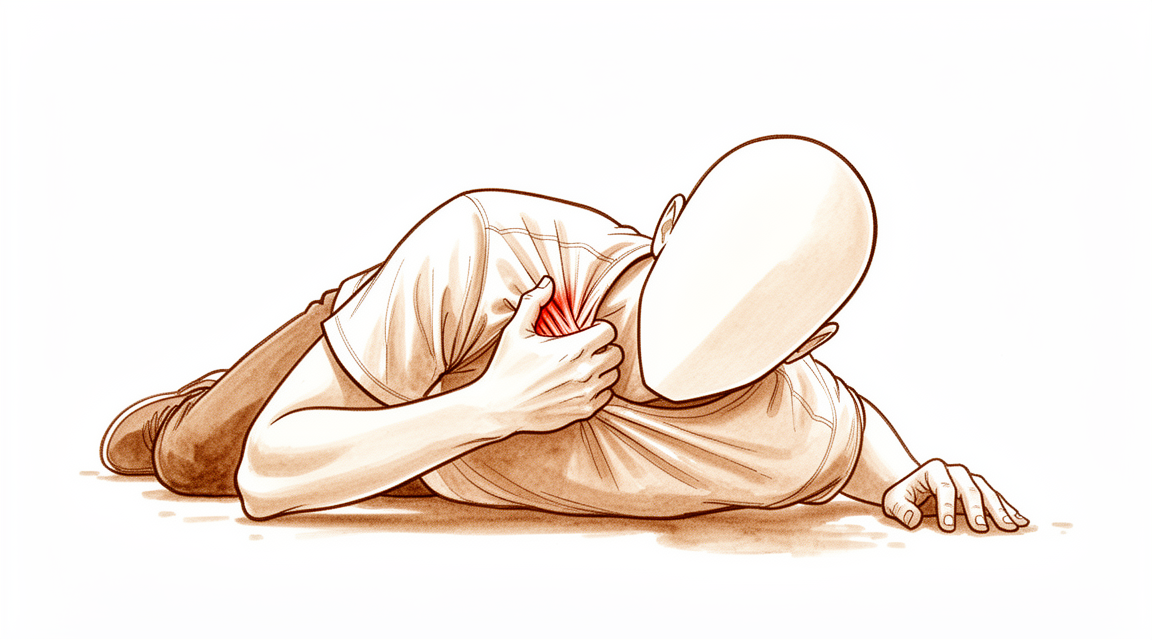
You likely feel sharp pain in the front of your shoulder or across your collarbone. This injury most often happens after a fall onto your shoulder or a direct blow. It is common in males, especially during sports like football. You may notice swelling and bruising over the bone. The area will be tender to the touch.
Simple daily tasks become difficult because moving your arm pulls on the injured bone. Reaching behind your back to fasten a bra or tuck in a shirt can be painful. Lifting objects, even light ones, may feel heavy or unsafe. You might find it hard to hold your arm away from your body. Your surgeon will advise you to keep your arm close to your side to reduce strain.
Pain often flares up at night, making it hard to find a comfortable sleeping position. Lying on the injured side is usually not possible. Waking up with stiffness is common, especially if you moved during the night. After activity, the ache may increase. Resting typically helps calm the pain, but you must avoid any movement that causes sharp spikes in discomfort.
Most clavicle fractures heal well with non-surgical care. However, you need close follow-up to ensure the bone does not shift out of place. The most common complications are non-unions, where the bone fails to heal, and malunions, where it heals in a slightly different position. These can cause lingering pain or a visible bump. If you have a medial clavicle fracture (closer to your chest), the bone itself usually heals well if you survive the initial trauma. But be aware that a high proportion of patients with this specific type of fracture may face serious health risks within three years of the injury.
For displaced distal fractures (near the shoulder joint), non-surgical treatment leads to higher rates of non-union but still offers excellent shoulder function and a low risk of other complications. Teenagers with completely displaced fractures often see excellent results after five years if treated without surgery. Your surgeon will tailor your care to your specific fracture pattern and expectations.
What's actually happening
Your collarbone connects your breastbone to your shoulder blade. It acts as a strut that keeps your shoulder wide and stable. Most breaks happen when you fall directly onto your shoulder or take a hard blow to the area. These injuries are common in males and often linked to car accidents, falls, or sports.
When the bone breaks, the normal alignment is lost. This can cause pain and limit how you move your arm. The good news is that your body is very good at healing this bone. Most breaks, especially in the middle section, heal well without surgery. Even if you choose not to have an operation, your surgeon will watch you closely. This is because the bone pieces can shift slightly in the days right after the injury.
For some patients, surgery is the better choice. This is often true if the break is completely displaced or if the bone has shortened by 2 cm or more. Surgery helps hold the bone in place so it heals correctly. It is a safe and effective procedure for both adults and adolescents. In fact, most complications from clavicle fractures—whether treated with or without surgery—are issues with how the bone heals, such as failing to join together or healing in a slightly wrong position.
Overall complication rates for surgical care average 8.1%. For adolescents, non-surgical treatment often leads to fewer complications and similar satisfaction levels compared to surgery. However, in select cases where the break is severe, surgery can lead to better outcomes. Your surgeon will look at the specific shape of your break and your personal goals to decide the best path. The goal is always to restore your shoulder function and comfort safely.
What we can do about it
Most clavicle fractures result from a fall onto the shoulder or a direct blow. The majority occur in males and are linked to vehicular trauma, falls, or sporting injuries. Your surgeon will carefully examine you for any other injuries to the shoulder area, especially if the injury involved compression. Most patients with clavicle fractures have an excellent outcome using conservative management. This means you can expect good clinical and functional results whether you choose surgery or not.
You can start with self-management and physiotherapy. Initial nonsurgical management is reasonable because patients had similar functional outcomes even when surgery was delayed. Close follow-up is warranted due to the risk of progressive displacement in the peri-injury period. Your surgeon may recommend a delay in assessment at 6 weeks following a displaced midshaft clavicle fracture. This timing enables an accurate prediction of patients who are likely to have union with nonoperative management. Physiotherapy aims to restore movement and strength as the bone heals. Once clavicle fractures are healed, further radiographic imaging does not provide any notable information.
Medical management focuses on pain relief. Your surgeon may prescribe pain medication or anti-inflammatories to help you manage discomfort during the healing process. For specific cases like nonunion, bone marrow injection is a promising treatment with low morbidity and preliminary success. However, standard plain unilateral radiographs of the clavicle are insufficient to reliably determine the degree of shortening of clavicle fractures and the need for surgery among shoulder/sports medicine fellowship–trained orthopaedic surgeons. Your surgeon will use clinical judgment alongside imaging to guide your care.
Surgery is considered when conservative care has reached its limit. High-quality evidence shows that surgical treatment of displaced clavicle fractures in adults results in higher union rates and better early patient-reported outcomes compared with nonsurgical treatment, though long-term outcomes are similar. Operative treatment of displaced midshaft clavicle fractures in adults is associated with higher union rates and better early patient-reported outcomes than non-operative treatment. A select group of patients with completely displaced fractures, shortening of 2 cm or more, or specific indications benefit from surgical fixation which has been shown to result in improved outcomes compared with non-operative measures. Your surgeon will discuss whether this option is right for you based on your fracture characteristics and expectations.
What to expect
Your outlook depends largely on your age and where the break is located. For most adults with a break in the middle of the collarbone, surgery leads to faster healing and better early shoulder function compared to non-surgical care. However, long-term results are similar whether you choose surgery or not. If you are an adolescent, non-surgical treatment is often preferred. It carries lower complication rates and still provides excellent long-term function, even if the bone heals in a slightly shifted position.
Healing takes time. With surgery, the bone typically fuses faster than without it. In some high-demand cases, such as professional athletes, healing can occur in about 8.8 weeks. Without surgery, your surgeon may wait six weeks to see if the bone is healing on its own before making further decisions. Most fractures result from a fall or direct blow. The most common issues are non-unions (where the bone does not heal) or malunions (where it heals in a misaligned position). These can happen with either treatment path.
Complications are relatively uncommon. The average complication rate for surgical care is 8.1%. For teenagers, non-surgical management has even fewer complications. If you have a medial clavicle fracture, your prognosis is generally good once you survive the initial injury, though it is important to note that a high proportion of patients with this specific type of fracture may face serious health risks within three years. For most other clavicle fractures, the risk of long-term shoulder pain or subacromial pain syndrome (pain under the shoulder blade) is not increased by the injury itself.
If you choose non-surgical treatment, close follow-up is essential. There is a risk that the bone fragments may shift further apart in the early weeks. If you do not have surgery, your shoulder side may feel more symptomatic than the other side 10 to 30 years after the trauma. If you do have surgery, you may experience slightly more short-term complications, but you will likely regain function sooner. Once the fracture is fully healed, further X-rays usually do not provide new information. Your surgeon will tailor the plan to your specific fracture pattern and personal goals.
When to see someone
See your GP if you have persistent pain that does not improve with rest. Ask for a specialist review if you notice weakness or instability in your shoulder. Seek care if your shoulder locks or gives way. Contact your surgeon if symptoms interfere with your sleep or work. Get help for any sudden worsening of your condition. Most fractures result from a fall onto the shoulder or a direct blow. The majority occur in males and are associated with vehicular trauma, falls, or sporting injuries. Close follow-up of nonoperatively treated clavicle fractures is warranted to ensure proper healing.
Evidence & references
title: "Clavicle Fracture" slug: clavicle-fracture region: shoulder audience: patient mesh_terms: ["Clavicle", "Bone Plates", "Fracture Healing", "Diaphyses", "Acromioclavicular Joint", "Fractures, Ununited", "Shoulder Injuries", "Fractures, Comminuted"] article_count: 597 model_used: Qwen3.6-35B-A3B-Q8_0.gguf generated_at: '2026-06-16T19:39:54+00:00' key_articles: - title: "CORR Insights®: What Are the Functional Outcomes and Pain Scores after Medial Clavicle Fracture Treatment?" ref_num: 1 evidence_tier: paper evidence_level: 5 doi: 10.1097/corr.0000000000001916 year: 2021 - title: "Displacement of diaphyseal clavicle fractures related to patient position and progressive displacement in the peri-injury period" ref_num: 2 evidence_tier: paper evidence_level: 2 doi: 10.1016/j.jse.2018.01.004 year: 2018 - title: "Clavicle fractures do not increase the occurrence of later subacromial pain syndrome. A registry-based case-control study with 15-25 years of follow-up of 131.838 persons from the Danish National Patient Register" ref_num: 3 evidence_tier: paper evidence_level: 4 doi: 10.1016/j.xrrt.2024.01.008 year: 2024 - title: "Potential Economic Benefits of Limited Clinical and Radiographic Follow-up After Plate Fixation of Midshaft Clavicle Fractures" ref_num: 4 evidence_tier: paper evidence_level: 3 doi: 10.5435/jaaos-d-17-00598 year: 2019 - title: "Factors Affecting Functional Outcomes After Clavicle Fracture" ref_num: 6 evidence_tier: paper evidence_level: 3 doi: 10.5435/jaaos-d-16-00130 year: 2016 - title: "Displaced medial clavicle fractures: operative treatment with locking compression plate fixation" ref_num: 8 evidence_tier: paper evidence_level: 4 doi: 10.1007/s00068-018-1024-6 year: 2018 - title: "Malunion after midshaft clavicle fractures in adults" ref_num: 9 evidence_tier: paper evidence_level: 4 doi: 10.3109/17453674.2010.480939 year: 2010 - title: "Adolescent mid-shaft clavicular fracture displacement does not predict nonunion or inferior functional outcome at long-term follow-up" ref_num: 10 evidence_tier: paper evidence_level: 3 doi: 10.1302/0301-620x.103b5.bjj-2020-1929.r1 year: 2021 - title: "Plate fixation of clavicle fractures: comparison between early and delayed surgery" ref_num: 11 evidence_tier: paper evidence_level: 3 doi: 10.1016/j.jse.2019.06.022 year: 2020 - title: "INCREASING VALUE: CAN MIDSHAFT CLAVICLE FRACTURES BE SURGICALLY TREATED AS AN OUTPATIENT?" ref_num: 12 evidence_tier: paper evidence_level: 4 doi: 10.1177/2325967119s00056 year: 2019 - title: "What Are the Functional Outcomes and Pain Scores after Medial Clavicle Fracture Treatment?" ref_num: 13 evidence_tier: paper evidence_level: 4 doi: 10.1097/corr.0000000000001839 year: 2021 - title: "Treatment of clavicle fractures: current concepts review" ref_num: 14 evidence_tier: paper evidence_level: 5 doi: 10.1016/j.jse.2011.08.053 year: 2012 - title: "Post-traumatic nonunion of a clavicle fracture in a 9-year-old child" ref_num: 15 evidence_tier: paper evidence_level: 5 doi: 10.1097/bpb.0000000000000231 year: 2016 - title: "Natural history of medial clavicle fractures" ref_num: 16 evidence_tier: paper doi: 10.1016/j.injury.2016.06.011 year: 2016 - title: "Two-year Functional Outcomes Of Operative Vs. Non-operative Treatment Of Completely Displaced Midshaft Clavicle Fractures In Adolescents: Results From A Prospective, Multicenter, Level 2 Study" ref_num: 17 evidence_tier: paper evidence_level: 2 doi: 10.1177/2325967119s00428 year: 2019 - title: "Ipsilateral Clavicle Fracture, Sternoclavicular Joint Subluxation, and Long Thoracic Nerve Injury: An Unusual Constellation of Injuries Sustained during Wrestling" ref_num: 18 evidence_tier: paper evidence_level: 4 doi: 10.1177/03635465000280062301 year: 2000 - title: "Functional recovery following early mobilization after middle third clavicle osteosynthesis for acute fractures or nonunion: A case-control study" ref_num: 19 evidence_tier: paper evidence_level: 3 doi: 10.1016/j.otsr.2017.03.021 year: 2017 - title: "Surgical treatment, complications, reoperations, and healthcare costs among patients with clavicle fracture in England" ref_num: 20 evidence_tier: paper evidence_level: 3 doi: 10.1186/s12891-022-05075-5 year: 2022 - title: "Operative management of an extra-lateral distal clavicle fracture pattern: a study of 48 patients and a proposed update to the modified Neer classification" ref_num: 22 evidence_tier: paper evidence_level: 4 doi: 10.1016/j.jse.2020.10.006 year: 2021 - title: "Limited incision plating of midshaft clavicle fractures: a case series of 1,038 patients" ref_num: 23 evidence_tier: paper evidence_level: 5 doi: 10.1016/j.jse.2025.06.002 year: 2026 - title: "Development of the Utrecht Score for clavicle fractures: a short and complete clavicle score with patient-reported and objective measures" ref_num: 24 evidence_tier: paper evidence_level: 4 doi: 10.1007/s00068-018-0979-7 year: 2018 - title: "Segmental clavicle fracture and acromio-clavicular joint disruption: an unusual case report" ref_num: 26 evidence_tier: case_report evidence_level: 4 doi: 10.1177/1758573214564496 year: 2014 - title: "A 2-year experience, management and outcome of 200 clavicle fractures" ref_num: 27 evidence_tier: paper evidence_level: 4 doi: 10.1016/j.injury.2011.04.008 year: 2012 - title: "Are displaced distal clavicle fractures associated with inferior clinical outcomes following nonoperative management? A systematic review" ref_num: 29 evidence_tier: paper evidence_level: 4 doi: 10.1016/j.jse.2023.12.006 year: 2024 - title: "Consequences of delayed surgical intervention of a displaced midshaft clavicle fracture: a case report" ref_num: 30 evidence_tier: case_report evidence_level: 4 doi: 10.1016/j.xrrt.2023.03.004 year: 2023 - title: "Displaced Midshaft Clavicle Fracture Union Can Be Accurately Predicted with a Delayed Assessment at 6 Weeks Following Injury" ref_num: 31 evidence_tier: paper evidence_level: 1 doi: 10.2106/jbjs.19.00955 year: 2020 - title: "Differentiating and treating lateral clavicle fractures: a new simple classification system" ref_num: 32 evidence_tier: paper evidence_level: 4 doi: 10.1016/j.jse.2025.04.021 year: 2026 - title: "Classifications in Brief: The Modified Neer Classification for Distal-third Clavicle Fractures" ref_num: 33 evidence_tier: paper evidence_level: 5 doi: 10.1097/corr.0000000000001456 year: 2020 - title: "Acromioclavicular joint injuries revisited: Pathoanatomy, pathomechanics, and clinical presentation" ref_num: 34 evidence_tier: paper evidence_level: 5 doi: 10.1177/17585732221122335 year: 2022 - title: "Distal clavicle fractures: A new classification system" ref_num: 35 evidence_tier: paper evidence_level: 3 doi: 10.1016/j.otsr.2018.05.015 year: 2018 - title: "Healing of a clavicle fracture nonunion with bone marrow injection" ref_num: 36 evidence_tier: paper evidence_level: 4 doi: 10.1016/j.jse.2006.05.001 year: 2007 - title: "Plate fixation of midshaft clavicle fractures for delayed union and non-union is a cost-effective intervention but functional deficits persist at long-term follow-up" ref_num: 37 evidence_tier: paper evidence_level: 3 doi: 10.1177/1758573221990367 year: 2021 - title: "Operative Versus Non-Operative Treatment of Severely Shortened or Comminuted Clavicle Fractures in Older Adolescent Athletes: Results from A Prospective, Multicenter, Level 2 Cohort Study" ref_num: 38 evidence_tier: paper evidence_level: 2 doi: 10.1177/2325967121s00214 year: 2021 - title: "A biomechanical comparison of hook plate vs. superolateral locking plate with coracoclavicular suture fixation for distal third clavicle fractures with coracoclavicular ligament disruption" ref_num: 39 evidence_tier: paper evidence_level: 5 doi: 10.1016/j.xrrt.2025.100645 year: 2026 - title: "American Academy of Orthopaedic Surgeons Clinical Practice Guideline Summary on the Treatment of Clavicle Fractures" ref_num: 40 evidence_tier: paper evidence_level: 1 doi: 10.5435/jaaos-d-23-00472 year: 2023 - title: "Nonunion of the clavicle treated with plate fixation: A review of forty-seven consecutive cases" ref_num: 41 evidence_tier: paper evidence_level: 4 doi: 10.1016/j.jse.2008.05.046 year: 2008 - title: "Distal clavicle fractures in children" ref_num: 43 evidence_tier: paper evidence_level: 4 doi: 10.1016/j.rboe.2015.12.006 year: 2016 - title: "Management of Distal Clavicle Fractures" ref_num: 44 evidence_tier: paper evidence_level: 4 doi: 10.5435/00124635-201107000-00002 year: 2011 - title: "The Interrater and Intrarater Agreement of a Modified Neer Classification System and Associated Treatment Choice for Lateral Clavicle Fractures" ref_num: 45 evidence_tier: paper evidence_level: 3 doi: 10.1177/0363546515593949 year: 2015 - title: "Descriptive Epidemiology of Adolescent Clavicle Fractures: Results From the FACTS (Function after Adolescent Clavicle Trauma and Surgery) Prospective, Multicenter Cohort Study" ref_num: 46 evidence_tier: paper evidence_level: 4 doi: 10.1177/2325967120921344 year: 2020 - title: "Midshaft Clavicle Fractures: Surgery Provides Better Results as Compared With Nonoperative Treatment: A Meta-analysis" ref_num: 47 evidence_tier: paper evidence_level: 1 doi: 10.1177/0363546519826961 year: 2019 - title: "Treatment of mid-shaft clavicle fractures: A comparative study" ref_num: 48 evidence_tier: paper evidence_level: 4 doi: 10.4103/0973-6042.57895 year: 2009 - title: "Outcomes from surgical treatment of middle-third clavicle fractures non-union in adults: A series of 21 cases" ref_num: 49 evidence_tier: paper evidence_level: 4 doi: 10.1016/j.otsr.2013.09.011 year: 2014 - title: "Midshaft clavicle fracture – Nonoperative versus operative care" ref_num: 50 evidence_tier: paper evidence_level: 5 doi: 10.1016/j.injury.2020.11.066 year: 2021 - title: "Clavicle Fractures: A Review of the Literature and Update on Treatment" ref_num: 51 evidence_tier: paper evidence_level: 4 doi: 10.3810/psm.2011.09.1930 year: 2011 - title: "Subacromial morphometric assessment of the clavicle hook plate" ref_num: 52 evidence_tier: paper evidence_level: 5 doi: 10.1016/j.injury.2009.12.012 year: 2010 - title: "Plating for midshaft clavicular fractures: The impact on quality of life and functional outcome" ref_num: 53 evidence_tier: paper evidence_level: 3 doi: 10.1016/j.injury.2017.10.032 year: 2017 - title: "Surgical fixation of midshaft clavicle fractures: A systematic review of biomechanical studies" ref_num: 54 evidence_tier: paper evidence_level: 2 doi: 10.1016/j.injury.2018.02.017 year: 2018 - title: "High inter-rater reliability, agreement, and convergent validity of Constant score in patients with clavicle fractures" ref_num: 55 evidence_tier: paper evidence_level: 4 doi: 10.1016/j.jse.2016.02.022 year: 2016 - title: "Evaluation of three-dimensional in vivo scapular kinematics and scapulohumeral rhythm between shoulders with a clavicle hook plate and contralateral healthy shoulders" ref_num: 56 evidence_tier: paper evidence_level: 3 doi: 10.1007/s00264-018-4003-y year: 2018 - title: "Clavicular Fractures in the Adolescent" ref_num: 57 evidence_tier: paper evidence_level: 4 doi: 10.2106/jbjs.22.01036 year: 2023 - title: "Management of clavicle nonunion and malunion" ref_num: 58 evidence_tier: paper evidence_level: 5 doi: 10.1016/j.jse.2013.01.022 year: 2013 - title: "Operative management of lateral third clavicle fractures: a comparison of internal fixation methods" ref_num: 59 evidence_tier: paper evidence_level: 4 doi: 10.1007/s00590-021-03173-z year: 2021 - title: "Displaced Clavicle Fractures in Adolescents: Facts, Controversies, and Current Trends" ref_num: 61 evidence_tier: paper evidence_level: 5 doi: 10.5435/00124635-201301000-00002 year: 2013 - title: "Os acromiale may be a contraindication of the clavicle hook plate: case reports and literature review" ref_num: 62 evidence_tier: paper evidence_level: 4 doi: 10.1186/s12891-021-04841-1 year: 2021 - title: "Decision-making for complex scapula and ipsilateral clavicle fractures: a review" ref_num: 63 evidence_tier: paper evidence_level: 4 doi: 10.1007/s00068-018-0946-3 year: 2018 - title: "Does candidate for plate fixation selection improve the functional outcome after midshaft clavicle fracture? A systematic review of 1348 patients" ref_num: 64 evidence_tier: paper evidence_level: 1 doi: 10.1177/1758573218777996 year: 2018 - title: "Long-term conservative treatment outcomes for midshaft clavicle fractures: a 10-to-30-year follow-up" ref_num: 65 evidence_tier: paper evidence_level: 4 doi: 10.1186/s13018-023-04450-9 year: 2023 - title: "Lateral clavicle fracture with coracoclavicular ligament injury: a biomechanical study of 4 different repair techniques" ref_num: 66 evidence_tier: paper evidence_level: 5 doi: 10.1007/s00167-017-4444-7 year: 2017 - title: "Plate Fixation Compared with Nonoperative Treatment for Displaced Midshaft Clavicular Fractures" ref_num: 67 evidence_tier: paper evidence_level: 1 doi: 10.2106/jbjs.15.01394 year: 2017 - title: "Concomitant glenohumeral injuries in patients with distal clavicle fractures undergoing arthroscopic-assisted surgery: a systematic review" ref_num: 69 evidence_tier: paper evidence_level: 1 doi: 10.1186/s13018-022-02919-7 year: 2022 - title: "Suture stabilization of the acromioclavicular ligament plus clavicular hook plate fixation vs. total ligament repair with loop plates for acromioclavicular joint dislocation" ref_num: 70 evidence_tier: paper evidence_level: 3 doi: 10.1186/s13018-025-06032-3 year: 2025 - title: "Biphasic Plating – In vivo study of a novel fixation concept to enhance mechanobiological fracture healing" ref_num: 71 evidence_tier: paper evidence_level: 5 doi: 10.1016/j.injury.2020.04.032 year: 2020 - title: "Biomechanical analysis of plating techniques for unstable lateral clavicle fractures with coracoclavicular ligament disruption (Neer type IIB)" ref_num: 72 evidence_tier: paper evidence_level: 5 doi: 10.1016/j.jse.2022.11.008 year: 2023 - title: "Biomechanical comparison of the Locking Compression superior anterior clavicle plate with seven and ten hole reconstruction plates in midshaft clavicle fracture stabilisation" ref_num: 73 evidence_tier: paper evidence_level: 5 doi: 10.1007/s00264-012-1671-x year: 2012 - title: "Treatment of Unstable Distal Clavicle Fractures With Multiple Steinmann Pins—A Modification of Neer's Method: A Series of 56 Consecutive Cases" ref_num: 74 evidence_tier: paper evidence_level: 4 doi: 10.1097/bot.0000000000000850 year: 2017 - title: "Infection after Clavicle Fractures" ref_num: 75 evidence_tier: paper evidence_level: 4 doi: 10.1097/01.blo.0000183088.60639.05 year: 2005 - title: "Morphological analysis of acromion and hook plate for the fixation of acromioclavicular joint dislocation" ref_num: 76 evidence_tier: paper evidence_level: 4 doi: 10.1007/s00167-016-3987-3 year: 2016 - title: "Effect of subacromial erosion shape on rotator cuff and clinical outcomes after hook plate fixation in type 5 acromioclavicular joint dislocations: a retrospective cohort study" ref_num: 77 evidence_tier: paper evidence_level: 3 doi: 10.1186/s12891-021-04987-y year: 2022 - title: "The comminuted midshaft clavicle fracture: A biomechanical evaluation of plating methods" ref_num: 78 evidence_tier: paper evidence_level: 5 doi: 10.1016/j.clinbiomech.2010.12.007 year: 2011 - title: "Unstable distal clavicle fractures: Outcomes of internal fixation of clavicle and coracoclavicular stabilization" ref_num: 81 evidence_tier: paper evidence_level: 4 doi: 10.1177/17585732261456152 year: 2026 - title: "Positional Change in Displacement of Midshaft Clavicle Fractures: An Aid to Initial Evaluation" ref_num: 82 evidence_tier: paper evidence_level: 4 doi: 10.1097/bot.0000000000000727 year: 2017 - title: "Measurement of Clavicle Fracture Shortening Using Computed Tomography and Chest Radiography" ref_num: 83 evidence_tier: paper evidence_level: 4 doi: 10.4055/cios.2016.8.4.367 year: 2016 - title: "Subacromial, supracoracoid dislocation of the acromioclavicular joint with ipsilateral clavicle fracture: a case report with review of the literature and classification" ref_num: 85 evidence_tier: paper evidence_level: 5 doi: 10.1177/2054270414527281 year: 2014 - title: "Intraobserver and Interobserver Agreement in the Classification and Treatment of Midshaft Clavicle Fractures" ref_num: 86 evidence_tier: paper evidence_level: 3 doi: 10.1177/0363546514523926 year: 2014 synthesis_version: "v2" verifier_status: skipped
Overview
- If patients with medial clavicle fractures survive the initial trauma, they can expect good clinical and functional outcomes regardless of whether surgical or nonsurgical management is chosen [1].
- Close follow-up of nonoperatively treated clavicle fractures is warranted due to potential displacement related to patient position and progressive displacement in the peri-injury period [2].
- The most common complications following clavicle fractures, whether treated operatively or non-operatively, are non-unions and malunions [7].
- Clavicle fixation is a safe and effective procedure in the pediatric population with a lack of serious complications [12].
- Specific treatment of clavicle fractures should be individualized based on fracture characteristics and patient expectations rather than broadly applied [14].
- Nonoperative treatment of adolescent clavicle fractures demonstrated lower complication rates and similar satisfaction and functional outcomes compared to operative treatment [17].
- Most mid-shaft clavicle fractures can be treated effectively by non-operative means, but a select group of patients with completely displaced fractures, shortening of 2 cm or more, or specific indications benefit from surgical fixation which has been shown to result in improved outcomes compared with non-operative measures [28].
- Although ORIF of displaced midshaft clavicle fractures remains controversial in the adolescent population, there may be additional circumstances beyond absolute indications for surgical intervention that warrant ORIF at initial presentation [30].
- Current evidence suggests that the majority of clavicular fractures in adolescents can and should be treated nonoperatively, although operative treatment with plate and screw application has consistently good outcomes with a low complication rate in selected cases [57].
- There is an increasing trend toward stabilization and fixation of markedly displaced midshaft clavicle fractures in adolescents due to concerns about symptomatic malunion and poor functional outcomes with nonsurgical management, though definitive indications for fixation in this population remain unclear [61].
- Patient selection for surgery may influence functional outcome after midshaft clavicle fracture [64].
Anatomy & Pathophysiology
- Clavicle fractures do not increase the occurrence of later subacromial pain syndrome [3].
- Protraction of the scapula is not suggested as a major risk factor for the development of subacromial pain syndrome [3].
- Evaluation of the extent of anatomic injury and understanding its mechanical consequences regarding shoulder and arm function is key in developing treatment protocols for acromioclavicular joint injuries [34].
- Hook plate and superolateral locking plate with coracoclavicular suture fixation constructs offer superior biomechanical stability for distal third clavicle fractures with coracoclavicular ligament disruption [39].
- These constructs potentially reduce complications associated with subacromial hardware [39].
- The position of the hook portion of a clavicle hook plate implant can predispose anatomic structures to post-operative complications of subacromial impingement and bony erosion [52].
- The clinical relevance of biomechanical studies on surgical fixation of midshaft clavicle fractures is arguable because none investigate the effect of tissue adaptation over time [54].
- Clavicle hook plate fixation changes scapular kinematics and scapulohumeral rhythm [56].
- Reliable bony union and improved shoulder function can be expected with thoughtful surgical planning, appropriate implant choice, and meticulous surgical technique for clavicle nonunion and malunion [58].
- In complex scapula and ipsilateral clavicle fractures, the question of stability is preoperatively less relevant than whether dislocated fragments lead to compromised shoulder function [63].
- Biomechanical analyses of four different repair techniques for lateral clavicle fracture with coracoclavicular ligament injury did not show any significance in load to failure or displacement after cyclic loading among the study groups [66].
- Plate fixation for displaced midshaft clavicular fractures does not improve shoulder function or general symptoms, and does not decrease limitations compared with nonoperative treatment in a sling [67].
- Suture stabilization of the acromioclavicular ligament plus clavicular hook plate fixation is conducive to restoring shoulder functions and has higher economic efficiency compared to total ligament repair with loop plates for acromioclavicular joint dislocation [70].
- The biphasic plate concept is aimed at improving the biomechanics of locked plating [71].
- Biomechanical evaluation showed effective fixation across all specimens at 500 cycles for unstable lateral clavicle fractures with coracoclavicular ligament disruption (Neer type IIB) [72].
- The specific design of the Locking Compression superior anterior clavicle plate provides higher strength and stiffness when compared to seven and ten hole reconstruction plates in midshaft clavicle fracture stabilisation [73].
- Clinical outcomes for treatment of unstable distal clavicle fractures with multiple Steinmann pins were evaluated using the Constant-Murley score, the University of California at Los Angeles (UCLA) Shoulder score, and the Disabilities of the Arm, Shoulder and Hand (DASH) score [74].
- Force concentration phenomena result from morphological mismatch, such as excessive inclination and improper occupation of the subacromial space, in acromion and hook plate fixation for acromioclavicular joint dislocation [76].
- Regardless of shape, subacromial erosion did not affect clinical outcomes nor cause rotator cuff lesions after plate removal in type 5 acromioclavicular joint dislocations [77].
- Inferior plates may be better equipped to resist in vivo loads experienced by the clavicle during early rehabilitation, particularly during shoulder flexion motions associated with eating, in comminuted midshaft clavicle fractures [78].
- Three patients (18%) experienced postoperative issues including plate prominence (2) and shoulder stiffness (1) in outcomes of internal fixation of clavicle and coracoclavicular stabilization for unstable distal clavicle fractures; none required reoperation [81].
Classification
- Clavicle fractures are the most commonly occurring fracture [5].
- The middle third is the most frequent site of clavicle fractures [5].
- The incidence of clavicle fractures is 1.23% [27].
- The most common complications following clavicle fractures, whether treated operatively or non-operatively, are non-unions and malunions [7].
- Clavicle malunion is a distinct clinical entity that can be treated successfully [9].
- Complication rates following surgical clavicle fracture care averaged 8.1% [20].
- The Utrecht Score for clavicle fractures is a compact yet complete tool developed to assess functional outcome specifically in patients with a clavicle fracture, consisting of patient-reported and objective measures [24].
- The Constant score was found to be reliable for assessing patients with clavicle fractures, especially at the group level [55].
- The presented classification system for lateral clavicle fractures, along with associated treatment algorithms, showed substantial inter- and intraobserver reliability [32].
- The modified Neer classification remains the predominantly cited classification system for distal clavicle fractures [33].
- The intra- and interobserver reliability of the modified Neer classification for distal clavicle fractures has been demonstrated to be inconsistent, which can lead to incorrect treatment choices and misclassifications in research [33].
- The interrater agreement of the modified Neer classification system for lateral clavicle fractures was fair [45].
- Additional 3D CT did not improve the overall level of interrater or intrarater agreement of the modified Neer classification system or associated treatment choice for lateral clavicle fractures [45].
- A new classification system for distal clavicle fractures demonstrated moderate interobserver and substantial intraobserver reliability, as well as reliability for the associated treatment choice [35].
Clinical Presentation
- Clavicle fractures are the most commonly occurring fracture [5].
- The middle third of the clavicle is the most frequent site of fracture [5].
- Adolescent clavicle fractures occur more commonly in male patients [46].
- Adolescent clavicle fractures occur during sports activities [46].
- Adolescent clavicle fractures are secondary to a direct blow to the shoulder [46].
- Adolescent clavicle fractures occur on the nondominant side [46].
- Clinicians must carefully examine patients with isolated clavicle fractures for concomitant injuries to the ipsilateral shoulder girdle, particularly in the context of compression mechanisms [18].
- Segmental fractures of the clavicle are easily missed [26].
- Distal fractures of the clavicle in children are rare [43].
- Most distal clavicle fractures in children can be treated conservatively [43].
- The most common complications following clavicle fractures, whether treated operatively or non-operatively, are non-unions and malunions [7].
- Clavicle malunion is a distinct clinical entity that can be treated successfully [9].
Investigations
- Clavicle fractures are the most commonly occurring fracture, with the middle third being the most frequent site [5].
- Segmental fractures of the clavicle are easily missed [26].
- Delayed diagnosis of subacromial, supracoracoid dislocation of the acromioclavicular joint with ipsilateral clavicle fracture is likely if careful examination of the patient's radiographs is not performed [85].
- Clinicians must carefully examine patients with isolated clavicle fractures for concomitant injuries to the ipsilateral shoulder girdle, particularly in the context of compression mechanisms [18].
- Preoperative MRI or diagnostic arthroscopy to evaluate glenohumeral associated injuries to distal clavicle fractures should be recommended [69].
- An upright chest radiograph should be obtained to evaluate midshaft clavicle fracture displacement, as it represents the physiologic stress across the fracture when considering nonoperative management [82].
- Close follow-up of nonoperatively treated clavicle fractures is warranted [2].
- Displacement of diaphyseal clavicle fractures is related to patient position and progressive displacement in the peri-injury period [2].
- Standard plain unilateral radiographs of the clavicle are insufficient to reliably determine the degree of shortening of clavicle fractures and the need for surgery among shoulder/sports medicine fellowship–trained orthopaedic surgeons [86].
- When clavicle shortening is considered in the decision to pursue operative management, the use of plain radiograph-based measurements is not recommended [83].
- Delayed assessment at 6 weeks following displaced midshaft clavicle fracture enables an accurate prediction of patients who are likely to have union with nonoperative management [31].
- Once clavicle fractures are healed, further radiographic imaging does not provide any notable information [4].
Treatment
- If patients with medial clavicle fractures survive the initial trauma, good clinical and functional outcomes are expected regardless of whether surgical or nonsurgical management is chosen [1].
- Close follow-up of nonoperatively treated clavicle fractures is warranted due to potential for progressive displacement in the peri-injury period [2].
- Initial nonsurgical management of clavicle fractures may be reasonable because patients had similar functional outcomes even when surgery was delayed [6].
- Operative treatment of displaced medial clavicle fractures provides an excellent long-term functional outcome [8].
- Nonoperative management of adolescent mid-shaft clavicle fractures results in excellent functional outcomes at long-term follow-up [10].
- Most patients with clavicle fractures have an excellent outcome using conservative management [11].
- Clavicle fixation is a safe and effective procedure in the pediatric population with a lack of serious complications [12].
- Specific treatment of clavicle fractures should not be broadly applied but rather should be individualized based on fracture characteristics and patient expectations [14].
- A more prolonged surveillance period is recommended in children with recurrent fractures of the clavicle [15].
- Nonoperative treatment of adolescent clavicle fractures demonstrated lower complication rates and similar satisfaction and functional outcomes compared to operative treatment [17].
- Functional outcome is excellent following the treatment of both acute and non-united clavicle fractures, but recovery occurs earlier following acute treatment [19].
- Most mid-shaft clavicle fractures can be treated effectively by non-operative means, but a select group of patients with completely displaced fractures, shortening of 2 cm or more, or specific indications benefit from surgical fixation which has been shown to result in improved outcomes compared with non-operative measures [28].
- Although ORIF of displaced midshaft clavicle fractures remains controversial in the adolescent population, there may be additional circumstances beyond absolute indications for surgical intervention that warrant ORIF at initial presentation [30].
- Bone marrow injection for the treatment of clavicle nonunion is promising, with low morbidity and preliminary success justifying further trials [36].
- Plate fixation of midshaft clavicle fractures for delayed union and non-union is a cost-effective intervention but functional deficits persist at long-term follow-up [37].
- Comparably excellent outcomes of severe clavicle fractures in adolescent athletes can be achieved with non-operative treatment [38].
- High-quality evidence shows that surgical treatment of displaced clavicle fractures in adults results in higher union rates and better early patient-reported outcomes compared with nonsurgical treatment, though long-term outcomes are similar [40].
- Superiorly applied plate fixation is an effective treatment for clavicular nonunion [41].
- Operative treatment of displaced midshaft clavicle fractures in adults is associated with higher union rates and better early patient-reported outcomes than non-operative treatment, though long-term outcomes are similar [42].
- Nonsurgical and surgical management provide similar results for distal clavicle fractures [44].
- Treatment of middle-third clavicle non-union after initial failure of conservative treatment with stable fixation and bone graft is a reliable, well-suited and effective treatment [49].
- A targeted approach to the management of mid-shaft clavicle fractures is needed, with simple fractures treated nonoperatively and complex displaced fractures considered for surgery to prevent non-union [50].
- Nondisplaced clavicle fractures continue to be treated conservatively with a simple sling until the fracture is healed according to radiographs and clinical assessment [51].
- In the studied unit, there is no clearly favoured method of internal fixation of lateral clavicle fractures [59].
- Ipsilateral os acromiale may be a relative contraindication to the clavicle hook plate [62].
Complications
- Non-unions and malunions are the most common complications following clavicle fractures, regardless of whether they are treated operatively or non-operatively [7].
- Complication rates following surgical clavicle fracture care average 8.1% [20].
- Limited incision plating of midshaft clavicle fractures achieves a low complication rate comparable to standard incision techniques [23].
- Clavicle pinning results in minimal complications [48].
- Surgical treatment of clavicle fractures in the pediatric population is associated with a lack of serious complications [12].
- Nonoperative management of displaced distal clavicle fractures is associated with higher nonunion rates [29].
- Nonoperative management of displaced distal clavicle fractures carries a low risk of complications and delayed surgery [29].
- The affected shoulder side is more symptomatic than the unaffected side 10 to 30 years after conservative treatment of midshaft clavicle fractures [65].
- Clavicle fractures do not increase the occurrence of later subacromial pain syndrome [3].
- Protraction of the scapula is not suggested as a major risk factor for the development of subacromial pain syndrome [3].
- Adolescent mid-shaft clavicle fracture displacement does not predict nonunion at long-term follow-up [10].
- Children with recurrent fractures of the clavicle require a more prolonged surveillance period [15].
Recovery
- Patients with medial clavicle fractures who survive the initial trauma can expect good clinical and functional outcomes regardless of whether surgical or nonsurgical management is chosen [1].
- Medial clavicle fractures have favorable functional outcomes and pain relief at minimum 1-year follow-up among patients who survive the trauma [13].
- A high proportion of patients with medial clavicle fractures die within 3 years of the injury [13].
- Conservative management of medial clavicle fractures results in excellent functional results [16].
- Operative treatment of displaced medial clavicle fractures provides an excellent long-term functional outcome [8].
- Nonoperative management of adolescent mid-shaft clavicle fractures results in excellent functional outcomes at long-term follow-up [10].
- Adolescent mid-shaft clavicular fracture displacement does not predict nonunion or inferior functional outcome at long-term follow-up [10].
- Initial nonsurgical management of clavicle fractures may be reasonable because patients had similar functional outcomes even when surgery was delayed [6].
- Nonoperative management of displaced distal clavicle fractures results in higher nonunion rates, but shoulder function remains excellent, and the risk of complications and delayed surgery are low [29].
- Patients had very good clinical outcomes following operative management of an extra-lateral distal clavicle fracture pattern [22].
- Functional outcome is excellent following the treatment of both acute and non-united clavicle fractures, but recovery occurs earlier following acute treatment [19].
- Patients reported a good quality of life and functional outcome after plating for midshaft clavicular fractures [53].
- Surgical treatment of midshaft clavicle fractures significantly reduces the nonunion rate and shortens the time to union as compared with the nonoperative approach [47].
- Surgical treatment of midshaft clavicle fractures leads to better shoulder functional scores at short- and long-term follow-up compared with nonoperative treatment [47].
- Surgical treatment of midshaft clavicle fractures has a slightly higher incidence of complications than nonoperative treatment [47].
- A limited incision approach for plating of acute midshaft clavicle fractures achieved good functional and radiographic outcomes with a low complication rate comparable to standard incision techniques [23].
- The prognosis for obtaining bony union after infected clavicle fractures is poor, with only two of six patients achieving union [75].
- Clavicle fractures do not increase the occurrence of later subacromial pain syndrome [3].
- The results do not suggest protraction of the scapula as a major risk factor for the development of subacromial pain syndrome [3].
Key Evidence
- [L5] If patients with medial clavicle fractures can survive the initial trauma, there is every reason to expect good clinical and functional outcomes, regardless of whether surgical or nonsurgical management is chosen. (10.1097/corr.0000000000001916)
- [L2] Close follow-up of nonoperatively treated clavicle fractures is warranted. (10.1016/j.jse.2018.01.004)
- [L4] The results do not suggest protraction of the scapula as a major risk factor for the development of SAPS. (10.1016/j.xrrt.2024.01.008)
- [L3] Once clavicle fractures are healed, further radiographic imaging does not provide any notable information. (10.5435/jaaos-d-17-00598)
- [L3] Initial nonsurgical management of clavicle fractures may be reasonable because patients had similar functional outcomes even when surgery was delayed. (10.5435/jaaos-d-16-00130)
- [L4] Operative treatment of displaced medial clavicle fractures provides an excellent long-term functional outcome. (10.1007/s00068-018-1024-6)
- [L4] Clavicle malunion is a distinct clinical entity that can be treated successfully. (10.3109/17453674.2010.480939)
- [L3] Nonoperative management of adolescent mid-shaft clavicle fractures results in excellent functional outcomes at long-term follow-up. (10.1302/0301-620x.103b5.bjj-2020-1929.r1)
- [L3] Most patients with clavicle fractures have an excellent outcome using conservative management. (10.1016/j.jse.2019.06.022)
- [L4] Clavicle fixation is a safe and effective procedure in the pediatric population with a lack of serious complications. (10.1177/2325967119s00056)
- [L4] Medial clavicle fractures have favorable functional outcomes and pain relief at minimum 1-year follow-up among those patients who survive the trauma, but a high proportion will die within 3 years of the injury. (10.1097/corr.0000000000001839)
- [L5] Specific treatment of clavicle fractures should not be broadly applied but rather should be individualized based on fracture characteristics and patient expectations. (10.1016/j.jse.2011.08.053)
- [L5] The authors recommend a more prolonged surveillance period in children with recurrent fractures of the clavicle. (10.1097/bpb.0000000000000231)
- [Paper] Sixty eight patients with medial clavicle fractures were identified over a 5 year period, with excellent functional results seen following conservative management. (10.1016/j.injury.2016.06.011)
- [L2] Nonoperative treatment of adolescent clavicle fractures demonstrated lower complication rates and similar satisfaction and functional outcomes compared to operative treatment. (10.1177/2325967119s00428)
- [L4] Clinicians must carefully examine patients with isolated clavicle fractures for concomitant injuries to the ipsilateral shoulder girdle, particularly in the context of compression mechanisms. (10.1177/03635465000280062301)
- [L3] Functional outcome is excellent following the treatment of both acute and non-united clavicle fractures, but recovery occurs earlier following acute treatment. (10.1016/j.otsr.2017.03.021)
- [L3] Complication rates following surgical clavicle fracture care averaged 8.1%. (10.1186/s12891-022-05075-5)
- [L4] The patients had very good clinical outcomes following operative management of an extra-lateral distal clavicle fracture pattern. (10.1016/j.jse.2020.10.006)
- [L5] In this large cohort with long-term follow-up, a limited incision approach for plating of acute midshaft clavicle fractures achieved good functional and radiographic outcomes with a low complication rate comparable to the reported rate for standard incision techniques. (10.1016/j.jse.2025.06.002)
- [L4] The Utrecht Score for clavicle fractures is a compact yet complete tool that was developed to assess functional outcome specifically in patients with a clavicle fracture, consisting of patient-reported and objective measures. (10.1007/s00068-018-0979-7)
- [Case_report] The case highlights that segmental fractures of the clavicle are easily missed. (10.1177/1758573214564496)
- [L4] The incidence of clavicle fractures was 1.23%. (10.1016/j.injury.2011.04.008)
- [L4] Nonoperative management of displaced distal clavicle fractures results in higher nonunion rates, but shoulder function remains excellent, and risk of complications and delayed surgery are low. (10.1016/j.jse.2023.12.006)
- [Case_report] Although ORIF of displaced midshaft clavicle fractures remains controversial in the adolescent population, there may be additional circumstances beyond absolute indications for surgical intervention that warrant ORIF at initial presentation. (10.1016/j.xrrt.2023.03.004)
- [L1] Delayed assessment at 6 weeks following displaced midshaft clavicle fracture enables an accurate prediction of patients who are likely to have union with nonoperative management. (10.2106/jbjs.19.00955)
- [L4] The presented classification system as well as associated treatment algorithms for lateral clavicle fractures showed substantial inter- and intraobserver reliability. (10.1016/j.jse.2025.04.021)
- [L5] The modified Neer classification remains the predominantly cited classification system for distal clavicle fractures, yet its intra- and interobserver reliability has been demonstrated to be inconsistent, which can lead to incorrect treatment choices and misclassifications in research. (10.1097/corr.0000000000001456)
- [L5] A comprehensive clinical approach emphasizing the evaluation of the extent of the anatomic injury and understanding its mechanical consequences regarding shoulder and arm function is a key in the development of guidelines for developing operative or non-operative treatment protocols and for establishing outcomes of the treatment protocols. (10.1177/17585732221122335)
- [L3] The study demonstrated moderate interobserver and substantial intraobserver reliability of the new classification system and the associated treatment choice for distal clavicle fractures. (10.1016/j.otsr.2018.05.015)
- [L4] Bone marrow injection for the treatment of clavicle nonunion is promising, with low morbidity and preliminary success justifying further trials. (10.1016/j.jse.2006.05.001)
- [L3] Clavicle fixation for delayed and non-union is a cost-effective intervention but outcomes are worse compared to patients that unite with non-operative management. (10.1177/1758573221990367)
- [L2] Comparably excellent outcomes of severe clavicle fractures in adolescent athletes can be achieved with non-operative treatment. (10.1177/2325967121s00214)
- [L5] These constructs offer superior biomechanical stability in our model and potentially reduce complications associated with subacromial hardware. (10.1016/j.xrrt.2025.100645)
- [L1] High-quality evidence shows that surgical treatment of displaced clavicle fractures in adults results in higher union rates and better early patient-reported outcomes compared with nonsurgical treatment, though long-term outcomes are similar. (10.5435/jaaos-d-23-00472)
- [L4] Superiorly applied plate fixation is an effective treatment for clavicular nonunion. (10.1016/j.jse.2008.05.046)
- [L4] Distal fractures of the clavicle in children are rare and most can be treated conservatively. (10.1016/j.rboe.2015.12.006)
- [L4] Nonsurgical and surgical management provide similar results for distal clavicle fractures. (10.5435/00124635-201107000-00002)
- [L3] The interrater agreement of the modified Neer classification system for lateral clavicle fractures was fair, and additional 3D CT did not improve the overall level of interrater or intrarater agreement of the classification system or associated treatment choice. (10.1177/0363546515593949)
- [L4] Adolescent clavicle fractures occurred more commonly in male patients during sports, secondary to a direct blow to the shoulder, and on the nondominant side. (10.1177/2325967120921344)
- [L1] Surgical treatment of midshaft clavicle fractures significantly reduces the nonunion rate and shortens the time to union as compared with the nonoperative approach and, despite a slightly higher incidence of complications, leads to better shoulder functional scores at short- and long-term follow-up. (10.1177/0363546519826961)
- [L4] The technique of clavicle pinning resulted in minimal complications, short hospital stay and excellent functional outcomes. (10.4103/0973-6042.57895)
- [L4] Treatment of middle-third clavicle non-union after initial failure of conservative treatment with stable fixation and bone graft is a reliable, well-suited and effective treatment. (10.1016/j.otsr.2013.09.011)
- [L5] A targeted approach to the management of mid-shaft clavicle fractures is needed, with simple fractures treated nonoperatively and complex displaced fractures considered for surgery to prevent non-union. (10.1016/j.injury.2020.11.066)
- [L4] Nondisplaced clavicle fractures continue to be treated conservatively with a simple sling until the fracture is healed according to radiographs and clinical assessment. (10.3810/psm.2011.09.1930)
- [L5] The observed frequency of hook contact with surrounding subacromial structures in a static shoulder confirms that the position of the hook portion of the implant can predispose anatomic structures to the post-operative complications of subacromial impingement and bony erosion. (10.1016/j.injury.2009.12.012)
- [L3] Patients reported a good quality of life and functional outcome after plating for midshaft clavicular fractures. (10.1016/j.injury.2017.10.032)
- [L2] The clinical relevance of the biomechanical studies may be arguable since none investigate the effect of tissue adaptation over time. (10.1016/j.injury.2018.02.017)
- [L4] The Constant score was found to be reliable for assessing patients with clavicle fractures, especially at the group level. (10.1016/j.jse.2016.02.022)
- [L3] Clavicle hook plate fixation changes the scapular kinematics and scapulohumeral rhythm; thus, when clavicle hook plate fixation is complete, the implant should be promptly removed. (10.1007/s00264-018-4003-y)
- [L4] Current evidence suggests that the majority of clavicular fractures in adolescents can and should be treated nonoperatively, although operative treatment with plate and screw application has consistently good outcomes with a low complication rate in selected cases. (10.2106/jbjs.22.01036)
- [L5] Reliable bony union and improved shoulder function can be expected with thoughtful surgical planning, appropriate implant choice, and meticulous surgical technique. (10.1016/j.jse.2013.01.022)
- [L4] In our unit there is no clearly favoured method of internal fixation of lateral clavicle fractures. (10.1007/s00590-021-03173-z)
- [L5] There is an increasing trend toward stabilization and fixation of markedly displaced midshaft clavicle fractures in adolescents due to concerns about symptomatic malunion and poor functional outcomes with nonsurgical management, though definitive indications for fixation in this population remain unclear. (10.5435/00124635-201301000-00002)
- [L4] Ipsilateral os acromiale may be a relative contraindication to the clavicle hook plate. (10.1186/s12891-021-04841-1)
- [L4] The question of stability is preoperatively less relevant than the question of whether the dislocated fragments lead to compromised shoulder function. (10.1007/s00068-018-0946-3)
- [L1] This review shows that patient selection for surgery may influence functional outcome after midshaft clavicle fracture. (10.1177/1758573218777996)
- [L4] The affected shoulder side was more symptomatic than the unaffected side 10 to 30 years after the trauma when midshaft clavicle fractures were treated conservatively. (10.1186/s13018-023-04450-9)
- [L5] The biomechanical analyses did not show any significance in load to failure or displacement after cyclic loading among the study groups. (10.1007/s00167-017-4444-7)
- [L1] In addition, the procedure does not improve shoulder function or general symptoms, and it does not decrease limitations compared with nonoperative treatment in a sling. (10.2106/jbjs.15.01394)
- [L1] Preoperative MRI or diagnostic arthroscopy to evaluate glenohumeral associated injuries to distal clavicle fractures should be recommended. (10.1186/s13018-022-02919-7)
- [L3] This procedure was conducive to restoring shoulder functions and had higher economic efficiency. (10.1186/s13018-025-06032-3)
- [L5] The biphasic plate concept is aimed at improving the biomechanics of locked plating. (10.1016/j.injury.2020.04.032)
- [L5] Biomechanical evaluation showed effective fixation across all specimens at 500 cycles. (10.1016/j.jse.2022.11.008)
- [L5] The specific design of the plate provides higher strength and stiffness when compared to reconstruction plates. (10.1007/s00264-012-1671-x)
- [L4] Clinical outcomes were evaluated using the Constant-Murley score, the University of California at Los Angeles (UCLA) Shoulder score, and the Disabilities of the Arm, Shoulder and Hand (DASH) score. (10.1097/bot.0000000000000850)
- [L4] The prognosis for obtaining bony union after infected clavicle fractures is poor, with only two of six patients achieving union. (10.1097/01.blo.0000183088.60639.05)
- [L4] The force concentration phenomenon results from cases of morphological mismatch, such as excessive inclination and improper occupation of the subacromial space. (10.1007/s00167-016-3987-3)
- [L3] Regardless of shape, subacromial erosion did not affect clinical outcomes nor cause rotator cuff lesions after plate removal. (10.1186/s12891-021-04987-y)
- [L5] Inferior plates may be better equipped to resist the in vivo loads experienced by the clavicle during early rehabilitation after internal fixation, particularly during the shoulder flexion motions associated with eating. (10.1016/j.clinbiomech.2010.12.007)
- [L4] Three patients (18%) experienced postoperative issues: plate prominence (2) and shoulder stiffness (1); none required reoperation. (10.1177/17585732261456152)
- [L4] An upright chest radiograph should be obtained to evaluate midshaft clavicle fracture displacement, as it represents the physiologic stress across the fracture when considering nonoperative management. (10.1097/bot.0000000000000727)
- [L4] When clavicle shortening is considered in the decision to pursue operative management, the use of plain radiograph-based measurements is not recommended. (10.4055/cios.2016.8.4.367)
- [L5] Delayed diagnosis is likely if careful examination of the patient's radiographs is not performed. (10.1177/2054270414527281)
- [L3] Standard plain unilateral radiographs of the clavicle are insufficient to reliably determine the degree of shortening of clavicle fractures and the need for surgery among shoulder/sports medicine fellowship–trained orthopaedic surgeons. (10.1177/0363546514523926)
References
[1] CORR Insights®: What Are the Functional Outcomes and Pain Scores after Medial Clavicle Fracture Treatment?. Clinical Orthopaedics & Related Research. 2021. DOI: 10.1097/corr.0000000000001916 [2] Displacement of diaphyseal clavicle fractures related to patient position and progressive displacement in the peri-injury period. Journal of Shoulder and Elbow Surgery. 2018. DOI: 10.1016/j.jse.2018.01.004 [3] Clavicle fractures do not increase the occurrence of later subacromial pain syndrome. A registry-based case-control study with 15-25 years of follow-up of 131.838 persons from the Danish National Patient Register. JSES Reviews, Reports, and Techniques. 2024. DOI: 10.1016/j.xrrt.2024.01.008 [4] Potential Economic Benefits of Limited Clinical and Radiographic Follow-up After Plate Fixation of Midshaft Clavicle Fractures. Journal of the American Academy of Orthopaedic Surgeons. 2019. DOI: 10.5435/jaaos-d-17-00598 [5] 7. Clavicle Fractures: Epidemiology, Clinical Evaluation, Imaging, and Classification. n.d.. [6] Factors Affecting Functional Outcomes After Clavicle Fracture. Journal of the American Academy of Orthopaedic Surgeons. 2016. DOI: 10.5435/jaaos-d-16-00130 [7] 10. Complications of Clavicle Fractures—Diagnosis and Management. n.d.. [8] Displaced medial clavicle fractures: operative treatment with locking compression plate fixation. European Journal of Trauma and Emergency Surgery. 2018. DOI: 10.1007/s00068-018-1024-6 [9] Malunion after midshaft clavicle fractures in adults. Acta Orthopaedica. 2010. DOI: 10.3109/17453674.2010.480939 [10] Adolescent mid-shaft clavicular fracture displacement does not predict nonunion or inferior functional outcome at long-term follow-up. The Bone & Joint Journal. 2021. DOI: 10.1302/0301-620x.103b5.bjj-2020-1929.r1 [11] Plate fixation of clavicle fractures: comparison between early and delayed surgery. Journal of Shoulder and Elbow Surgery. 2020. DOI: 10.1016/j.jse.2019.06.022 [12] INCREASING VALUE: CAN MIDSHAFT CLAVICLE FRACTURES BE SURGICALLY TREATED AS AN OUTPATIENT?. Orthopaedic Journal of Sports Medicine. 2019. DOI: 10.1177/2325967119s00056 [13] What Are the Functional Outcomes and Pain Scores after Medial Clavicle Fracture Treatment?. Clinical Orthopaedics & Related Research. 2021. DOI: 10.1097/corr.0000000000001839 [14] Treatment of clavicle fractures: current concepts review. Journal of Shoulder and Elbow Surgery. 2012. DOI: 10.1016/j.jse.2011.08.053 [15] Post-traumatic nonunion of a clavicle fracture in a 9-year-old child. Journal of Pediatric Orthopaedics B. 2016. DOI: 10.1097/bpb.0000000000000231 [16] Natural history of medial clavicle fractures. Injury. 2016. DOI: 10.1016/j.injury.2016.06.011 [17] Two-year Functional Outcomes Of Operative Vs. Non-operative Treatment Of Completely Displaced Midshaft Clavicle Fractures In Adolescents: Results From A Prospective, Multicenter, Level 2 Study. Orthopaedic Journal of Sports Medicine. 2019. DOI: 10.1177/2325967119s00428 [18] Ipsilateral Clavicle Fracture, Sternoclavicular Joint Subluxation, and Long Thoracic Nerve Injury: An Unusual Constellation of Injuries Sustained during Wrestling. The American Journal of Sports Medicine. 2000. DOI: 10.1177/03635465000280062301 [19] Functional recovery following early mobilization after middle third clavicle osteosynthesis for acute fractures or nonunion: A case-control study. Orthopaedics & Traumatology: Surgery & Research. 2017. DOI: 10.1016/j.otsr.2017.03.021 [20] Surgical treatment, complications, reoperations, and healthcare costs among patients with clavicle fracture in England. BMC Musculoskeletal Disorders. 2022. DOI: 10.1186/s12891-022-05075-5 [22] Operative management of an extra-lateral distal clavicle fracture pattern: a study of 48 patients and a proposed update to the modified Neer classification. Journal of Shoulder and Elbow Surgery. 2021. DOI: 10.1016/j.jse.2020.10.006 [23] Limited incision plating of midshaft clavicle fractures: a case series of 1,038 patients. Journal of Shoulder and Elbow Surgery. 2026. DOI: 10.1016/j.jse.2025.06.002 [24] Development of the Utrecht Score for clavicle fractures: a short and complete clavicle score with patient-reported and objective measures. European Journal of Trauma and Emergency Surgery. 2018. DOI: 10.1007/s00068-018-0979-7 [26] Segmental clavicle fracture and acromio-clavicular joint disruption: an unusual case report. Shoulder & Elbow. 2014. DOI: 10.1177/1758573214564496 [27] A 2-year experience, management and outcome of 200 clavicle fractures. Injury. 2012. DOI: 10.1016/j.injury.2011.04.008 [28] 9. Operative Management of Clavicle Fractures: Indications, Techniques, and Outcomes. n.d.. [29] Are displaced distal clavicle fractures associated with inferior clinical outcomes following nonoperative management? A systematic review. Journal of Shoulder and Elbow Surgery. 2024. DOI: 10.1016/j.jse.2023.12.006 [30] Consequences of delayed surgical intervention of a displaced midshaft clavicle fracture: a case report. JSES Reviews, Reports, and Techniques. 2023. DOI: 10.1016/j.xrrt.2023.03.004 [31] Displaced Midshaft Clavicle Fracture Union Can Be Accurately Predicted with a Delayed Assessment at 6 Weeks Following Injury. Journal of Bone and Joint Surgery. 2020. DOI: 10.2106/jbjs.19.00955 [32] Differentiating and treating lateral clavicle fractures: a new simple classification system. Journal of Shoulder and Elbow Surgery. 2026. DOI: 10.1016/j.jse.2025.04.021 [33] Classifications in Brief: The Modified Neer Classification for Distal-third Clavicle Fractures. Clinical Orthopaedics & Related Research. 2020. DOI: 10.1097/corr.0000000000001456 [34] Acromioclavicular joint injuries revisited: Pathoanatomy, pathomechanics, and clinical presentation. Shoulder & Elbow. 2022. DOI: 10.1177/17585732221122335 [35] Distal clavicle fractures: A new classification system. Orthopaedics & Traumatology: Surgery & Research. 2018. DOI: 10.1016/j.otsr.2018.05.015 [36] Healing of a clavicle fracture nonunion with bone marrow injection. Journal of Shoulder and Elbow Surgery. 2007. DOI: 10.1016/j.jse.2006.05.001 [37] Plate fixation of midshaft clavicle fractures for delayed union and non-union is a cost-effective intervention but functional deficits persist at long-term follow-up. Shoulder & Elbow. 2021. DOI: 10.1177/1758573221990367 [38] Operative Versus Non-Operative Treatment of Severely Shortened or Comminuted Clavicle Fractures in Older Adolescent Athletes: Results from A Prospective, Multicenter, Level 2 Cohort Study. Orthopaedic Journal of Sports Medicine. 2021. DOI: 10.1177/2325967121s00214 [39] A biomechanical comparison of hook plate vs. superolateral locking plate with coracoclavicular suture fixation for distal third clavicle fractures with coracoclavicular ligament disruption. JSES Reviews, Reports, and Techniques. 2026. DOI: 10.1016/j.xrrt.2025.100645 [40] American Academy of Orthopaedic Surgeons Clinical Practice Guideline Summary on the Treatment of Clavicle Fractures. Journal of the American Academy of Orthopaedic Surgeons. 2023. DOI: 10.5435/jaaos-d-23-00472 [41] Nonunion of the clavicle treated with plate fixation: A review of forty-seven consecutive cases. Journal of Shoulder and Elbow Surgery. 2008. DOI: 10.1016/j.jse.2008.05.046 [42] AAOS CPG: Treatment of Clavicle Fractures. 2024. [43] Distal clavicle fractures in children. Revista Brasileira de Ortopedia (English Edition). 2016. DOI: 10.1016/j.rboe.2015.12.006 [44] Management of Distal Clavicle Fractures. Journal of the American Academy of Orthopaedic Surgeons. 2011. DOI: 10.5435/00124635-201107000-00002 [45] The Interrater and Intrarater Agreement of a Modified Neer Classification System and Associated Treatment Choice for Lateral Clavicle Fractures. The American Journal of Sports Medicine. 2015. DOI: 10.1177/0363546515593949 [46] Descriptive Epidemiology of Adolescent Clavicle Fractures: Results From the FACTS (Function after Adolescent Clavicle Trauma and Surgery) Prospective, Multicenter Cohort Study. Orthopaedic Journal of Sports Medicine. 2020. DOI: 10.1177/2325967120921344 [47] Midshaft Clavicle Fractures: Surgery Provides Better Results as Compared With Nonoperative Treatment: A Meta-analysis. The American Journal of Sports Medicine. 2019. DOI: 10.1177/0363546519826961 [48] Treatment of mid-shaft clavicle fractures: A comparative study. International Journal of Shoulder Surgery. 2009. DOI: 10.4103/0973-6042.57895 [49] Outcomes from surgical treatment of middle-third clavicle fractures non-union in adults: A series of 21 cases. Orthopaedics & Traumatology: Surgery & Research. 2014. DOI: 10.1016/j.otsr.2013.09.011 [50] Midshaft clavicle fracture – Nonoperative versus operative care. Injury. 2021. DOI: 10.1016/j.injury.2020.11.066 [51] Clavicle Fractures: A Review of the Literature and Update on Treatment. The Physician and Sportsmedicine. 2011. DOI: 10.3810/psm.2011.09.1930 [52] Subacromial morphometric assessment of the clavicle hook plate. Injury. 2010. DOI: 10.1016/j.injury.2009.12.012 [53] Plating for midshaft clavicular fractures: The impact on quality of life and functional outcome. Injury. 2017. DOI: 10.1016/j.injury.2017.10.032 [54] Surgical fixation of midshaft clavicle fractures: A systematic review of biomechanical studies. Injury. 2018. DOI: 10.1016/j.injury.2018.02.017 [55] High inter-rater reliability, agreement, and convergent validity of Constant score in patients with clavicle fractures. Journal of Shoulder and Elbow Surgery. 2016. DOI: 10.1016/j.jse.2016.02.022 [56] Evaluation of three-dimensional in vivo scapular kinematics and scapulohumeral rhythm between shoulders with a clavicle hook plate and contralateral healthy shoulders. International Orthopaedics. 2018. DOI: 10.1007/s00264-018-4003-y [57] Clavicular Fractures in the Adolescent. Journal of Bone and Joint Surgery. 2023. DOI: 10.2106/jbjs.22.01036 [58] Management of clavicle nonunion and malunion. Journal of Shoulder and Elbow Surgery. 2013. DOI: 10.1016/j.jse.2013.01.022 [59] Operative management of lateral third clavicle fractures: a comparison of internal fixation methods. European Journal of Orthopaedic Surgery & Traumatology. 2021. DOI: 10.1007/s00590-021-03173-z [61] Displaced Clavicle Fractures in Adolescents: Facts, Controversies, and Current Trends. Journal of the American Academy of Orthopaedic Surgeons. 2013. DOI: 10.5435/00124635-201301000-00002 [62] Os acromiale may be a contraindication of the clavicle hook plate: case reports and literature review. BMC Musculoskeletal Disorders. 2021. DOI: 10.1186/s12891-021-04841-1 [63] Decision-making for complex scapula and ipsilateral clavicle fractures: a review. European Journal of Trauma and Emergency Surgery. 2018. DOI: 10.1007/s00068-018-0946-3 [64] Does candidate for plate fixation selection improve the functional outcome after midshaft clavicle fracture? A systematic review of 1348 patients. Shoulder & Elbow. 2018. DOI: 10.1177/1758573218777996 [65] Long-term conservative treatment outcomes for midshaft clavicle fractures: a 10-to-30-year follow-up. Journal of Orthopaedic Surgery and Research. 2023. DOI: 10.1186/s13018-023-04450-9 [66] Lateral clavicle fracture with coracoclavicular ligament injury: a biomechanical study of 4 different repair techniques. Knee Surgery, Sports Traumatology, Arthroscopy. 2017. DOI: 10.1007/s00167-017-4444-7 [67] Plate Fixation Compared with Nonoperative Treatment for Displaced Midshaft Clavicular Fractures. Journal of Bone and Joint Surgery. 2017. DOI: 10.2106/jbjs.15.01394 [69] Concomitant glenohumeral injuries in patients with distal clavicle fractures undergoing arthroscopic-assisted surgery: a systematic review. Journal of Orthopaedic Surgery and Research. 2022. DOI: 10.1186/s13018-022-02919-7 [70] Suture stabilization of the acromioclavicular ligament plus clavicular hook plate fixation vs. total ligament repair with loop plates for acromioclavicular joint dislocation. Journal of Orthopaedic Surgery and Research. 2025. DOI: 10.1186/s13018-025-06032-3 [71] Biphasic Plating – In vivo study of a novel fixation concept to enhance mechanobiological fracture healing. Injury. 2020. DOI: 10.1016/j.injury.2020.04.032 [72] Biomechanical analysis of plating techniques for unstable lateral clavicle fractures with coracoclavicular ligament disruption (Neer type IIB). Journal of Shoulder and Elbow Surgery. 2023. DOI: 10.1016/j.jse.2022.11.008 [73] Biomechanical comparison of the Locking Compression superior anterior clavicle plate with seven and ten hole reconstruction plates in midshaft clavicle fracture stabilisation. International Orthopaedics. 2012. DOI: 10.1007/s00264-012-1671-x [74] Treatment of Unstable Distal Clavicle Fractures With Multiple Steinmann Pins—A Modification of Neer's Method: A Series of 56 Consecutive Cases. Journal of Orthopaedic Trauma. 2017. DOI: 10.1097/bot.0000000000000850 [75] Infection after Clavicle Fractures. Clinical Orthopaedics and Related Research. 2005. DOI: 10.1097/01.blo.0000183088.60639.05 [76] Morphological analysis of acromion and hook plate for the fixation of acromioclavicular joint dislocation. Knee Surgery, Sports Traumatology, Arthroscopy. 2016. DOI: 10.1007/s00167-016-3987-3 [77] Effect of subacromial erosion shape on rotator cuff and clinical outcomes after hook plate fixation in type 5 acromioclavicular joint dislocations: a retrospective cohort study. BMC Musculoskeletal Disorders. 2022. DOI: 10.1186/s12891-021-04987-y [78] The comminuted midshaft clavicle fracture: A biomechanical evaluation of plating methods. Clinical Biomechanics. 2011. DOI: 10.1016/j.clinbiomech.2010.12.007 [81] Unstable distal clavicle fractures: Outcomes of internal fixation of clavicle and coracoclavicular stabilization. Shoulder & Elbow. 2026. DOI: 10.1177/17585732261456152 [82] Positional Change in Displacement of Midshaft Clavicle Fractures: An Aid to Initial Evaluation. Journal of Orthopaedic Trauma. 2017. DOI: 10.1097/bot.0000000000000727 [83] Measurement of Clavicle Fracture Shortening Using Computed Tomography and Chest Radiography. Clinics in Orthopedic Surgery. 2016. DOI: 10.4055/cios.2016.8.4.367 [85] Subacromial, supracoracoid dislocation of the acromioclavicular joint with ipsilateral clavicle fracture: a case report with review of the literature and classification. JRSM Open. 2014. DOI: 10.1177/2054270414527281 [86] Intraobserver and Interobserver Agreement in the Classification and Treatment of Midshaft Clavicle Fractures. The American Journal of Sports Medicine. 2014. DOI: 10.1177/0363546514523926