Scaphoid Fixation PDF Evidence
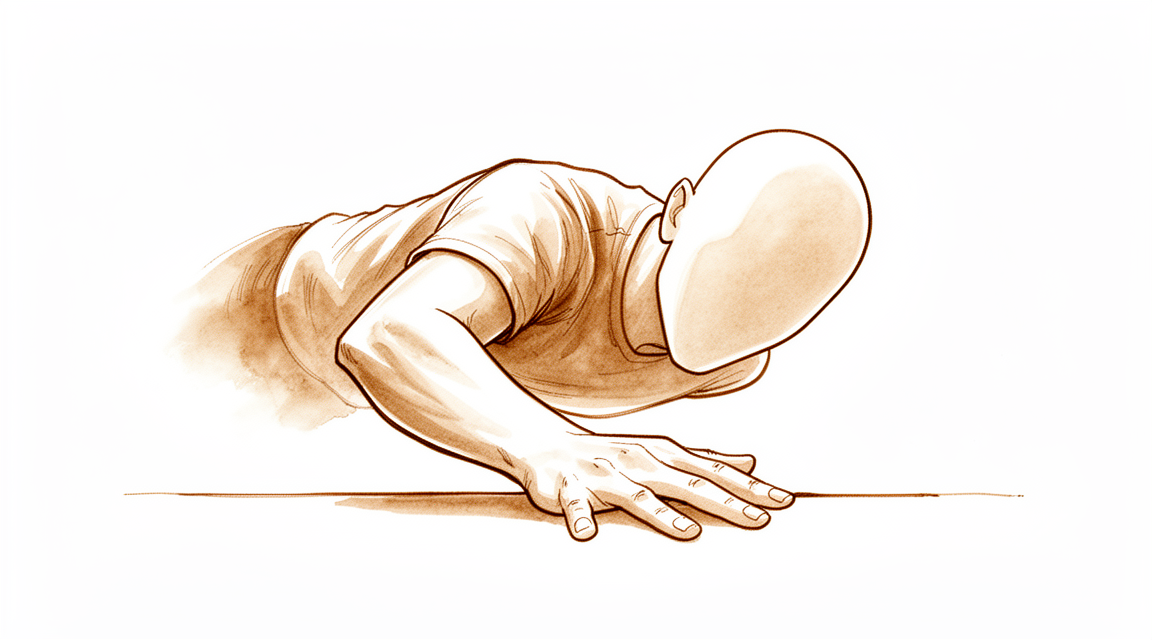
A protected recovery plan after surgical fixation of a scaphoid fracture with a buried headless compression screw, easing the wrist back into movement early under the screw's protection while the slow-healing bone unites, then building grip and strength, with loading and contact sport held back until union is confirmed.
This protocol guides your recovery after surgical fixation of a scaphoid fracture — a break in the small boat-shaped bone deep in the wrist, held together with a buried headless compression screw — with Dr Kieran Hirpara at Mater Private Hospital Rockhampton. It begins with your home exercise program, followed by the structured clinical protocol written for your hand therapist — bring this page or its PDF to your first therapy visit so your rehabilitation stays coordinated. Your hand therapist may adjust the plan depending on your fracture, your fixation and how your recovery progresses.
If you have any concerns about your wound after surgery, get in touch with the rooms. It is often helpful to take a photo of the wound and email it for review.
What to expect
The scaphoid is a small bone in the floor of the wrist that links the two rows of wrist bones. It has an unusual and fragile blood supply that runs into it backwards, from one end to the other, which is why a scaphoid fracture heals slowly and, if left alone, can sometimes fail to join (a nonunion). A scaphoid fixation holds the two pieces of bone firmly together with a single headless compression screw that is buried completely inside the bone — there is nothing to feel or remove. The screw squeezes the fracture together, which both helps it heal and lets the wrist start moving sooner than a fracture treated in a plaster cast alone. If the fracture was old or had not joined, a small piece of bone graft (often taken from the nearby forearm bone) may be added to encourage healing; this can make the early plan a little more cautious.
The key idea of this recovery is that the screw does the holding while the bone slowly knits. Because the scaphoid heals slowly, the milestones in this plan are paced by how the bone is healing — not by the calendar alone. Your surgeon usually confirms that the fracture has joined ("union") with an X-ray, and often a CT scan, before clearing you for heavier loading and sport. How quickly you progress depends on the type and position of the fracture (a break near the slow-healing top, or "proximal pole", and a previous nonunion are more cautious) and on how stable the fixation is.
Movement is opened up in careful stages: finger and thumb movement straight away; gentle wrist movement once your hand therapist allows it; then grip and strengthening only after the bone has united; and return to loaded or contact sport last of all. Because the repair keeps maturing for months, heavier loading and sport are built back gradually rather than all at once.
Precautions and limitations
- Wear your splint or cast as directed and keep it dry. Dr Hirpara and your hand therapist will tell you when to come out of it for exercises and when it can be left off.
- Do NOT grip hard, lift, carry or push through the wrist until you are told the fracture has united — squeezing and loading strain the scaphoid and the screw while the bone is still healing.
- Avoid forcing the wrist back into full backward bend (extension) and avoid the extremes of movement early — ease into the range, do not push the end of it.
- Do NOT return to contact, collision or load-bearing sport (or to gym/weights, push-ups, racquet or stick sports) until your surgeon confirms the bone has joined and clears you — this is usually months, not weeks.
- Keep your fingers, thumb, elbow and shoulder moving from the start so they do not stiffen, and use the hand for light everyday tasks within comfort, as long as it does not involve gripping, lifting or forcing the wrist.
- If your fixation also used bone graft for a nonunion, expect a more cautious timeline — follow the specific plan your surgeon and hand therapist give you.
For wound, swelling and scar management, see the practice's wound care guidance.
Your exercises
Kieran Hirpara 4.0
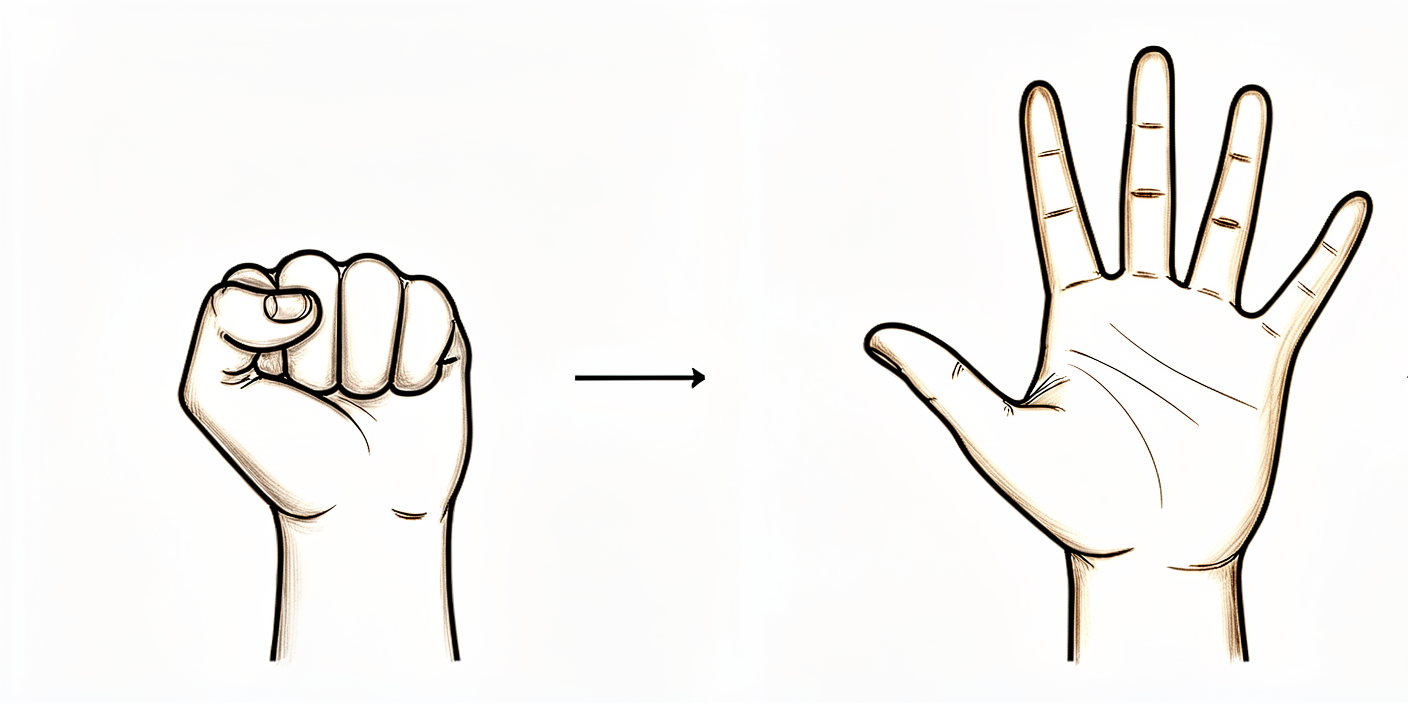
Finger and thumb movement
From the very first days, keep your fingers and thumb moving so they do not stiffen. Make a gentle full fist, then straighten the fingers right out, and touch your thumb to the tip of each finger in turn. Keep the wrist itself still inside its splint or cast while you do this. This is safe straight away — it keeps the hand supple without disturbing the healing scaphoid.
10 times each, several times a day, from day one
Kieran Hirpara 4.0
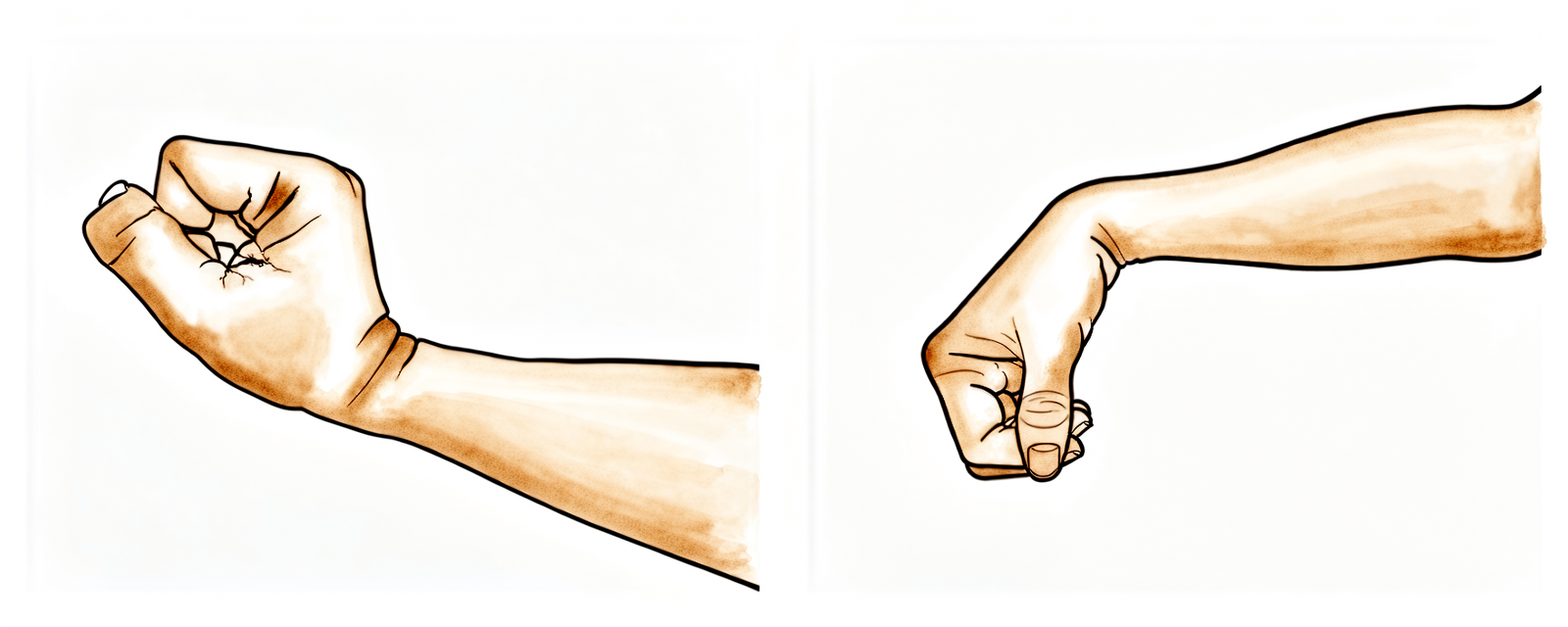
Wrist movement (when allowed)
Once your hand therapist clears it — often only a few weeks after surgery, depending on your fracture and fixation — begin gently moving the wrist: bend it up and down, then tilt it side to side, staying slow and within a comfortable, pain-free range. Do NOT force the end of the movement and do NOT push into full backward bend (extension) early. Your therapist will tell you when to start and how far to go.
10 times each direction, 2-3 times a day, only once cleared
Kieran Hirpara 4.0
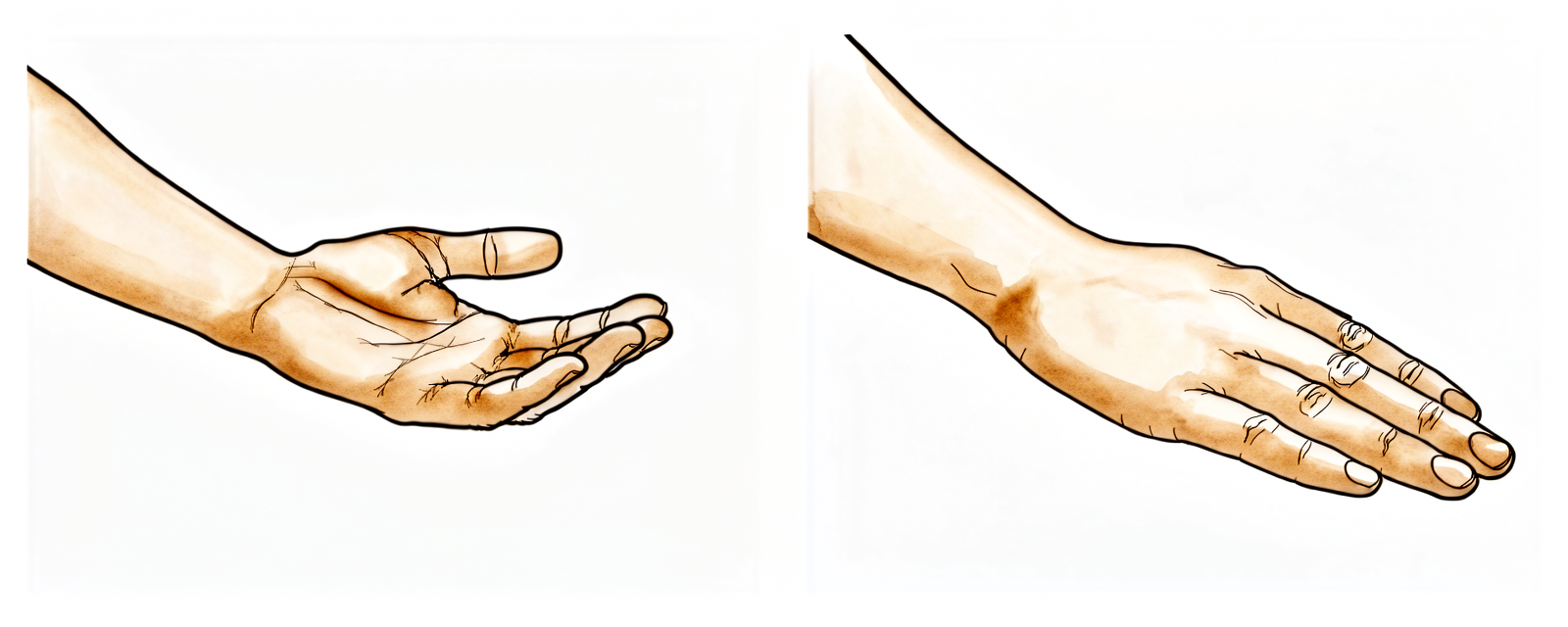
Forearm rotation (palm up / palm down)
With your elbow tucked at your side and bent to a right angle, gently turn your palm up towards the ceiling, then down towards the floor. Keep it slow and easy. This keeps the forearm supple and does not load the scaphoid, so it can usually begin early — follow your hand therapist's guidance.
10 times each direction, 2-3 times a day
Scar care
Once the wound is fully healed and there are no scabs, massage the scar for a minute or two with a little unscented moisturiser, using small firm circles. This keeps the scar soft and less sensitive. If your screw was placed through a small keyhole cut, the scar is tiny but the same care still helps.
1-2 minutes, twice a day, once the wound is healed
Kieran Hirpara 4.0
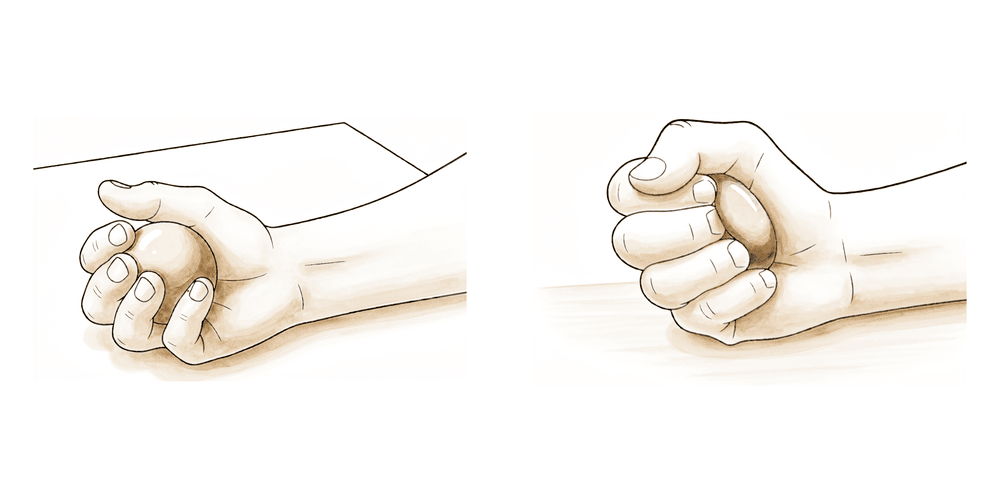
Grip strengthening (after union)
A LATER exercise — only once your fracture has united and your hand therapist starts strengthening (commonly not before about 8 to 12 weeks, and confirmed on imaging). Squeeze a soft ball or therapy putty, hold briefly, then relax. Build up gradually. Grip is held back until the bone is solid because squeezing hard loads the scaphoid and the screw, and the scaphoid heals slowly.
As guided by your hand therapist (after union is confirmed only)
These are the exercises from your handout. Start them only as guided by Dr Hirpara and your hand therapist, staying within whatever range and limits you have been given. The early exercises keep the fingers, thumb and forearm moving without disturbing the healing scaphoid, and gentle wrist movement is added only once your therapist allows it. Grip strengthening belongs to a later phase and should not be started until you are told the bone has united. Stop anything that causes sharp pain in the wrist, and let your therapist know.
Your clinical protocol
The rest of this page is the staged clinical protocol for rehabilitation after scaphoid fixation with a headless compression screw. This section is to be provided to the patient's hand therapist, and each phase opens with a plain-English explanation of what is happening. The scaphoid heals slowly because of its tenuous retrograde blood supply, so progression is union-gated and fixation- and fracture-dependent: rigid screw fixation of a stable acute waist fracture permits earlier protected wrist motion, whereas proximal-pole fractures, nonunions and bone-grafted cases warrant a more conservative course.
Prior to treatment, check the operation report and past medical history, and liaise with the treating surgeon regarding the fracture pattern (waist vs proximal pole), whether the fracture was acute or a nonunion, whether bone graft was used, the stability of the fixation, and the planned imaging milestone for confirming union. The hand therapist follows the plan for the individual fracture and fixation. The timings below are typical guides for a stable, screw-fixed acute waist fracture; more cautious progression applies to proximal-pole, nonunion and bone-grafted fixations.
Phase I - protected early motion (weeks 0 to 2)
The first couple of weeks protect the wound and the fixation while keeping the hand mobile. The wrist rests in a splint or short cast; the fingers, thumb and forearm move freely from day one. Wound review is typically at around two weeks, when formal therapy begins.
For your hand therapist:
Education and precautions - Immobilise in a wrist splint or short cast as directed by the surgeon; keep dry; off only as cleared - Full, immediate active finger, thumb, elbow and shoulder ROM to prevent stiffness - No gripping, lifting, weight-bearing or pushing through the wrist - Avoid forced/end-range wrist extension
Management - Wound: surgical dressings as directed; monitor for infection; wound review ~2 weeks - Oedema: elevation, gentle hand pump, ice as needed - Exercises: active finger/thumb composite flexion-extension; thumb opposition; gentle forearm pronation-supination; shoulder and elbow ROM
Criteria to progress - Wound healed/healing; pain settling; surgeon clearance to begin wrist motion
Phase II - protected wrist mobilisation (weeks 2 to 8, union-gated)
From around two weeks (for a stable, screw-fixed acute waist fracture) gentle active wrist motion is introduced within a comfortable, pain-free range under the protection of the screw. Range is progressed gradually; end-range extension and any loading are still withheld. Proximal-pole, nonunion and bone-grafted fixations are kept in protective immobilisation longer and mobilised later, on surgeon guidance.
For your hand therapist:
Assessments - Active wrist ROM, pain, swelling; wound/scar review; liaise with surgeon on imaging and union status
Education and precautions - Begin gentle active wrist flexion-extension and radial-ulnar deviation in a pain-free range; progress range gradually - Avoid end-range/forced wrist extension and avoid loading - No grip strengthening, no weight-bearing, no resisted work until union is confirmed - Continue full digital and forearm ROM; commence scar management once healed
Management - Exercises: active and active-assisted wrist ROM within comfort; continue finger/thumb/forearm ROM; oedema and scar management - Splint between exercises early in this phase if advised; weaning of immobilisation is surgeon-directed
Criteria to progress - Radiographic (often CT-confirmed) union confirmed by the surgeon; comfortable, controlled wrist ROM; minimal pain — before any strengthening
Phase III - strengthening and return (after confirmed union)
Once the surgeon confirms the fracture has united (commonly around 8 to 12 weeks for an acute waist fracture, and later for proximal-pole fractures and nonunions), strengthening begins and is built up gradually: grip and putty work first, then progressive resisted wrist and forearm strengthening, then loaded and sport-specific work. Return to contact, collision and load-bearing sport is criterion-based and union-gated, typically not before about three to four months and often later for higher-risk fractures.
For your hand therapist:
Assessments - Grip and pinch strength versus the other side; wrist ROM; pain/swelling response to loading; functional and sport-/work-specific testing as appropriate
Education and precautions - Begin grip and putty strengthening only after surgeon-confirmed union; progress load gradually - Add progressive resisted wrist and forearm strengthening; then graded loaded and closed-chain work - Return to contact/collision/load-bearing sport is union-gated and criterion-based, typically not before ~3-4 months and later for proximal-pole/nonunion; a protective splint or cast may be used for early supervised return in athletes on surgeon direction
Management - Exercises: graded grip/putty → resisted wrist and forearm strengthening (band → light weights) → loaded and sport-specific drills; continue any residual mobility work - Consider discharge once strength is near-symmetrical and a suitable return of function is achieved - Refer back to the treating surgeon if recovery plateaus, pain persists, or union is in doubt (consider delayed union/nonunion or AVN)
Criteria for return to sport - Surgeon-confirmed union; full painless ROM; near-symmetrical grip strength; pain-free sport-specific loading and control
Getting back to work and activity
Light everyday hand use — eating, writing, dressing, light self-care — is encouraged from the start, within comfort, as long as it does not involve gripping, lifting or forcing the wrist. Office and other light, non-manual work is often possible early, sometimes within the first week or two on modified duties; heavier manual work that loads the wrist waits until the fracture has united and is then built up gradually.
Because you must be able to control the car safely, do not drive while you are in a cast or splint that prevents safe control of the wheel, or while the wrist cannot safely steer and grip. Driving resumes once you are out of the restrictive cast and can confidently and safely control the car, as confirmed at your review — plan for help with transport in the early weeks.
Loading through the wrist — gripping hard, lifting, pushing, pressing and pulling — waits until your surgeon confirms the bone has united, and is then built up gradually. Return to contact, collision and load-bearing sport is union-gated — typically not before around three to four months, and often later for proximal-pole fractures and nonunions — and is based on confirmed healing plus regaining full pain-free movement and adequate, symmetrical grip strength, judged by Dr Hirpara and your hand therapist, not by the calendar alone.
After your protocol
This protocol works alongside the practice's general recovery advice — see managing post-operative pain, wound care and scar management. The phased plan above reflects published rehabilitation guidance after scaphoid fixation, and your ongoing recovery is guided individually by Dr Hirpara and your hand therapist according to your fracture, your fixation and how your wrist heals.
Evidence & references
Scaphoid Fixation — Fracture Fixation Outcomes & Post-operative Rehabilitation (Headless Compression Screw ± Bone Graft)
Topic scope: post-operative rehabilitation after internal fixation of a scaphoid fracture with a buried headless compression screw — percutaneous or open, for an acute fracture or for a nonunion (the latter usually with bone graft, e.g. distal-radius cancellous or vascularised graft). This is a fixation of a slow-healing bone, not a soft-tissue repair: rehabilitation is paced by bone union rather than by tendon/ligament healing windows, and the central tension is between the early-motion advantage that rigid screw fixation buys and the scaphoid's biological tendency to heal slowly and, when neglected, to fail to unite.
Defining principle of the rehab here: the scaphoid has a tenuous retrograde blood supply (it fills from distal to proximal), so it heals slowly and the proximal pole is at risk of delayed union, nonunion and avascular necrosis. A headless compression screw compresses and stabilises the fracture, which is what permits earlier protected wrist motion than a cast alone and earlier return to work/sport in suitable fractures. But the construct does not change the bone's biology: grip, loading and contact sport remain union-gated — held back until the surgeon confirms healing, commonly on CT. Progression is therefore fixation- and fracture-dependent: a stable, screw-fixed acute waist fracture mobilises early; a proximal-pole fracture, a nonunion, or a bone-grafted case is treated more cautiously. The hand therapist follows the plan for the specific fracture and fixation.
A. FIXATION OUTCOMES (acute fixation, and nonunion fixation with graft)
Headless compression screw fixation is a reliable operation with high union rates; the principal debates are who should be fixed acutely (vs cast) and how aggressively to mobilise, not whether the screw works.
- Headless compression screws give high union rates and earlier mobilisation. Internal fixation of scaphoid fractures with headless compression screws achieves high union in both non-displaced and displaced fractures, with the added benefits of earlier mobilisation and earlier return to work and sport compared with cast treatment [Fowler & Ilyas, Hand Clin 2010; Fowler & Hughes, Clin Sports Med 2015]. Moderate (narrative/technique reviews + cohort).
- Percutaneous screw fixation unites faster than cast for acute waist fractures. A randomised trial of 60 acute scaphoid-waist fractures found percutaneous Acutrak screw fixation reached union significantly faster than cast immobilisation (~9.2 vs ~13.9 weeks), with a trend to fewer nonunions [Bond et al., J Bone Joint Surg Br 2008]. Moderate–strong (RCT, single-centre).
- But surgery vs cast for minimally displaced waist fractures gives equivalent long-term function at the cost of more complications. The pragmatic multicentre SWIFFT RCT (bicortical, ≤2 mm displaced waist fractures) found no meaningful difference in wrist function between early surgical fixation and cast immobilisation (with fixation reserved for the cast fractures that failed to unite), while surgery carried more complications. Systematic reviews/meta-analyses concur: surgery favours union but raises complication risk, with ROM, grip and arthritis rates not significantly different [Dias et al., SWIFFT, Lancet 2020; Alshryda et al., The Surgeon 2012; Modi et al., Injury 2009; Rhemrev et al., Injury 2009]. Strong (RCT + SRs).
- Nonunion fixation with bone graft restores union in most cases but heals slower. Scaphoid nonunions treated with screw fixation and bone grafting (non-vascularised distal-radius, vascularised distal-radius, or two-screw constructs) achieve union in the large majority, with proximal-pole and avascular cases the hardest. Acute fixation unites ~100% vs chronic/nonunion ~87% in pooled experience [Garcia et al., J Hand Surg Am 2014; Ribak et al., Int Orthop 2009; Kim et al., Orthop Traumatol Surg Res 2018; Wu et al., Bone Joint J 2022; Simonian & Trumble, JAAOS 1994]. Moderate (cohort/SR).
- The elite/competitive athlete is a distinct decision. Early screw fixation is often favoured in athletes to compress the fracture, shorten immobilisation and enable earlier (often splinted) return to play, accepting the surgical risk for the time advantage [Belsky et al., Hand Clin 2012; Fowler & Hughes, Clin Sports Med 2015]. Moderate (expert/cohort).
B. REHABILITATION / THERAPY EVIDENCE
The rehab questions are (1) how soon to mobilise the wrist after rigid fixation, (2) when to permit loading/grip, and (3) when to confirm union and clear sport. The evidence supports early protected motion under the screw but keeps strengthening and sport union-gated, with proximal-pole/nonunion cases handled more conservatively.
- Rigid screw fixation permits earlier protected wrist motion than cast-alone. The mechanical rationale is that compression across the fracture confers stability, allowing the wrist to begin gentle motion while the bone unites; reported acute-fixation pathways start gentle mobilisation early with a ~2-week wound/therapy review and ~6-week radiographic check [Fowler & Ilyas, Hand Clin 2010; Fowler & Hughes, Clin Sports Med 2015]. Moderate (technique/expert).
- Union is the gate for loading — and it is slow and imaging-confirmed. Reported time to union ranges ~7–16 weeks depending on healing criteria, fracture site and population (athletes vs general), and CT is frequently used to confirm union before clearing loading and sport because plain films overestimate healing [Ecker, Hand Clin 2017 (scaphoid union); Fowler & Hughes, Clin Sports Med 2015]. Moderate.
- Proximal-pole fractures, nonunions and grafted cases progress more slowly. The proximal pole's poor vascularity means later union and a more cautious return; arthroscopic and open grafting series for nonunion report union but over longer timeframes [Wu et al., Bone Joint J 2022; Shih et al., J Orthop Surg Res 2023; Garcia et al., J Hand Surg Am 2014]. Moderate (cohort).
- Percutaneous/antegrade technique is a safe route that supports the early-motion pathway. The percutaneous antegrade approach minimises soft-tissue insult and supports the earlier-mobilisation rationale in suitable fractures [Weinberg et al., Injury 2009]. Moderate (cohort).
Recovery trajectory (expected, evidence-anchored)
| Phase | Window | Restraint | Hand use / therapy focus | Strength / load | Notes |
|---|---|---|---|---|---|
| I — Protected early motion | Week 0–2 | Wrist splint/short cast; no wrist loading | Immediate active finger/thumb/elbow/shoulder ROM; oedema control; wound review ~2 wk | None through the wrist | Hand kept supple; scaphoid undisturbed |
| II — Protected wrist mobilisation | Week 2–8 (union-gated) | No grip/loading; avoid end-range/forced extension | Gentle active wrist flexion-extension and deviation in pain-free range; gradual progression; forearm rotation; scar massage once healed | No resisted/grip work | For stable, screw-fixed acute waist fractures. Proximal-pole/nonunion/grafted: immobilise longer, mobilise later |
| III — Strengthening & return | After confirmed union (commonly ~8–12 wk acute waist; later for proximal pole/nonunion) | Restrictions lifted on union | Grip/putty → progressive resisted wrist/forearm → loaded & sport-specific | Graded to symmetrical grip | Contact/load sport union-gated, typically not before ~3–4 months, later for high-risk fractures; CT often confirms union |
(Phase windows are typical guides for a stable screw-fixed acute waist fracture, not trial-derived deadlines; proximal-pole, nonunion and bone-grafted fixations are paced more conservatively by the surgeon and hand therapist.)
C. KEY CONTROVERSIES / EVIDENCE QUALITY
- Screw fixation vs cast for the acute minimally displaced waist fracture. Fixation unites faster (Bond RCT: ~9 vs ~14 weeks) and returns athletes/workers sooner, but SWIFFT and meta-analyses show equivalent long-term wrist function with more complications from surgery for minimally displaced waist fractures. The defensible position is selective fixation (displacement, proximal pole, high-demand athlete/worker, patient preference) rather than routine surgery for every undisplaced waist fracture [Dias SWIFFT Lancet 2020; Bond JBJS Br 2008; Alshryda Surgeon 2012; Modi/Rhemrev Injury 2009]. Strong evidence of functional equivalence; moderate on the complication trade-off.
- Early motion vs continued immobilisation after fixation. Rigid compression is the rationale for earlier protected wrist motion than cast-alone, and reported pathways mobilise early — but there is no high-certainty trial defining the optimal mobilisation schedule, so timing is surgeon/ therapist protocol and fracture-dependent. Weak–moderate (mechanism strong, scheduling consensus).
- When is it united — and what confirms it. Time to union is wide (~7–16 weeks) and plain radiographs overestimate healing; CT is commonly used to confirm union before clearing loading and sport, which is the true gate for progression [Ecker Hand Clin 2017]. Moderate.
- Return-to-sport timing. Union-gated and fracture-dependent; competitive athletes may return earlier in a protective splint/cast at surgeon discretion, accepting risk, whereas proximal-pole and nonunion cases return later. Reported real-world return is typically months, not weeks [Belsky Hand Clin 2012; Fowler & Hughes Clin Sports Med 2015]. Moderate (expert/cohort).
- Nonunion and proximal-pole biology. The retrograde blood supply drives delayed union, nonunion and AVN risk; grafting (cancellous, corticocancellous, or vascularised) addresses biology but lengthens the timeline. Persistent pain or doubtful union warrants reassessment rather than more loading [Garcia JHS Am 2014; Ribak Int Orthop 2009; Kim OTSR 2018; Wu BJJ 2022; Simonian & Trumble JAAOS 1994]. Moderate.
D. EVIDENCE STRENGTH FLAGS (summary)
- STRONG (RCT / SR): equivalent long-term wrist function from surgery vs cast for minimally displaced acute waist fractures, with more complications from surgery (SWIFFT + meta-analyses); faster union with percutaneous screw fixation than cast (Bond RCT, ~9 vs ~14 weeks).
- MODERATE: high union rates and earlier mobilisation/return with headless compression screws; nonunion union rates with screw + bone graft (acute ~100% vs chronic ~87%); wide ~7–16-week union window and CT confirmation of union; athlete-specific early/splinted return.
- WEAK / CONSENSUS: the specific early protected-motion, union-gated phase schedule (mechanistically rationalised by rigid compression; exact timings are surgeon/hand-therapist protocol and fracture-dependent, not trial-derived); precise return-to-sport months.
CITATIONS
RAG corpus (180,000+ Orthopaedic articles)
- Fowler JR, Ilyas AM. Headless compression screw fixation of scaphoid fractures. Hand Clin. 2010. PMID: 20670800. DOI: 10.1016/j.hcl.2010.04.005
- Fowler JR, Hughes TB. Scaphoid fractures. Clin Sports Med. 2015. PMID: 25455395. DOI: 10.1016/j.csm.2014.09.011
- Belsky MR, Leibman MI, Ruchelsman DE. Scaphoid fracture in the elite athlete. Hand Clin. 2012. PMID: 22883862. DOI: 10.1016/j.hcl.2012.05.005
- Ecker J. Scaphoid union. Hand Clin. 2017. PMID: 28991580. DOI: 10.1016/j.hcl.2017.07.001
- Bond CD, Shin AY, McBride MT, Dao KD. Percutaneous screw fixation versus conservative treatment for fractures of the waist of the scaphoid: a prospective randomised study. J Bone Joint Surg Br. 2008. PMID: 18160502. DOI: 10.1302/0301-620X.90B1.19767
- Alshryda S, Shah A, Odak S, et al. Acute fractures of the scaphoid bone: systematic review and meta-analysis. The Surgeon. 2012. PMID: 22595773. DOI: 10.1016/j.surge.2012.03.004
- Modi CS, Nancoo T, Powers D, et al. Operative versus nonoperative treatment of acute undisplaced and minimally displaced scaphoid waist fractures — a systematic review. Injury. 2009. PMID: 19195652. DOI: 10.1016/j.injury.2008.07.030
- Rhemrev SJ, van Leerdam RH, Ootes D, et al. Non-operative treatment of non-displaced scaphoid fractures may be preferred. Injury. 2009. PMID: 19324359. DOI: 10.1016/j.injury.2008.10.028
- Weinberg AM, Pichler W, Grechenig S, et al. The percutaneous antegrade scaphoid fracture fixation — a safe method? Injury. 2009. PMID: 19380132. DOI: 10.1016/j.injury.2008.12.016
- Garcia RM, Leversedge FJ, Aldridge JM, et al. Scaphoid nonunions treated with 2 headless compression screws and bone grafting. J Hand Surg Am. 2014;39(7). PMID: 24793227. DOI: 10.1016/j.jhsa.2014.02.030
- Ribak S, Medina CEG, Mattar R, et al. Treatment of scaphoid nonunion with vascularised and nonvascularised dorsal bone grafting from the distal radius. Int Orthop. 2009. PMID: 19730861. DOI: 10.1007/s00264-009-0862-6
- Kim J, Yoon J, Baek H. Corticocancellous bone graft vs cancellous bone graft for the management of unstable scaphoid nonunion. Orthop Traumatol Surg Res. 2018. PMID: 29258960. DOI: 10.1016/j.otsr.2017.11.011
- Wu F, Zhang Y, Liu B. Arthroscopic bone graft and fixation for proximal scaphoid nonunions. Bone Joint J. 2022. PMID: 35909374. DOI: 10.1302/0301-620X.104B8.BJJ-2022-0198.R1
- Shih Y, Wu C, Shih J. Arthroscopic treatment of stable nonunion, unstable nonunion, or nonunion of the scaphoid with early degenerative radioscaphoid arthritis. J Orthop Surg Res. 2023. PMID: 36804865. DOI: 10.1186/s13018-023-03609-8
- Simonian PT, Trumble TE. Scaphoid nonunion. J Am Acad Orthop Surg. 1994. PMID: 10709008. DOI: 10.5435/00124635-199407000-00001
Scaphoid fixation / rehabilitation literature (URLs)
- Dias JJ, Brealey SD, Fairhurst C, et al. Surgery versus cast immobilisation for adults with a bicortical fracture of the scaphoid waist (SWIFFT): a pragmatic, multicentre, open-label, randomised superiority trial. Lancet. 2020. DOI: 10.1016/S0140-6736(20)30931-4. https://doi.org/10.1016/S0140-6736(20)30931-4
- SWIFFT protocol — Scaphoid Waist Internal Fixation for Fractures Trial. PMC. https://www.ncbi.nlm.nih.gov/pmc/articles/PMC4893284/
- Bond CD, Shin AY, McBride MT, Dao KD. Percutaneous screw fixation versus conservative treatment for fractures of the waist of the scaphoid. J Bone Joint Surg Br. 2008. PubMed. https://pubmed.ncbi.nlm.nih.gov/18160502/
- The headless compression screw — technical challenges in scaphoid fracture fixation. PMC. https://pmc.ncbi.nlm.nih.gov/articles/PMC4796528/
- Arthroscopic-assisted screw fixation of scaphoid waist fractures vs conservative treatment — randomised trial, minimum 4-year follow-up. PubMed. https://pubmed.ncbi.nlm.nih.gov/25913660/
- Non-operative treatment versus percutaneous fixation for minimally displaced scaphoid waist fractures in high-demand young manual workers. PMC. https://pmc.ncbi.nlm.nih.gov/articles/PMC4244556/