Dupuytren's Disease PDF Evidence
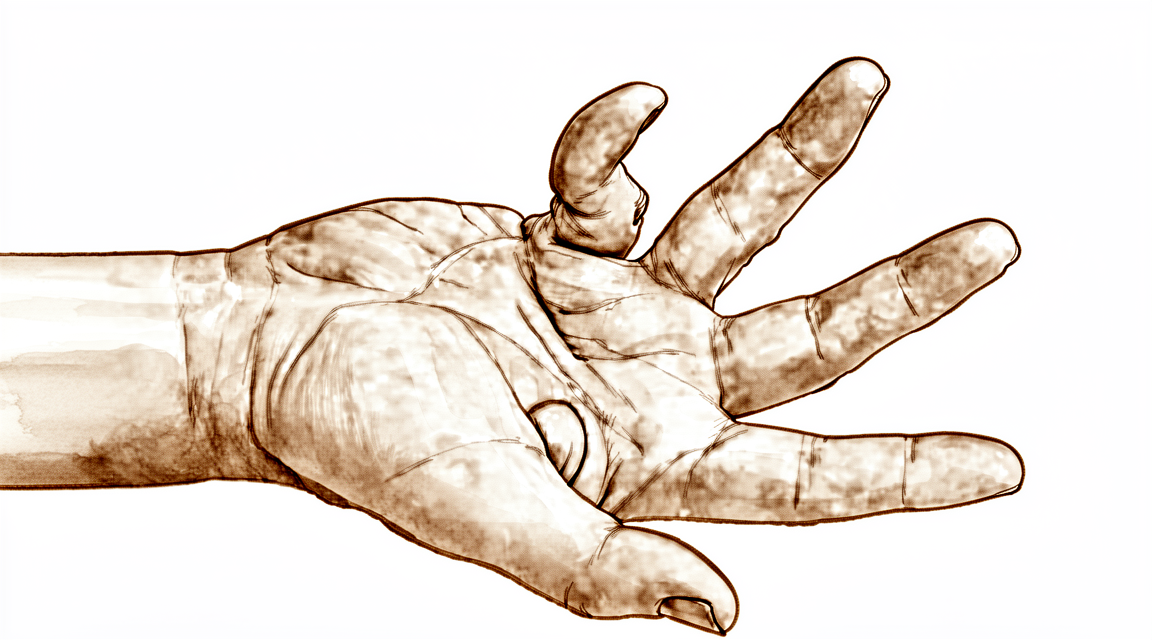
Dupuytren’s disease causes palm thickening and finger contracture—options range from observation to needle aponeurotomy or surgical excision.
What you're feeling
Dupuytren’s disease is a progressive condition that changes the tissue in your palm. You may notice thickening or tight bands under the skin of your hand. These changes happen slowly, and the pace is unique to you. Some people see changes over years, while others notice them more quickly. You might feel a small lump or nodule in your palm. This is often the first sign. In some cases, you may also see bumps on the back of your hand.
As the disease progresses, the tight bands can pull your fingers toward your palm. This makes it hard to straighten them fully. You might find that your ring or little finger starts to curl inward. Daily tasks become difficult. You may struggle to tuck in a shirt, wash your face, or put on gloves. Reaching behind your back to fasten a bra or zip a jacket can feel impossible. Your hand may not fit into a pocket or a glove anymore. This loss of function is what doctors call clinically important disease. It is common, and many people with this condition eventually seek treatment.
The condition is more common in men, but women experience similar symptoms. Women may have more severe bending at the middle joint of the finger, but the treatment outcomes are generally the same. There is no single cause, and it runs in families for some. While the disease is progressive, it does not always get worse rapidly. Many people live with mild symptoms for a long time. However, if the bending interferes with your life, your surgeon can help. Surgery remains the most reliable way to correct the deformity and improve function. Other non-surgical options also exist. The best choice depends on how much your hand is affected and how it impacts your daily routine.
What's actually happening
Dupuytren’s disease is a progressive condition that affects the thick band of tissue, called the palmar fascia, which lies just under the skin of your palm. Think of this fascia as a network of ropes that normally allows your fingers to straighten and bend freely. In Dupuytren’s disease, these ropes become thickened and tight. Over time, they form hard lumps or cords that pull your fingers into a bent position.
This tightening is what causes the characteristic deformity. As the cords shorten, they prevent your fingers from lying flat against a table. The pace of this progression is unique to each patient. For some, the changes happen slowly over years; for others, the tightening may advance more quickly. Because the disease is progressive, the bend in your fingers can worsen if left untreated.
The underlying problem is not in the joint itself, but in the tissue surrounding it. The thickened fascia acts like a short, stiff tether. When you try to straighten your hand, this tether resists, causing pain or stiffness. While many people have small lumps that do not affect function, clinically important disease is common. A majority of diagnosed individuals undergo treatment because the deformity interferes with daily tasks like shaking hands, washing your face, or putting on gloves.
There is little agreement among international hand surgeons on the best way to treat common presentations of this disease. This is because the condition varies so much from person to person. Some patients need minor adjustments, while others require more significant intervention. Your surgeon will assess the severity of your specific cords and how much they limit your movement. The goal of any treatment, whether surgical or non-surgical, is to release these tight cords so you can regain the ability to straighten your fingers and improve your hand function.
What we can do about it
Dupuytren’s disease is a progressive condition, but the pace is unique to each patient. Because there is little agreement among international hand surgeons on the best treatment for common presentations, your surgeon will tailor a plan to your specific needs. For many people, the first step is self-management and therapy. Therapy interventions help link your specific problems to the right choices. You may work with a therapist to keep your hand moving and manage stiffness. This approach aims to maintain function while you monitor how the disease changes over time.
If you experience pain or significant tightness, medical management may be considered. While the evidence base for specific medications is limited, your surgeon might discuss options to help with discomfort. Some patients receive injections to help manage symptoms. For example, high-energy focused extracorporeal shockwave therapy has been shown to relieve pain in some cases, though more research is needed to confirm its value as a non-invasive option. Other treatments, such as collagenase injections, are available. Collagenase Clostridium Histolyticum (CCH) is a safe and effective treatment to improve hand function. Most adverse events associated with CCH are minor and self-resolving. There are no long-term adverse events reported three years after initial CCH treatment. However, CCH may not provide durable contracture reduction, and its recurrence rate is comparable to other standard treatments. It remains a viable nonsurgical option if you wish to avoid surgery.
Surgery remains the gold-standard treatment for progressive Dupuytren contractures that limit your daily life. Surgical intervention is typically considered when conservative care has reached its limit and the deformity interferes with your ability to use your hand. The best available published evidence indicates that surgical treatment in the form of partial or selective fasciectomy is the most reliable method. This procedure involves removing the tight tissue causing the finger to curl. It achieves a high rate of full or almost full correction in 75% of cases. Many treatment options exist, each with its own complication profile, so your surgeon will discuss which approach offers the best balance of benefit and risk for you.
What to expect
Dupuytren’s disease is a progressive condition that affects the tissue under the skin of your palm. It is common, and most people who are diagnosed will eventually seek treatment. The disease causes thick bands of tissue to form, which can pull your fingers into a bent position. This makes it difficult to straighten your hand or place it flat on a table.
The pace of this progression is unique to each patient. For some, the changes happen slowly over many years. For others, the condition may advance more quickly. There is no way to predict exactly how fast it will progress in your case. Because the disease is genetic and involves changes in your collagen matrix, it tends to persist rather than settle on its own.
If you choose to have treatment, you can expect significant functional benefits. Surgical correction or other interventions can help straighten your fingers and improve your hand’s ability to perform daily tasks. For advanced cases, procedures like dermofasciectomy offer substantial long-term benefits in terms of function and disease control. Even if you undergo treatment, there is a chance the disease could return. Recurrence rates vary depending on the method used, but reintervention is sometimes necessary over time.
If you leave the condition untreated, the contractures may worsen. This can lead to increasing difficulty with simple activities like washing your face, putting on gloves, or shaking hands. While some people manage with non-surgical options or splints in the early stages, these do not reverse the underlying tissue changes.
Your surgeon will discuss the best approach for your specific situation. Outcomes are generally similar for men and women, though women may experience more severe involvement of the middle finger joint. Ultimately, the goal is to maintain your hand’s function and comfort for as long as possible.
When to see someone
Dupuytren disease progresses at a pace unique to each patient. You may notice thickened skin or nodules in your palm. These can pull your fingers into a bent position. This makes it hard to straighten your hand or fit it into a pocket. You should see your GP if this stiffness interferes with daily tasks or sleep. Your surgeon uses specific staging systems to measure how far the deformity has progressed. Early review helps determine if treatment is needed. While many cases are mild, significant contractures can limit function. Do not wait until you cannot straighten your hand at all. Ask for a specialist review if you feel your hand is becoming weaker or more rigid.
Evidence & references
title: "Dupuytren's Disease" slug: dupuytrens-disease region: hand audience: patient mesh_terms: ["Dupuytren Contracture", "Fasciotomy", "Collagenases", "Fascia", "Microbial Collagenase", "Recurrence", "Diabetes Complications", "Disease Progression"] article_count: 159 model_used: Qwen3.6-35B-A3B-Q8_0.gguf generated_at: '2026-06-13T10:08:54+00:00' key_articles: - title: "Variation in Treatment Recommendations for Dupuytren Disease" ref_num: 1 evidence_tier: paper evidence_level: 4 doi: 10.1016/j.jhsa.2017.08.023 year: 2017 - title: "Prevalence and incidence of doctor-diagnosed Dupuytren’s disease: a population-based study" ref_num: 2 evidence_tier: paper evidence_level: 3 doi: 10.1177/1753193416687914 year: 2017 - title: "Dupuytren Disease: Is Collagenase Better Than Needling?" ref_num: 3 evidence_tier: paper evidence_level: 5 doi: 10.2106/jbjs.18.00282 year: 2018 - title: "Complications after treating Dupuytren's disease. A systematic literature review" ref_num: 4 evidence_tier: paper evidence_level: 4 doi: 10.1016/j.hansur.2017.07.002 year: 2017 - title: "Management of Dupuytren's Disease – Clear Advice for an Elusive Condition" ref_num: 5 evidence_tier: paper evidence_level: 4 doi: 10.1308/003588406x83104 year: 2006 - title: "Treatment of Dupuytren’s contracture" ref_num: 6 evidence_tier: paper evidence_level: 2 doi: 10.1302/0301-620x.100b9.bjj-2017-1194.r2 year: 2018 - title: "Dupuytren Disease Management Trends: A Survey of Hand Surgeons" ref_num: 7 evidence_tier: paper evidence_level: 4 doi: 10.1177/1558944718787281 year: 2018 - title: "Revised Tubiana's Staging System for Assessment of Disease Severity in Dupuytren's Disease—Preliminary Clinical Findings" ref_num: 8 evidence_tier: paper evidence_level: 4 doi: 10.1007/s11552-007-9071-1 year: 2007 - title: "Surgical and therapy update on the management of Dupuytren's disease" ref_num: 9 evidence_tier: paper evidence_level: 5 doi: 10.1016/j.jht.2013.10.006 year: 2014 - title: "Dupuytren Disease: An Evolving Understanding of an Age-old Disease" ref_num: 10 evidence_tier: paper evidence_level: 5 doi: 10.5435/00124635-201112000-00005 year: 2011 - title: "Outcomes of Management of Recurrent Dupuytren Contracture: A Systematic Review and Meta-analysis" ref_num: 11 evidence_tier: paper evidence_level: 1 doi: 10.1177/1558944721994220 year: 2021 - title: "Dorsal Pads Versus Nodules in Normal Population and Dupuytren's Disease Patients" ref_num: 12 evidence_tier: paper evidence_level: 3 doi: 10.1016/j.jhsa.2010.06.001 year: 2010 - title: "Segmental aponeurectomy with Z-Plasty as a treatment option in Dupuytren's disease: A retrospective cohort study" ref_num: 13 evidence_tier: paper doi: 10.1016/j.otsr.2019.08.016 year: 2019 - title: "A Longitudinal Analysis of 281 Cases of Dermofasciectomy Efficacy in Advanced Dupuytren Disease Cases: A 20-Year Perspective" ref_num: 14 evidence_tier: paper evidence_level: 3 doi: 10.1016/j.jhsa.2025.02.007 year: 2025 - title: "Unité Rhumatologique des Affections de la Main (URAM) scale: Development and validation of a tool to assess Dupuytren's disease–specific disability" ref_num: 15 evidence_tier: paper evidence_level: 4 doi: 10.1002/acr.20564 year: 2011 - title: "Results of Surgical Treatment of Dupuytren’s Disease in Women: A Review of 109 Consecutive Patients" ref_num: 16 evidence_tier: paper evidence_level: 3 doi: 10.1016/j.jhsa.2007.06.015 year: 2007 - title: "The Treatment of Dupuytren Disease" ref_num: 17 evidence_tier: paper evidence_level: 4 doi: 10.1016/j.jhsa.2011.03.002 year: 2011 - title: "Dupuytren’s disease: my personal view" ref_num: 18 evidence_tier: paper evidence_level: 5 doi: 10.1177/1753193417715773 year: 2017 - title: "Complications of Treatment for Dupuytren Disease" ref_num: 19 evidence_tier: paper evidence_level: 5 doi: 10.1016/j.hcl.2018.03.007 year: 2018 - title: "Dupuytren Contracture Recurrence Following Treatment with Collagenase Clostridium Histolyticum (CORDLESS Study): 3-Year Data" ref_num: 20 evidence_tier: paper evidence_level: 4 doi: 10.1016/j.jhsa.2012.09.028 year: 2013 - title: "Epidemiological Evaluation of Dupuytren's Disease Incidence and Prevalence Rates in Relation to Etiology" ref_num: 21 evidence_tier: paper evidence_level: 4 doi: 10.1007/s11552-008-9160-9 year: 2009 - title: "Is Dupuytren’s Disease Caused by an Imbalance between Proliferation and Cell Death?" ref_num: 22 evidence_tier: paper evidence_level: 4 doi: 10.1054/jhsb.1999.0251 year: 1999 - title: "Histological Staging and Dupuytren's Disease Recurrence or Extension after Surgical Treatment: A Retrospective Study of 124 Patients" ref_num: 23 evidence_tier: paper evidence_level: 3 doi: 10.1177/1753193408103729 year: 2009 - title: "Nonoperative Treatment of Dupuytren's Disease" ref_num: 24 evidence_tier: paper evidence_level: 5 doi: 10.1016/j.jhsa.2008.05.027 year: 2008 - title: "Treatment of Dupuytren’s Contracture With Collagenase: A Systematic Review" ref_num: 25 evidence_tier: paper evidence_level: 2 doi: 10.1177/1558944720974119 year: 2021 - title: "Limited Fasciectomy Versus Collagenase Clostridium histolyticum for Dupuytren Contracture: A Propensity Score Matched Study of Single Digit Treatment With Minimum 5 Years of Telephone Follow-Up" ref_num: 26 evidence_tier: paper evidence_level: 4 doi: 10.1016/j.jhsa.2021.05.022 year: 2021 - title: "One-year results of needle fasciotomy and collagenase injection in treatment of Dupuytren’s contracture: A two-centre prospective randomized clinical trial" ref_num: 27 evidence_tier: paper evidence_level: 2 doi: 10.1177/1753193415617385 year: 2015 - title: "Management of severe Dupuytren’s contracture of the proximal interphalangeal joint with use of a central slip facilitation device" ref_num: 28 evidence_tier: paper evidence_level: 4 doi: 10.1177/1753193412439673 year: 2012 - title: "Skin involvement in Dupuytren’s disease" ref_num: 29 evidence_tier: paper evidence_level: 3 doi: 10.1177/1753193415601353 year: 2015 - title: "Examining the Efficacy and Maintenance of Contracture Correction after Collagenase Clostridium Histolyticum Treatment for Dupuytren's Disease" ref_num: 30 evidence_tier: paper evidence_level: 4 doi: 10.1007/s11552-013-9524-7 year: 2013 - title: "High-energy focused extracorporeal shockwave therapy relieved pain in Dupuytren's disease: a series of seven hands" ref_num: 31 evidence_tier: paper evidence_level: 4 doi: 10.23736/s1973-9087.18.05498-9 year: 2020 - title: "Gender Ratio of Dupuytren's Disease in the Modern U.S. Population" ref_num: 32 evidence_tier: paper evidence_level: 3 doi: 10.1007/s11552-007-9076-9 year: 2007 - title: "Fasciectomy for Dupuytren Contracture" ref_num: 33 evidence_tier: paper evidence_level: 5 doi: 10.1016/j.hcl.2018.04.002 year: 2018 - title: "Factors affecting functional recovery after surgery and hand therapy in patients with Dupuytren's disease" ref_num: 34 evidence_tier: paper evidence_level: 4 doi: 10.1016/j.jht.2014.11.006 year: 2015 - title: "Dupuytren's Contracture—Therapy and Result Following Percutaneous Fasciotomy With Xiaflex (Collagenase)" ref_num: 35 evidence_tier: paper evidence_level: 2 doi: 10.1016/j.jht.2010.09.006 year: 2010 - title: "Experiences of men living with Dupuytren's disease—Consequences of the disease for hand function and daily activities" ref_num: 37 evidence_tier: paper evidence_level: 4 doi: 10.1016/j.jht.2019.04.004 year: 2020 - title: "The influence of skin tears following collagenase treatment of Dupuytren’s disease on treatment outcomes" ref_num: 38 evidence_tier: paper evidence_level: 2 doi: 10.1177/1753193420941329 year: 2020 - title: "Night-time splinting after fasciectomy or dermo-fasciectomy for Dupuytren's contracture: a pragmatic, multi-centre, randomised controlled trial" ref_num: 39 evidence_tier: paper evidence_level: 1 doi: 10.1186/1471-2474-12-136 year: 2011 - title: "Outcomes Following Repeat Collagenase Treatment of Dupuytren Contracture" ref_num: 40 evidence_tier: paper evidence_level: 4 doi: 10.1016/j.jhsa.2023.03.026 year: 2024 - title: "Separating Fact From Fiction: A Nationwide Longitudinal Examination of Complex Regional Pain Syndrome Following Treatment of Dupuytren Contracture" ref_num: 41 evidence_tier: paper evidence_level: 3 doi: 10.1177/1558944720963915 year: 2020 - title: "Collagenase Injection as Nonsurgical Treatment of Dupuytren's Disease: 8-Year Follow-Up" ref_num: 42 evidence_tier: paper evidence_level: 4 doi: 10.1016/j.jhsa.2010.01.003 year: 2010 - title: "The Use of Splinting as a Non-Surgical Treatment for Dupuytren's Disease: A Pilot Study" ref_num: 43 evidence_tier: paper evidence_level: 4 doi: 10.1177/175899830200700302 year: 2002 - title: "Patient’s perspective of treatment in Dupuytren’s Disease: collagenase versus limited fasciectomy" ref_num: 44 evidence_tier: paper evidence_level: 4 doi: 10.1177/17531934221095681 year: 2022 - title: "Hospitalization for Dupuytren's disease: A French national descriptive analysis, 2002 to 2009" ref_num: 45 evidence_tier: paper evidence_level: 3 doi: 10.1016/j.otsr.2014.05.013 year: 2014 - title: "Equivalent Treatment Effect After Percutaneous Needle Fasciotomy and Collagenase Treatment for Dupuytren Contracture: 2-Year Results of a Randomized Controlled Trial With Ultrasonographic Evaluation" ref_num: 46 evidence_tier: paper evidence_level: 2 doi: 10.1016/j.jhsa.2018.06.093 year: 2018 - title: "Novel patient-specific visual analogue survey (PVS) is validated in patients treated with collagenase injection for Dupuytren's disease" ref_num: 47 evidence_tier: paper evidence_level: 2 doi: 10.1136/jisakos-2019-000301 year: 2020 - title: "Outcomes of limited fasciectomy, needle fasciotomy and collagenase injection for Dupuytren’s disease: a systematic review and meta-analysis of individual patient data" ref_num: 48 evidence_tier: paper evidence_level: 1 doi: 10.1177/17531934251338349 year: 2025 - title: "Ultrasonographic examination of the ruptured cord after collagenase treatment or needle fasciotomy for Dupuytren’s contracture" ref_num: 49 evidence_tier: paper evidence_level: 2 doi: 10.1177/1753193417711594 year: 2017 synthesis_version: "v2" verifier_status: skipped
Overview
- Little agreement exists on treatment recommendations for common presentations of Dupuytren disease among international hand surgeons [1].
- Clinically important Dupuytren's disease is common in the general population [2].
- A majority of diagnosed individuals with Dupuytren's disease undergo treatment [2].
- The best treatment for Dupuytren contractures continues to be fiercely debated [3].
- Dupuytren disease is progressive [3].
- The pace of Dupuytren disease progression is unique to each patient [3].
- Best treatments for Dupuytren disease remain uncertain [3].
- The literature does not provide evidence in favor of a specific procedure for Dupuytren's disease due to inconsistencies in reporting complications [4].
- The literature lacks a standardized definition for complications in Dupuytren's disease [4].
- Patients with Dupuytren's disease may gain significant functional benefit following surgical improvement or correction of the deformity [5].
- There remains limited evidence to guide the management of patients with Dupuytren's contracture [6].
- Several procedural options exist for the treatment of Dupuytren disease [7].
- Advancements in surgical and therapy management for Dupuytren's disease include indications, surgical options, non-surgical techniques, and therapy interventions [9].
- Dermofasciectomy appears to be a highly effective surgical intervention for advanced Dupuytren disease [14].
- Dermofasciectomy offers substantial long-term benefits in terms of function and disease control for advanced Dupuytren disease [14].
- Surgery remains the gold-standard treatment for progressive Dupuytren contractures [17].
- Limited palmar fasciectomy is the most common surgical option for Dupuytren's disease [17].
- Many treatment options exist for Dupuytren contracture, each with its own complication profile [19].
- Surgical treatment in the form of partial or selective fasciectomy remains the most reliable method for treating Dupuytren's disease [24].
- Partial or selective fasciectomy is the most widely used method for treating Dupuytren's disease [24].
Anatomy & Pathophysiology
- Little agreement exists on treatment recommendations for common presentations of Dupuytren disease among international hand surgeons [1].
- Patients with Dupuytren's disease may gain significant functional benefit following surgical improvement or correction of the deformity [5].
- Several procedural options exist for the treatment of Dupuytren disease [7].
- A revised severity staging system incorporating total flexion deformity and additional clinical risk factors provides a more objective and precise method for assessing Dupuytren's disease severity and may predict surgical outcomes [8].
- Surgery remains the gold-standard treatment for progressive Dupuytren contractures, with limited palmar fasciectomy being the most common option [17].
- Collagenase clostridium histolyticum (CCH) is a safe, effective treatment to improve hand function in Dupuytren's contracture, with most adverse events being minor and self-resolving [25].
- A simple staged procedure is a valid alternative in the management of severe Dupuytren's proximal interphalangeal joint (PIPJ) contracture, demonstrating reliable, reproducible correction of the deformity and acceptable patient outcomes [28].
- Safety and social issues of hand function and quality of life have an evident association with functional recovery after surgery and hand therapy [34].
- Hand therapy after collagenase treatment is utilized to discuss results and support recovery [35].
- Hand therapy should acknowledge patients' individual experiences and support self-modifications and development of new skills [37].
- The incidence of skin tears after collagenase injection does not affect patient-reported outcomes six months later, but the incidence of skin tears is significantly associated with the severity of pre-treatment finger extension deficits [38].
- No differences were observed in self-reported upper limb disability or active range of motion between patients receiving routine night-time splinting and those receiving hand therapy only after fasciectomy or dermo-fasciectomy [39].
- Repeat collagenase treatment of previously treated digits yields similar deformity correction and complete correction rates but a higher incidence of adverse events compared to initial treatment [40].
- Female sex and release of more than one digit are significant predictors of developing Complex Regional Pain Syndrome (CRPS) following treatment of Dupuytren contracture [41].
- Soft tissue distraction prior to radialization can successfully realign the carpus and wrist over the ulna, but some minor recurrence must still be expected in the mid-term [44].
- There were no significant differences in the reduction of PIP contracture, range of motion, and patient-reported outcomes between percutaneous needle fasciotomy and collagenase treatment at 2-year follow-up [46].
- A novel patient-specific visual analogue survey (PVS) is validated in patients treated with collagenase injection for Dupuytren's disease and is readily adaptable for use in other musculoskeletal diseases [47].
- Clinically relevant contracture correction was comparable between limited fasciectomy (LF), percutaneous needle fasciotomy (PNF), and CCH, but CCH had a higher risk of minor complications and LF had the longest time to recurrence [48].
- In the absence of evidence that collagenase effects on cord morphology are better than needle fasciotomy, needle fasciotomy remains the first line of treatment for an uncomplicated Dupuytren's cord at the metacarpophalangeal (MCP) joint [49].
Classification
- Dupuytren disease is a progressive condition of genetic origin [10].
- The pathophysiology of Dupuytren disease is multifactorial, involving myofibroblast proliferation and altered collagen matrix composition [10].
- Clinically important Dupuytren's disease is common in the general population [2].
- A majority of diagnosed individuals with Dupuytren's disease undergo treatment [2].
- The prevalence of Dupuytren's disease varies extremely across different geographical locations [21].
- It is unclear whether the geographical variation in Dupuytren's disease prevalence is due to genetic, environmental, or combined factors [21].
- Dorsal Dupuytren's nodules are encountered only in patients with Dupuytren's disease [12].
- Dorsal Dupuytren's nodules are especially prevalent among patients with strong diathesis [12].
- Histological staging is a reliable method for predicting recurrence of Dupuytren's disease [23].
- Histological Type I (proliferative) carries the highest risk of recurrence [23].
- Histological Type III (fibrotic) carries the lowest risk of recurrence [23].
- The revised Tubiana's staging system incorporates total flexion deformity and additional clinical risk factors to assess disease severity [8].
- The revised Tubiana's staging system provides a more objective and precise method for assessing Dupuytren's disease severity compared to prior methods [8].
- The revised Tubiana's staging system may predict surgical outcomes [8].
- The URAM scale is the first patient-reported functional measure for assessing Dupuytren's disease–specific disability [15].
Clinical Presentation
- Dupuytren disease is a progressive condition of genetic origin with a multifactorial pathophysiology involving myofibroblast proliferation and altered collagen matrix composition [10].
- Histological specimens of Dupuytren's disease are not characterized by apoptotic cells, suggesting proliferating cells may be primed for death if they fail to receive an appropriate survival signal [22].
- Dermal fibromatosis exists in the absence of clinical features of skin involvement, and the skin may have a greater role in the development and propagation of Dupuytren's disease than previously thought [29].
- Clinically important Dupuytren's disease is common in the general population, with a majority of diagnosed individuals undergoing treatment [2].
- The prevalence of Dupuytren's Disease in different geographical locations is extremely variable, and it is not clear whether this is genetic, environmental, or a combination of both [21].
- Dorsal Dupuytren's nodules are encountered only in Dupuytren's disease patients, especially among those with strong diathesis [12].
- Dupuytren's disease in women presents similarly to men with more severe PIP joint involvement but equivalent surgical outcomes regarding final contracture correction, recurrence, and complication rates [16].
- The pace of Dupuytren disease progression is unique to each patient [3].
- There is as much unknown as known about Dupuytren's disease, and even current knowledge may not be absolutely correct [18].
- The revised Tubiana's staging system incorporates total flexion deformity and additional clinical risk factors to provide a more objective and precise method for assessing Dupuytren's disease severity [8].
- The URAM scale is the first patient-reported functional measure for Dupuytren's disease [15].
Investigations
- Clinically important Dupuytren's disease is common in the general population, with a majority of diagnosed individuals undergoing treatment [2].
- Dupuytren disease is a progressive condition of genetic origin with a multifactorial pathophysiology involving myofibroblast proliferation and altered collagen matrix composition [10].
- The pace of disease progression is unique to each patient [3].
- Dorsal Dupuytren's nodules are encountered only in Dupuytren's disease patients, especially among those with strong diathesis [12].
- Dupuytren's disease in women presents similarly to men with more severe proximal interphalangeal (PIP) joint involvement but equivalent surgical outcomes regarding final contracture correction, recurrence, and complication rates [16].
- The revised Tubiana's staging system, which incorporates total flexion deformity and additional clinical risk factors, provides a more objective and precise method for assessing Dupuytren's disease severity and may predict surgical outcomes [8].
- Histological staging is a reliable method for predicting recurrence of Dupuytren's disease, with Type I (proliferative) having the highest risk and Type III (fibrotic) the lowest [23].
- The URAM scale is the first patient-reported functional measure for Dupuytren's disease [15].
- There is limited evidence to guide the management of patients with Dupuytren's contracture [6].
- Little agreement exists on treatment recommendations for common presentations of Dupuytren disease among international hand surgeons [1].
- The best treatment for Dupuytren contractures continues to be fiercely debated, and best treatments remain uncertain [3].
- The literature does not provide evidence in favor of a specific procedure for Dupuytren's disease due to inconsistencies in reporting complications as well as the lack of a standardized definition [4].
- Despite extensive literature, there is as much unknown as known about Dupuytren's disease, and even current knowledge may not be absolutely correct [18].
Treatment
- Little agreement exists on treatment recommendations for common presentations of Dupuytren disease among international hand surgeons [1].
- Clinically important Dupuytren's disease is common in the general population, with a majority of diagnosed individuals undergoing treatment [2].
- The best treatment for Dupuytren contractures continues to be fiercely debated [3].
- Dupuytren disease is progressive, but the pace is unique to each patient [3].
- Best treatments for Dupuytren disease remain uncertain [3].
- The literature does not provide evidence in favor of a specific procedure for Dupuytren's disease due to inconsistencies in reporting complications [4].
- The literature lacks a standardized definition for complications in Dupuytren's disease [4].
- Patients with Dupuytren's disease may gain significant functional benefit following surgical improvement or correction of the deformity [5].
- There remains limited evidence to guide the management of patients with Dupuytren's contracture [6].
- Several procedural options exist for the treatment of Dupuytren disease [7].
- Advancements in surgical and therapy management for Dupuytren's disease include indications, surgical options, non-surgical techniques, and therapy interventions [9].
- Therapy interventions assist in linking patient-specific problems to appropriate treatment choices [9].
- There is a low level of evidence that both surgical and nonsurgical treatments provide clinically important improvements for recurrent Dupuytren contracture [11].
- Segmental aponeurectomy with Z-Plasty has a role in the management of Dupuytren's disease with flexion contracture predominantly involving the MCPJ [13].
- Dermofasciectomy appears to be a highly effective surgical intervention for advanced Dupuytren disease [14].
- Dermofasciectomy offers substantial long-term benefits in terms of function and disease control for advanced Dupuytren disease [14].
- Surgery remains the gold-standard treatment for progressive Dupuytren contractures [17].
- Limited palmar fasciectomy is the most common surgical option for Dupuytren contractures [17].
- Many treatment options exist for Dupuytren contracture, each with its own complication profile [19].
- The recurrence rate of Collagenase Clostridium Histolyticum (CCH) is comparable to other standard treatments [20].
- There is an absence of long-term adverse events 3 years after initial CCH treatment [20].
- CCH is an effective and safe treatment for Dupuytren contracture [20].
- The best available published evidence indicates that surgical treatment in the form of partial or selective fasciectomy remains the most reliable method for treating Dupuytren's disease [24].
- Partial or selective fasciectomy is the most widely used method for treating Dupuytren's disease [24].
- CCH is a safe, effective treatment to improve hand function in Dupuytren's contracture [25].
- Most adverse events associated with CCH are minor and self-resolving [25].
- CCH may not provide durable contracture reduction [30].
- CCH remains a viable nonsurgical treatment for Dupuytren's disease [30].
- High-energy focused extracorporeal shockwave therapy relieved pain in Dupuytren's disease in a series of seven hands [31].
- A doublemasked randomized controlled trial is warranted to elucidate the value of extracorporeal shockwave therapy in Dupuytren's disease as a non-invasive treatment option to reduce pain [31].
- Surgical intervention for Dupuytren contractures achieves a high rate of full or almost full correction (75%) [33].
Complications
- There is little agreement among international hand surgeons on treatment recommendations for common presentations of Dupuytren disease [1].
- Clinically important Dupuytren's disease is common in the general population, with a majority of diagnosed individuals undergoing treatment [2].
- The best treatment for Dupuytren contractures remains uncertain and is fiercely debated [3].
- Dupuytren disease is progressive, but the pace of progression is unique to each patient [3].
- The literature does not provide evidence in favor of a specific procedure for Dupuytren's disease due to inconsistencies in reporting complications [4].
- There is a lack of a standardized definition for complications in Dupuytren's disease literature [4].
- Patients with Dupuytren's disease may gain significant functional benefit following surgical improvement or correction of the deformity [5].
- There remains limited evidence to guide the management of patients with Dupuytren's contracture [6].
- The revised Tubiana's staging system incorporates total flexion deformity and additional clinical risk factors to assess disease severity [8].
- The revised severity staging system provides a more objective and precise method for assessing Dupuytren's disease severity [8].
- The revised severity staging system may predict surgical outcomes [8].
- Dupuytren disease is a progressive condition of genetic origin [10].
- Dupuytren disease has a multifactorial pathophysiology involving myofibroblast proliferation and altered collagen matrix composition [10].
- There is a low level of evidence that both surgical and nonsurgical treatments provide clinically important improvements for recurrent Dupuytren contracture [11].
- Dorsal Dupuytren's nodules are encountered only in Dupuytren's disease patients [12].
- Dorsal Dupuytren's nodules are especially prevalent among patients with strong diathesis [12].
- Dermofasciectomy appears to be a highly effective surgical intervention for advanced Dupuytren disease [14].
- Dermofasciectomy offers substantial long-term benefits in terms of function and disease control for advanced Dupuytren disease [14].
- Dupuytren's disease in women presents similarly to men with more severe proximal interphalangeal (PIP) joint involvement [16].
- Women with Dupuytren's disease have equivalent surgical outcomes regarding final contracture correction, recurrence, and complication rates compared to men [16].
- There is as much unknown as known about Dupuytren's disease despite extensive literature [18].
- Even current knowledge about Dupuytren's disease may not be absolutely correct [18].
- Many treatment options exist for Dupuytren contracture, each with its own complication profile [19].
- The recurrence rate of collagenase clostridium histolyticum (CCH) treatment is comparable to other standard treatments [20].
- There is an absence of long-term adverse events 3 years after initial CCH treatment [20].
- CCH is an effective and safe treatment for Dupuytren contracture [20].
- Long-term overall reintervention rates following treatment of Dupuytren contracture affecting a single digit were higher with CCH than with surgical fasciectomy [26].
- Perceived recurrence rates following treatment of Dupuytren contracture affecting a single digit were higher with CCH than with surgical fasciectomy [26].
- These findings compare groups with similar baseline characteristics [26].
- At 3 months and 1 year, the outcomes of needle fasciotomy and collagenase injection are the same in Dupuytren's disease with predominantly metacarpophalangeal joint involvement [27].
- Large-scale epidemiological studies are needed to accurately report Dupuytren's disease in the modern U.S. population [32].
Recovery
- Clinically important Dupuytren's disease is common in the general population, with a majority of diagnosed individuals undergoing treatment [2].
- Dupuytren disease is a progressive condition of genetic origin with a multifactorial pathophysiology involving myofibroblast proliferation and altered collagen matrix composition [10].
- The pace of Dupuytren disease progression is unique to each patient [3].
- Histological specimens of Dupuytren's disease were not characterized by apoptotic cells, suggesting proliferating cells may be primed for death if they fail to receive an appropriate survival signal [22].
- Patients with Dupuytren's disease of the hand may gain a significant functional benefit following surgical improvement or correction of the deformity [5].
- Dermofasciectomy appears to be a highly effective surgical intervention for advanced Dupuytren disease, offering substantial long-term benefits in terms of function and disease control [14].
- Dupuytren's disease in women presents similarly to men with more severe PIP joint involvement but equivalent surgical outcomes regarding final contracture correction, recurrence, and complication rates [16].
- Hospitalization for surgery for Dupuytren's disease in France still represents a meaningful economic burden despite shortening of hospital stays over time [45].
- There is low level of evidence that both surgical and nonsurgical treatments provide clinically important improvements for recurrent Dupuytren contracture [11].
- The recurrence rate following treatment with Collagenase Clostridium Histolyticum (CCH) is comparable to other standard treatments [20].
- There is an absence of long-term adverse events 3 years after initial treatment with CCH, indicating it is an effective and safe treatment for Dupuytren contracture [20].
- Long-term overall reintervention and perceived recurrence following treatment of Dupuytren contracture affecting a single digit were higher with CCH treatment than surgical fasciectomy when comparing groups with similar baseline characteristics [26].
- Initial evaluation of long-term recurrence rates suggests disease recurrence or progression in 4 out of 6 patients with MCP contractures and 2 patients with PIP contractures following collagenase injection [42].
- Recurrence following collagenase injection was generally less severe than the initial contracture in the MCP group [42].
- At 3 months and 1 year, the outcomes of needle fasciotomy and collagenase injection are the same in Dupuytren's disease with predominantly metacarpophalangeal joint involvement [27].
- Static night splintage may have a role in the treatment of early stages of Dupuytren's disease, with greatest benefit noted in the early proliferative phase [43].
- Little agreement exists on treatment recommendations for common presentations of Dupuytren disease among international hand surgeons [1].
- The literature does not provide evidence in favor of a specific procedure for Dupuytren's disease due to inconsistencies in reporting complications as well as the lack of a standardized definition [4].
- The best treatment for Dupuytren contractures continues to be fiercely debated, and best treatments remain uncertain [3].
- The Unité Rhumatologique des Affections de la Main (URAM) scale is the first patient-reported functional measure for Dupuytren's disease [15].
Key Evidence
- [L4] Little agreement exists on treatment recommendations for common presentations of Dupuytren disease in this sample of international hand surgeons. (10.1016/j.jhsa.2017.08.023)
- [L3] Clinically important Dupuytren's disease is common in the general population, with a majority of diagnosed individuals undergoing treatment. (10.1177/1753193416687914)
- [L5] The best treatment for Dupuytren contractures continues to be fiercely debated; what is known is that Dupuytren disease is progressive, but the pace is unique to each patient, and best treatments remain uncertain. (10.2106/jbjs.18.00282)
- [L4] The literature does not provide evidence in favor of a specific procedure for Dupuytren's disease due to inconsistencies in reporting complications as well as the lack of a standardized definition. (10.1016/j.hansur.2017.07.002)
- [L4] Patients with Dupuytren's disease of the hand may gain a significant functional benefit following surgical improvement or correction of the deformity. (10.1308/003588406x83104)
- [L2] Currently there remains limited evidence to guide the management of patients with Dupuytren's contracture. (10.1302/0301-620x.100b9.bjj-2017-1194.r2)
- [L4] There are several procedural options for the treatment of Dupuytren disease. (10.1177/1558944718787281)
- [L4] The revised severity staging system, which incorporates total flexion deformity and additional clinical risk factors, provides a more objective and precise method for assessing Dupuytren's disease severity and may predict surgical outcomes. (10.1007/s11552-007-9071-1)
- [L5] The article highlights advancements in surgical and therapy management for Dupuytren's disease, reviewing indications, surgical options, non-surgical techniques, and therapy interventions to assist in linking patient-specific problems to appropriate treatment choices. (10.1016/j.jht.2013.10.006)
- [L5] Dupuytren disease is a progressive condition of genetic origin with a multifactorial pathophysiology involving myofibroblast proliferation and altered collagen matrix composition. (10.5435/00124635-201112000-00005)
- [L1] There is low level of evidence that both surgical and nonsurgical treatments provide clinically important improvements for recurrent Dupuytren contracture. (10.1177/1558944721994220)
- [L3] Dorsal Dupuytren's nodules are encountered only in Dupuytren's disease patients, especially among those with strong diathesis. (10.1016/j.jhsa.2010.06.001)
- [Paper] It has a role in the management of Dupuytren's disease with flexion contracture predominantly involving the MCPJ. (10.1016/j.otsr.2019.08.016)
- [L3] Dermofasciectomy appears to be a highly effective surgical intervention for advanced Dupuytren disease, offering substantial long-term benefits in terms of function and disease control. (10.1016/j.jhsa.2025.02.007)
- [L4] We provide the first patient-reported functional measure for Dupuytren's disease. (10.1002/acr.20564)
- [L3] Dupuytren's disease in women presents similarly to men with more severe PIP joint involvement but equivalent surgical outcomes regarding final contracture correction, recurrence, and complication rates. (10.1016/j.jhsa.2007.06.015)
- [L4] Surgery remains the gold-standard treatment for progressive Dupuytren contractures, with limited palmar fasciectomy being the most common option. (10.1016/j.jhsa.2011.03.002)
- [L5] Despite extensive literature, there is as much unknown as known about Dupuytren's disease, and even current knowledge may not be absolutely correct. (10.1177/1753193417715773)
- [L5] Many treatment options exist for Dupuytren contracture, each with its own complication profile. (10.1016/j.hcl.2018.03.007)
- [L4] The recurrence rate, which is comparable to other standard treatments, and the absence of long-term adverse events 3 years after initial treatment indicate that CCH is an effective and safe treatment for Dupuytren contracture. (10.1016/j.jhsa.2012.09.028)
- [L4] The prevalence of Dupuytren's Disease in different geographical locations is extremely variable, and it is not clear whether this is genetic, environmental, or a combination of both. (10.1007/s11552-008-9160-9)
- [L4] Histological specimens of Dupuytren's disease were not characterized by apoptotic cells, suggesting proliferating cells may be primed for death if they fail to receive an appropriate survival signal. (10.1054/jhsb.1999.0251)
- [L3] Histological staging is a reliable method for predicting recurrence of Dupuytren's disease, with Type I (proliferative) having the highest risk and Type III (fibrotic) the lowest. (10.1177/1753193408103729)
- [L5] The best available published evidence indicates that surgical treatment in the form of partial or selective fasciectomy remains the most reliable and the most widely used method for treating Dupuytren's disease. (10.1016/j.jhsa.2008.05.027)
- [L2] CCH is a safe, effective treatment to improve hand function in Dupuytren's contracture, with most adverse events being minor and self-resolving. (10.1177/1558944720974119)
- [L4] Long-term overall reintervention and perceived recurrence following treatment of Dupuytren contracture affecting a single digit were higher with CCH treatment than surgical fasciectomy when comparing groups with similar baseline characteristics. (10.1016/j.jhsa.2021.05.022)
- [L2] At 3 months and 1 year, the outcomes of needle fasciotomy and collagenase injection are the same in Dupuytren's disease with predominantly metacarpophalangeal joint involvement. (10.1177/1753193415617385)
- [L4] The simple staged procedure is a valid alternative in the management of severe Dupuytren's PIPJ contracture, demonstrating reliable, reproducible correction of the deformity and acceptable patient outcomes. (10.1177/1753193412439673)
- [L3] Dermal fibromatosis exists in the absence of clinical features of skin involvement, and we hypothesize that the skin may have a greater role in the development and propagation of Dupuytren's disease than previously thought. (10.1177/1753193415601353)
- [L4] While initially effective, CCH may not provide durable contracture reduction, but remains a viable nonsurgical treatment for Dupuytren's disease. (10.1007/s11552-013-9524-7)
- [L4] A doublemasked randomized controlled trial is warranted to elucidate the value of extracorporeal shockwave therapy in Dupuytren's disease of the hand as a non-invasive treatment option to reduce pain. (10.23736/s1973-9087.18.05498-9)
- [L3] Large-scale epidemiological studies are needed to accurately report Dupuytren's disease in the modern U.S. population. (10.1007/s11552-007-9076-9)
- [L5] Surgical intervention for Dupuytren contractures achieves a high rate of full or almost full correction (75%). (10.1016/j.hcl.2018.04.002)
- [L4] Safety and social issues of hand function and quality of life had an evident association with functional recovery. (10.1016/j.jht.2014.11.006)
- [L2] Results after 9 month follow-up, hand therapy after treatment will be presented in detail and discussed. (10.1016/j.jht.2010.09.006)
- [L4] A clinical implication for hand therapy is to acknowledge patients' individual experiences and support self-modifications and development of new skills. (10.1016/j.jht.2019.04.004)
- [L2] The incidence of skin tears after collagenase injection does not affect patient-reported outcomes six months later, but the incidence of skin tears is significantly associated with the severity of pre-treatment finger extension deficits. (10.1177/1753193420941329)
- [L1] No differences were observed in self-reported upper limb disability or active range of motion between patients receiving routine night-time splinting and those receiving hand therapy only. (10.1186/1471-2474-12-136)
- [L4] Repeat collagenase treatment of previously treated digits yields similar deformity correction and complete correction rates but a higher incidence of adverse events compared to initial treatment. (10.1016/j.jhsa.2023.03.026)
- [L3] Female sex and release of more than one digit are significant predictors of developing CRPS. (10.1177/1558944720963915)
- [L4] Initial evaluation of long-term recurrence rates suggests disease recurrence or progression in 4 out of 6 patients with MCP contractures and 2 patients with PIP contractures; however, recurrence was generally less severe than the initial contracture in the MCP group. (10.1016/j.jhsa.2010.01.003)
- [L4] This study indicates that there may be a role for static night splintage in the treatment of early stages of Dupuytren's disease, with greatest benefit noted in the early proliferative phase. (10.1177/175899830200700302)
- [L4] Soft tissue distraction prior to radialization can successfully realign the carpus and wrist over the ulna, but some minor recurrence must still be expected in the mid-term. (10.1177/17531934221095681)
- [L3] Despite shortening of hospital stays over time, hospitalization for surgery for Dupuytren's disease in France still represents a meaningful economic burden. (10.1016/j.otsr.2014.05.013)
- [L2] There were no significant differences in the reduction of PIP contracture, range of motion, and patient-reported outcomes between the two treatments. (10.1016/j.jhsa.2018.06.093)
- [L2] It is also readily adaptable for use in other diseases, particularly within musculoskeletal medicine. (10.1136/jisakos-2019-000301)
- [L1] Overall, the clinically relevant contracture correction was comparable between LF, PNF and CCH, but CCH had a higher risk of minor complications and LF had the longest time to recurrence. (10.1177/17531934251338349)
- [L2] In the absence of evidence that collagenase effects on cord morphology are better, needle fasciotomy remains the first line of treatment for an uncomplicated Dupuytren's cord at the MCP joint. (10.1177/1753193417711594)
References
[1] Variation in Treatment Recommendations for Dupuytren Disease. The Journal of Hand Surgery. 2017. DOI: 10.1016/j.jhsa.2017.08.023 [2] Prevalence and incidence of doctor-diagnosed Dupuytren’s disease: a population-based study. Journal of Hand Surgery (European Volume). 2017. DOI: 10.1177/1753193416687914 [3] Dupuytren Disease: Is Collagenase Better Than Needling?. Journal of Bone and Joint Surgery. 2018. DOI: 10.2106/jbjs.18.00282 [4] Complications after treating Dupuytren's disease. A systematic literature review. Hand Surgery and Rehabilitation. 2017. DOI: 10.1016/j.hansur.2017.07.002 [5] Management of Dupuytren's Disease – Clear Advice for an Elusive Condition. The Annals of The Royal College of Surgeons of England. 2006. DOI: 10.1308/003588406x83104 [6] Treatment of Dupuytren’s contracture. The Bone & Joint Journal. 2018. DOI: 10.1302/0301-620x.100b9.bjj-2017-1194.r2 [7] Dupuytren Disease Management Trends: A Survey of Hand Surgeons. HAND. 2018. DOI: 10.1177/1558944718787281 [8] Revised Tubiana's Staging System for Assessment of Disease Severity in Dupuytren's Disease—Preliminary Clinical Findings. HAND. 2007. DOI: 10.1007/s11552-007-9071-1 [9] Surgical and therapy update on the management of Dupuytren's disease. Journal of Hand Therapy. 2014. DOI: 10.1016/j.jht.2013.10.006 [10] Dupuytren Disease: An Evolving Understanding of an Age-old Disease. Journal of the American Academy of Orthopaedic Surgeons. 2011. DOI: 10.5435/00124635-201112000-00005 [11] Outcomes of Management of Recurrent Dupuytren Contracture: A Systematic Review and Meta-analysis. HAND. 2021. DOI: 10.1177/1558944721994220 [12] Dorsal Pads Versus Nodules in Normal Population and Dupuytren's Disease Patients. The Journal of Hand Surgery. 2010. DOI: 10.1016/j.jhsa.2010.06.001 [13] Segmental aponeurectomy with Z-Plasty as a treatment option in Dupuytren's disease: A retrospective cohort study. Orthopaedics & Traumatology: Surgery & Research. 2019. DOI: 10.1016/j.otsr.2019.08.016 [14] A Longitudinal Analysis of 281 Cases of Dermofasciectomy Efficacy in Advanced Dupuytren Disease Cases: A 20-Year Perspective. The Journal of Hand Surgery. 2025. DOI: 10.1016/j.jhsa.2025.02.007 [15] Unité Rhumatologique des Affections de la Main (URAM) scale: Development and validation of a tool to assess Dupuytren's disease–specific disability. Arthritis Care & Research. 2011. DOI: 10.1002/acr.20564 [16] Results of Surgical Treatment of Dupuytren’s Disease in Women: A Review of 109 Consecutive Patients. The Journal of Hand Surgery. 2007. DOI: 10.1016/j.jhsa.2007.06.015 [17] The Treatment of Dupuytren Disease. The Journal of Hand Surgery. 2011. DOI: 10.1016/j.jhsa.2011.03.002 [18] Dupuytren’s disease: my personal view. Journal of Hand Surgery (European Volume). 2017. DOI: 10.1177/1753193417715773 [19] Complications of Treatment for Dupuytren Disease. Hand Clinics. 2018. DOI: 10.1016/j.hcl.2018.03.007 [20] Dupuytren Contracture Recurrence Following Treatment with Collagenase Clostridium Histolyticum (CORDLESS Study): 3-Year Data. The Journal of Hand Surgery. 2013. DOI: 10.1016/j.jhsa.2012.09.028 [21] Epidemiological Evaluation of Dupuytren's Disease Incidence and Prevalence Rates in Relation to Etiology. HAND. 2009. DOI: 10.1007/s11552-008-9160-9 [22] Is Dupuytren’s Disease Caused by an Imbalance between Proliferation and Cell Death?. Journal of Hand Surgery. 1999. DOI: 10.1054/jhsb.1999.0251 [23] Histological Staging and Dupuytren's Disease Recurrence or Extension after Surgical Treatment: A Retrospective Study of 124 Patients. Journal of Hand Surgery (European Volume). 2009. DOI: 10.1177/1753193408103729 [24] Nonoperative Treatment of Dupuytren's Disease. The Journal of Hand Surgery. 2008. DOI: 10.1016/j.jhsa.2008.05.027 [25] Treatment of Dupuytren’s Contracture With Collagenase: A Systematic Review. HAND. 2021. DOI: 10.1177/1558944720974119 [26] Limited Fasciectomy Versus Collagenase Clostridium histolyticum for Dupuytren Contracture: A Propensity Score Matched Study of Single Digit Treatment With Minimum 5 Years of Telephone Follow-Up. The Journal of Hand Surgery. 2021. DOI: 10.1016/j.jhsa.2021.05.022 [27] One-year results of needle fasciotomy and collagenase injection in treatment of Dupuytren’s contracture: A two-centre prospective randomized clinical trial. Journal of Hand Surgery (European Volume). 2015. DOI: 10.1177/1753193415617385 [28] Management of severe Dupuytren’s contracture of the proximal interphalangeal joint with use of a central slip facilitation device. Journal of Hand Surgery (European Volume). 2012. DOI: 10.1177/1753193412439673 [29] Skin involvement in Dupuytren’s disease. Journal of Hand Surgery (European Volume). 2015. DOI: 10.1177/1753193415601353 [30] Examining the Efficacy and Maintenance of Contracture Correction after Collagenase Clostridium Histolyticum Treatment for Dupuytren's Disease. HAND. 2013. DOI: 10.1007/s11552-013-9524-7 [31] High-energy focused extracorporeal shockwave therapy relieved pain in Dupuytren's disease: a series of seven hands. European Journal of Physical and Rehabilitation Medicine. 2020. DOI: 10.23736/s1973-9087.18.05498-9 [32] Gender Ratio of Dupuytren's Disease in the Modern U.S. Population. HAND. 2007. DOI: 10.1007/s11552-007-9076-9 [33] Fasciectomy for Dupuytren Contracture. Hand Clinics. 2018. DOI: 10.1016/j.hcl.2018.04.002 [34] Factors affecting functional recovery after surgery and hand therapy in patients with Dupuytren's disease. Journal of Hand Therapy. 2015. DOI: 10.1016/j.jht.2014.11.006 [35] Dupuytren's Contracture—Therapy and Result Following Percutaneous Fasciotomy With Xiaflex (Collagenase). Journal of Hand Therapy. 2010. DOI: 10.1016/j.jht.2010.09.006 [37] Experiences of men living with Dupuytren's disease—Consequences of the disease for hand function and daily activities. Journal of Hand Therapy. 2020. DOI: 10.1016/j.jht.2019.04.004 [38] The influence of skin tears following collagenase treatment of Dupuytren’s disease on treatment outcomes. Journal of Hand Surgery (European Volume). 2020. DOI: 10.1177/1753193420941329 [39] Night-time splinting after fasciectomy or dermo-fasciectomy for Dupuytren's contracture: a pragmatic, multi-centre, randomised controlled trial. BMC Musculoskeletal Disorders. 2011. DOI: 10.1186/1471-2474-12-136 [40] Outcomes Following Repeat Collagenase Treatment of Dupuytren Contracture. The Journal of Hand Surgery. 2024. DOI: 10.1016/j.jhsa.2023.03.026 [41] Separating Fact From Fiction: A Nationwide Longitudinal Examination of Complex Regional Pain Syndrome Following Treatment of Dupuytren Contracture. HAND. 2020. DOI: 10.1177/1558944720963915 [42] Collagenase Injection as Nonsurgical Treatment of Dupuytren's Disease: 8-Year Follow-Up. The Journal of Hand Surgery. 2010. DOI: 10.1016/j.jhsa.2010.01.003 [43] The Use of Splinting as a Non-Surgical Treatment for Dupuytren's Disease: A Pilot Study. The British Journal of Hand Therapy. 2002. DOI: 10.1177/175899830200700302 [44] Patient’s perspective of treatment in Dupuytren’s Disease: collagenase versus limited fasciectomy. Journal of Hand Surgery (European Volume). 2022. DOI: 10.1177/17531934221095681 [45] Hospitalization for Dupuytren's disease: A French national descriptive analysis, 2002 to 2009. Orthopaedics & Traumatology: Surgery & Research. 2014. DOI: 10.1016/j.otsr.2014.05.013 [46] Equivalent Treatment Effect After Percutaneous Needle Fasciotomy and Collagenase Treatment for Dupuytren Contracture: 2-Year Results of a Randomized Controlled Trial With Ultrasonographic Evaluation. The Journal of Hand Surgery. 2018. DOI: 10.1016/j.jhsa.2018.06.093 [47] Novel patient-specific visual analogue survey (PVS) is validated in patients treated with collagenase injection for Dupuytren's disease. Journal of ISAKOS. 2020. DOI: 10.1136/jisakos-2019-000301 [48] Outcomes of limited fasciectomy, needle fasciotomy and collagenase injection for Dupuytren’s disease: a systematic review and meta-analysis of individual patient data. Journal of Hand Surgery (European Volume). 2025. DOI: 10.1177/17531934251338349 [49] Ultrasonographic examination of the ruptured cord after collagenase treatment or needle fasciotomy for Dupuytren’s contracture. Journal of Hand Surgery (European Volume). 2017. DOI: 10.1177/1753193417711594